Skip to content
Welcome, thoughtbot's Giant Robots listeners!Start here
US Midterms 2026
24SEP

House panel clears voter-ID budget route

2 min read
11:45UTC

The House Budget Committee approved an FY2027 reconciliation resolution 20-14 on 16 July, carrying $10bn in state election-integrity and voter-ID grants alongside $73bn for defence.

PoliticsDeveloping
Key takeaway

The reconciliation resolution cleared committee 20-14, carrying $10bn in election grants toward a parliamentarian's ruling.

The House Budget Committee approved an FY2027 reconciliation budget resolution 20-14 on Thursday 16 July, carrying $10bn in state election-integrity and voter-ID grants alongside $73bn for defence⁠1. Roll Call describes the election money as funding for legislation aimed at preventing voting fraud⁠2. The Washington Times describes it as funding the implementation of the SAVE Act's proof-of-citizenship and photo-ID requirements for voting⁠3.

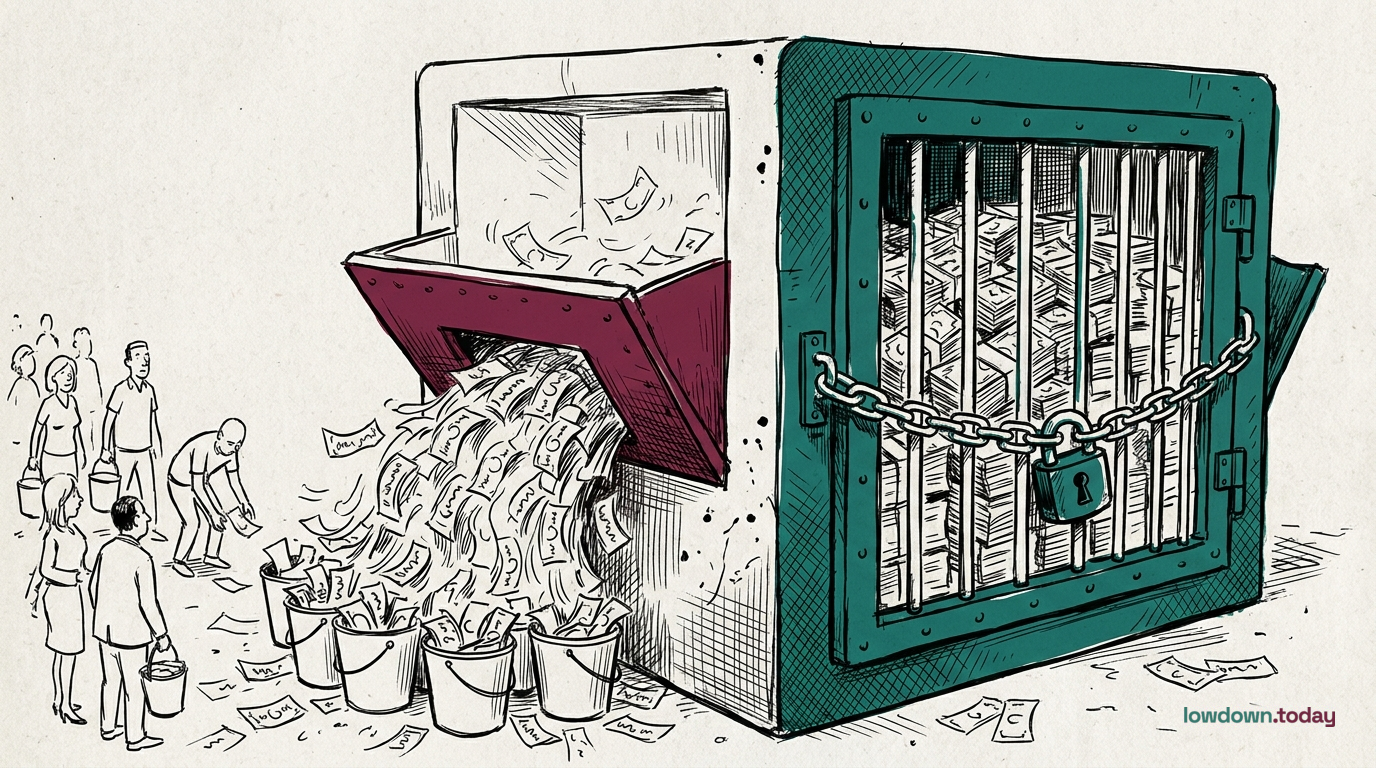
How the money is drafted deserves attention, and the reading that follows is Lowdown's own. We attribute it to no source. The Byrd Rule bars reconciliation from carrying provisions whose budgetary effect is merely incidental to their policy purpose. A federal registration requirement does not ride a budget bill easily on those terms. Money conditioned on a state adopting one has a better claim to being a spending measure, and Congress has run that manoeuvre before: the national drinking age of 1984 was enforced by withholding highway funds, upheld in South Dakota v. Dole. That precedent settles constitutionality, not Byrd compliance, and the two questions go to different people.

Reaching a parliamentarian at all counts as progress for this bill. Senator Kennedy's Budget Act waiver motion fell 48-50 in April with all 53 Republican seats occupied, and House Republicans had already refused to hang the SAVE Act on the defence authorisation bill, 198-224. Reconciliation is what remained after both.

The first gate is therefore an unelected officer applying a drafting test, not a floor count. That officer struck the $15 minimum wage from the American Rescue Plan in February 2021, when the majority had the votes, the vehicle and the political will, and the provision fell anyway.

Deep Analysis

In plain English

'Reconciliation' is a special process that lets the Senate pass certain budget bills with 51 votes instead of the usual 60, but only if every provision is genuinely about spending or taxes, not general policy. The House Budget Committee voted 20-14 on 16 July to advance a budget blueprint carrying $10bn for state election-security grants and $73bn for defence. Because the grants are written as payments to states rather than a direct national voter-ID law, backers hope they will survive a Senate rule, named after the late Senator Robert Byrd, that strips out provisions the Senate's own rules referee decides are not truly budgetary.

Deep Analysis
Root Causes

Reconciliation bills may only include provisions with a budgetary effect that is not 'merely incidental' to policy, a standard the Senate parliamentarian applies case by case. Any voter-ID requirement has to be dressed as spending, specifically state grants conditioned on compliance, rather than a direct mandate, to survive a point of order once it reaches the Senate floor.

That drafting choice matters more than usual this cycle because the floor sits at 51-47 rather than the nominal 53-47, leaving almost no margin to overcome a successful Byrd Rule challenge with a further procedural vote.

What could happen next?
  • Risk

    If the Senate parliamentarian finds the $10bn voter-ID grant provision not 'merely incidental' to the budget, as happened three times to Build Back Better's immigration provisions, it could be struck before a Senate vote regardless of the House committee's approval.

First Reported In

Update #13 · Graham's death strands the SAVE Act route

Roll Call· 17 Jul 2026
Read original →
Different Perspectives
Missouri and Secretary of State Denny Hoskins
Missouri and Hoskins, held in contempt by the state's own supreme court on 10 September for prematurely reverting to HB 1, filed against a pause of the 8th Circuit's order restoring the same 2025 map.
Richard von Glahn and People Not Politicians
Von Glahn and People Not Politicians filed emergency application 26A388 on 22 September asking Justice Kavanaugh to pause the 8th Circuit's order restoring the 2025 map, days after Missouri mailed overseas ballots under the 2022 lines. A refusal to pause it would leave those ballots carrying the wrong districts.
Harmeet Dhillon, Justice Department
Dhillon said the department will send about 1,000 election monitors to Nevada, Pennsylvania and Rhode Island in November, calling it "the biggest DOJ election observer effort in history" and citing "67 election-related indictments and convictions" against 13 under the Biden administration.
National Association for the Advancement of Colored People and co-plaintiffs
The NAACP and eight other groups sued DHS in Washington on 18 September to keep ICE away from polling places, citing federal statutes barring armed officers and troops at elections. The suit follows a released 2025 DHS email listing non-English-language voting jurisdictions beside a Justice Department prosecution checklist.
Cook Political Report
Cook wrote that "the amount of money national Republicans have dedicated to this race is a flashing red light for Democrats" when it moved New Hampshire from Lean Democrat to Toss Up on 15 September, citing the NRSC's $5.18m for Sununu. It is the one state where Republican spending and the rating move the same direction.
Democratic Senate strategists
Strategists note the DSCC held a $37.6m cash lead over the NRSC's $18.7m at the end of August, after coordinating just $1.00m of spending itself. One reading holds the committee is banking that cash for the campaign's final weeks rather than matching Republican spending dollar-for-dollar in August.