Skip to content
You can now search across every topic, entity and event.What's new
US Midterms 2026
4AUG

Voter ID moves into the budget

2 min read
08:56UTC

The House passed its FY2027 budget resolution by two votes on 22 July, carrying $10bn in state voter-ID grants that need 51 Senate votes rather than 60.

PoliticsDeveloping
Key takeaway

Grants to states pursue the voter-ID goal that a direct mandate could not pass.

Ron Johnson was formally named chairman of the Senate Budget Committee on 22 July, eleven days after Lindsey Graham's death vacated the post 1. Majority Leader John Thune had moved to install him within two days of the seat falling empty . The same day, the House of Representatives passed the FY2027 budget resolution 216-214, carrying $10bn in state election-integrity and voter-ID grants alongside $73bn for defence and intelligence and $12bn in farm aid 2. The Budget Committee had cleared the text 20-14 six days earlier .

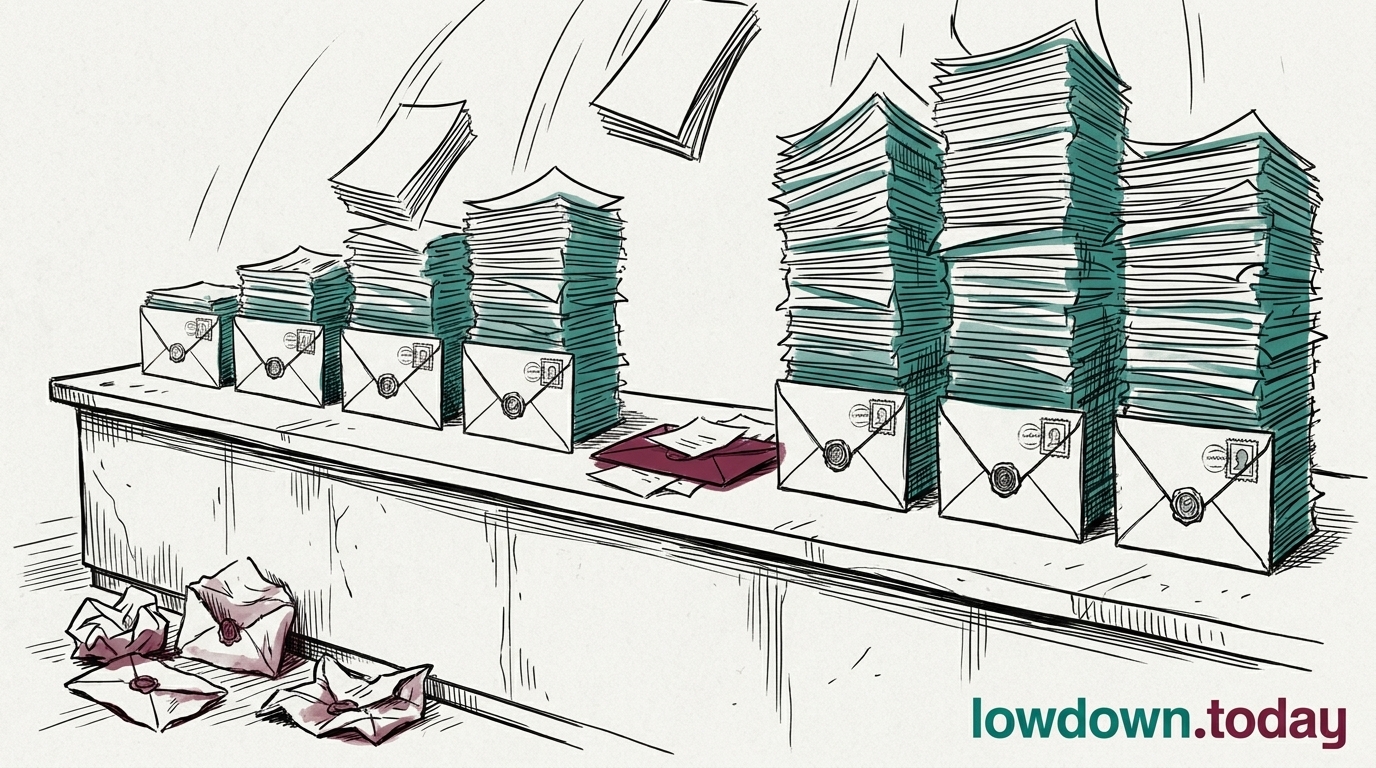
Speaker Mike Johnson has spent the year trying to write documentary proof-of-citizenship requirements into federal law. The Safeguard American Voter Eligibility Act (SAVE Act) went down 198-224 as a defence-bill rider on 30 June , and within days House Republicans moved its substance into reconciliation, the fast-track budget process . Grants do what the mandate could not. Reconciliation clears the Senate on 51 votes rather than the 60 needed to break a filibuster, and money handed to states carries conditions without commanding anything.

The Byrd Rule now decides whether the grants survive. It lets the Senate parliamentarian strike provisions whose budgetary effect is merely incidental to their policy purpose, and a grant programme funding voter-ID infrastructure invites the argument both ways: the outlay is real, but the conditions attached to it are the point of the exercise. No ruling has been made. House conservatives have already said they want Senate Republicans to overrule the parliamentarian if she strikes the provision 3.

That is where the arithmetic bites. Graham's death and Mitch McConnell's hospitalisation cut Republican floor strength to 51-47 , leaving no room for defections on a manoeuvre the Senate has never used on a Byrd point. Thune has spent his leadership resisting precedent changes that a future Democratic majority would inherit, and he is slow-walking the resolution while pursuing a separate bipartisan funding deal 4.

Deep Analysis

In plain English

Congress usually needs 60 votes in the Senate to pass a bill, which Republicans do not have. But a special budget process called reconciliation only needs 51 votes, so long as everything in it is mainly about spending money rather than changing policy. House Republicans failed twice to pass a voter-ID law directly, so they have put $10bn of grants for state voter-ID systems into a budget bill instead. A nonpartisan Senate official, the parliamentarian, can strike anything from that bill that she decides is really a policy change rather than spending, and Republicans are now arguing over whether to overrule her if she does.

Deep Analysis
Root Causes

Reconciliation exists because the ordinary path failed twice: the SAVE Act died as a standalone bill for lack of 60 votes, then died again as a defence-bill rider on 30 June .

Reconciliation bypasses the Senate filibuster by design, requiring only 51 votes, but the Byrd Rule limits what can travel through it to provisions whose primary effect is budgetary rather than a policy change dressed up as spending. Grants to states, unlike a direct mandate, have an unambiguous budgetary effect, which is the structural reason House leaders chose that vehicle for the SAVE Act's goal once the direct legislative route closed .

What could happen next?
  • Risk

    A Byrd Rule strike would remove the $10bn voter-ID grant programme without any floor vote, which is why House leaders are pressing to have the parliamentarian overruled rather than persuaded.

  • Precedent

    Overruling a parliamentarian's Byrd Rule ruling has never been attempted in the Senate, and Thune has spent his leadership resisting the kind of precedent change a future Democratic majority could later use in reverse.

First Reported In

Update #14 · 0-for-17 in court, and the map that held

Roll Call· 26 Jul 2026
Read original
Different Perspectives
Senate Republican leadership
Floor time is finite at 51-47 with a bipartisan funding negotiation running, and a contested procedural fight over grant conditions is not the best use of it this month. Nothing has been abandoned; the resolution keeps its place on the calendar.
South Carolina election administrators
The Commission applied section 7-11-55 as written and certified the field inside the window the statute allowed. Complaints about the compression belong to the legislature, which alone can change the formula.
Rival Republican campaigns
A nine-candidate field and a majority requirement mean nobody wins on 11 August. The endorsement guarantees a place in the runoff, not the seat, and a fortnight of consolidation afterwards is where the nomination is actually settled.
Trump-endorsed campaign operation
The President's endorsement of the interim senator settles the contest, and a former governor rejected by these voters in 2018 does not merit a second hearing. Outside spending against her is money wasted on a nomination already decided.
Senate Budget Committee under Ron Johnson
Johnson, reported to succeed the late Lindsey Graham as Budget chair on 22 July, has a record of opposing reconciliation packages on deficit grounds, a different proposition than his predecessor for carrying the $10bn voter-ID grant through the Senate on 51 votes after the House passed its version 216-214.
NRCC and Republican committee strategists
The NRCC's $92.7m cash on hand outweighs the DCCC's $79.0m by $13.7m even after Democrats out-raised them $37.4m to $35.4m in the second quarter, official FEC filings from 20 July confirmed. Strategists are banking on the reserve gap, not this quarter's receipts, to carry House races.