Skip to content
Briefings are running a touch slower this week while we rebuild the foundations.See roadmap
UK Local Elections 2026
10APR

Rupert Lowe's Party Tests Itself in Great Yarmouth Only

2 min read
18:20UTC

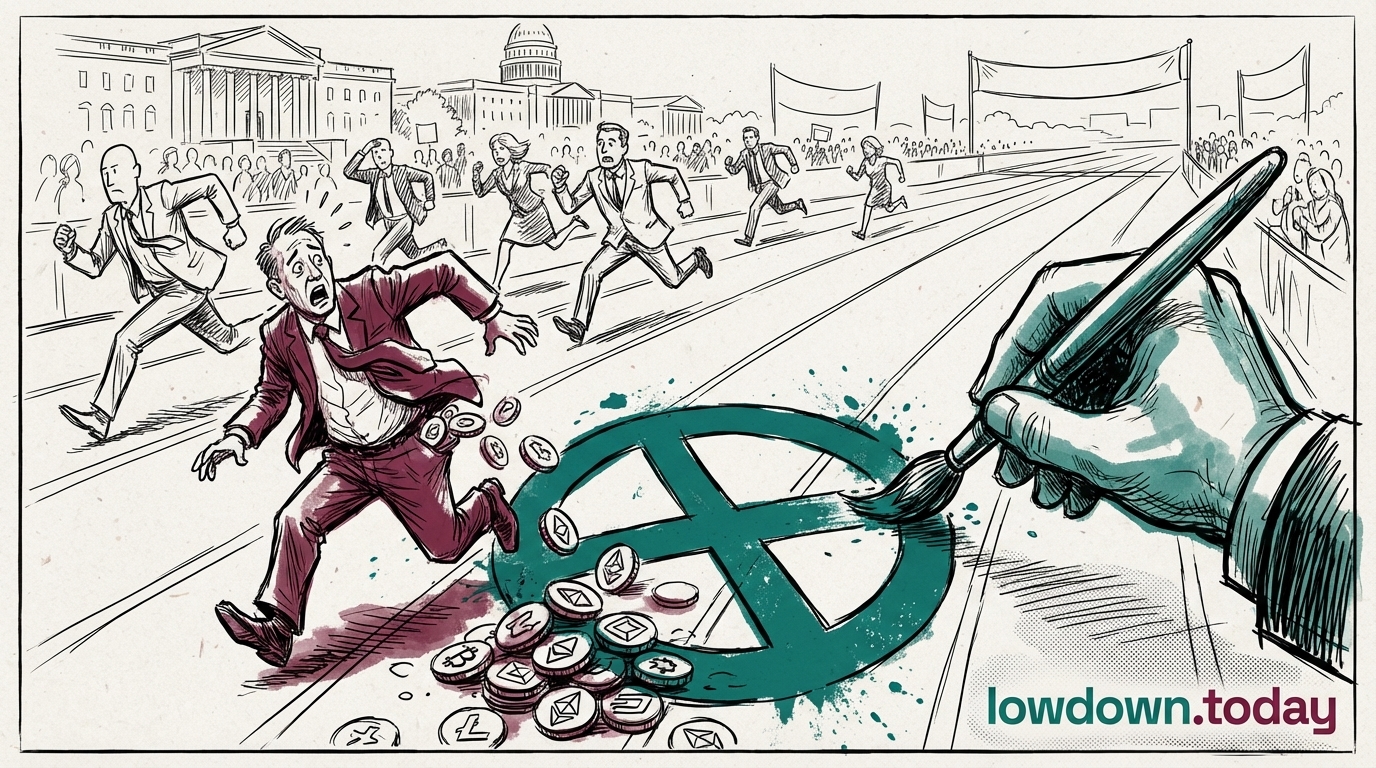
Rupert Lowe's Restore Britain party, launched in February, is fielding candidates only in the Great Yarmouth area as a proof-of-concept for 2028. Seven Kent councillors have defected to the party. It is not trying to win this election; it is trying to demonstrate it can field credible candidates for the next one.

PoliticsDeveloping
Key takeaway

Restore Britain is building 2028 operational infrastructure by contesting 2026, using Great Yarmouth as a proof-of-concept.

Rupert Lowe, a former Reform UK parliamentary candidate who stood down from the party amid internal disputes, launched Restore Britain on 13 February 2026. The party's local election strategy is avowedly limited: candidates only in Great Yarmouth, where the partner local group Great Yarmouth First registered on 4 March. Seven Kent councillors have defected to Restore Britain, providing an elected base that the party did not have at launch.

The explicit framing as a 2028 proof-of-concept is unusual in British party politics. New parties typically contest elections to win them, or at minimum to demonstrate momentum. Restore Britain's public position is that it is using 2026 to test candidate selection, campaign infrastructure, and local government operations before scaling for the next general election cycle. In a first-past-the-post context, this is a rational if unorthodox approach: a single local government beachhead provides legitimacy, operational experience, and press coverage at minimal cost.

The emergence of Restore Britain alongside Reform UK's candidate attrition in Wales points to fragmentation on the populist right that is qualitatively different from the historic UKIP-to-Brexit-Party-to-Reform UK succession. The previous transitions involved a single dominant vehicle absorbing the Eurosceptic/populist voter bloc in sequence. Two simultaneous vehicles, one reformist national and one explicitly replacementist, competing for the same voter pool funded by record donations , creates a splitting problem that benefits every other party. Under FPTP, split votes between Reform and Restore Britain in the same English ward produce Conservative or Labour holds that neither populist party wants.

For Reform UK specifically, Restore Britain's presence is a long-term competitive threat dressed as a short-term curiosity. Lowe's defection gave the new party credibility it could not have purchased; Kent councillors' defections give it a local government base. If 2026 produces even a handful of Restore Britain council seats in Great Yarmouth, the template for 2028 exists.

Deep Analysis

In plain English

Rupert Lowe is a former football club chairman who was briefly a Reform UK MP before falling out with the party. In February 2026, he launched a new party called Restore Britain. Unlike most new parties, Restore Britain is not trying to win this election nationally. It has announced it will only field candidates in the Great Yarmouth area, a coastal town in Norfolk. The idea is to use these local elections as a practice run. By concentrating everything in one place, the party can test whether it can recruit credible candidates, run a campaign, and build local support before attempting to stand candidates across the whole country at the next general election in 2028. Seven councillors from Kent have already defected to Restore Britain, giving the party some elected representatives before it has even fought an election. A local partner group called Great Yarmouth First registered as a formal organisation in March 2026 to work alongside the national party. Restore Britain broadly shares Reform UK's politics on issues like immigration and national identity, but its founder fell out with Nigel Farage's party, so it is positioning itself as an alternative vehicle for voters who are sympathetic to those views.

First Reported In

Update #2 · New Money Rules, Old Party Fractures

Hull Story / GB News / New Statesman· 10 Apr 2026
Read original
Different Perspectives
Welsh Government (Plaid Cymru under Rhun ap Iorwerth)
Plaid's Cardiff minority government relies on Green confidence-and-supply with no written agreement, the same arrangement that collapsed in Scotland in 2023. Green Westminster polling fell from 17% to 15% in two weeks as Greens took governing responsibility; whether that deflation reaches Cardiff is the near-term test for ap Iorwerth's majority.
Reform-run English county councils (Essex, Suffolk, Norfolk)
Essex named a City-trained efficiency lead over a budget where statute has already committed roughly 98% of spend; Suffolk simultaneously issued a pre-action letter against the reorganisation that will dissolve it. Reform-controlled authorities are spending public money on litigation their own sector lawyers expect to fail while their DOGE units face statutory constraints they cannot override.
Scottish Government (SNP under John Swinney)
Swinney rested the 72-55 Holyrood mandate on the combined SNP-Green bloc rather than his own party's 58 seats, seven short of the trigger he named; he has publicly conceded he has no plan if Westminster holds its veto. The constitutional argument is made; the enforcement route does not exist.
UK Government (MHCLG and Downing Street)
MHCLG has until 12 June to respond to Suffolk's pre-action letter and faces three further counties at the same stage; Downing Street rejected Holyrood's Section 30 demand as a spokesperson lobby line rather than a written statement, declining to open formal inter-governmental correspondence. Both decisions compress Reform's two main legal challenges into the same two-week window.
UK Government (Labour)
Westminster framed the youth justice transfer as a culmination of prior work rather than a precedent, refused a Section 30 order before the request arrived, and omitted both the Representation of the People Bill and any Wales Bill from the 13 May King's Speech. Starmer is described as open to a devolved-leaders summit in June.
Reform UK
Reform UK
Essex, Norfolk and Suffolk filed pre-action protocol letters framing their LGR challenge as mandate-consistent, while 22 Reform councillors departed in 14 days at an annualised rate nearly three times the 10 percent projection. Richard Tice defended the Harborne 5 million pound gift as unconditional, with no acknowledgement of Farage's two contradictory accounts on record.