Skip to content
Briefings are running a touch slower this week while we rebuild the foundations.See roadmap
Russia-Ukraine War 2026
18MAR

Trump Extends Hormuz Deadline for Fifth Time

2 min read
11:41UTC

Five deadlines in six weeks, zero enforcement. The coercive mechanism has become diplomatic cover for continued talks.

ConflictAssessed
Key takeaway

Five deadlines, zero enforcement; the threat is now the extension.

The 6 April power-grid deadline was superseded by a 48-hour Hormuz ultimatum, which has now been extended again to Tuesday 8pm ET (8 April). This is the fifth reformulation of the same threat in six weeks.

The pattern: 16 March to 23 March. 23 March to 6 April. 6 April replaced by 48-hour ultimatum expiring 7 April. 7 April extended to Tuesday. Each deadline arrived with escalating rhetoric. None produced action. Trump told Axios the US is in deep negotiations and threatened to blow up everything if no deal by Tuesday. The words are documented. The action is the extension itself.

Coercive diplomacy requires credible commitment to escalation. Five extensions in 42 days is the opposite of credibility. What the pattern reveals is that Trump has no appetite for the energy infrastructure campaign he threatens. Each extension is a policy decision disguised as a tactical pause. Iran's General Aliabadi dismissed Trump as helpless, nervous, unbalanced and stupid. The deadline no longer functions as leverage; it functions as domestic political communication.

The Islamabad Accord's timing is not coincidental. It provides Trump with a potential face-saving exit from the deadline cycle. If the accord gains traction, Tuesday's deadline can be reframed as a diplomatic success rather than a sixth capitulation.


Deep Analysis

In plain English

Trump has threatened to bomb Iran's power grid five times in six weeks and extended the deadline every time. The threats no longer carry weight because Iran knows they will not be acted on. The new peace plan from Pakistan may give Trump a way to step back from the deadlines without looking like he backed down.

Deep Analysis
Root Causes

US coercive diplomacy required credible escalation. Five deadline extensions destroyed that credibility. The gap between rhetoric and action has become the defining feature of US policy in this conflict, creating the diplomatic vacuum Pakistan filled.

Escalation

Mixed. The extension itself is de-escalatory (no strike). But each extension without consequence makes the eventual choice between striking and permanently abandoning the threat more binary. The Islamabad Accord offers a third path.

What could happen next?
  • US coercive credibility in the Middle East is materially damaged for the remainder of this conflict

  • Trump faces growing political exposure from both anti-war and hawkish constituencies

First Reported In

Update #60 · Pakistan's Ceasefire Plan Fills the Vacuum

Time· 6 Apr 2026
Read original
Different Perspectives
North Korea / DPRK
North Korea / DPRK
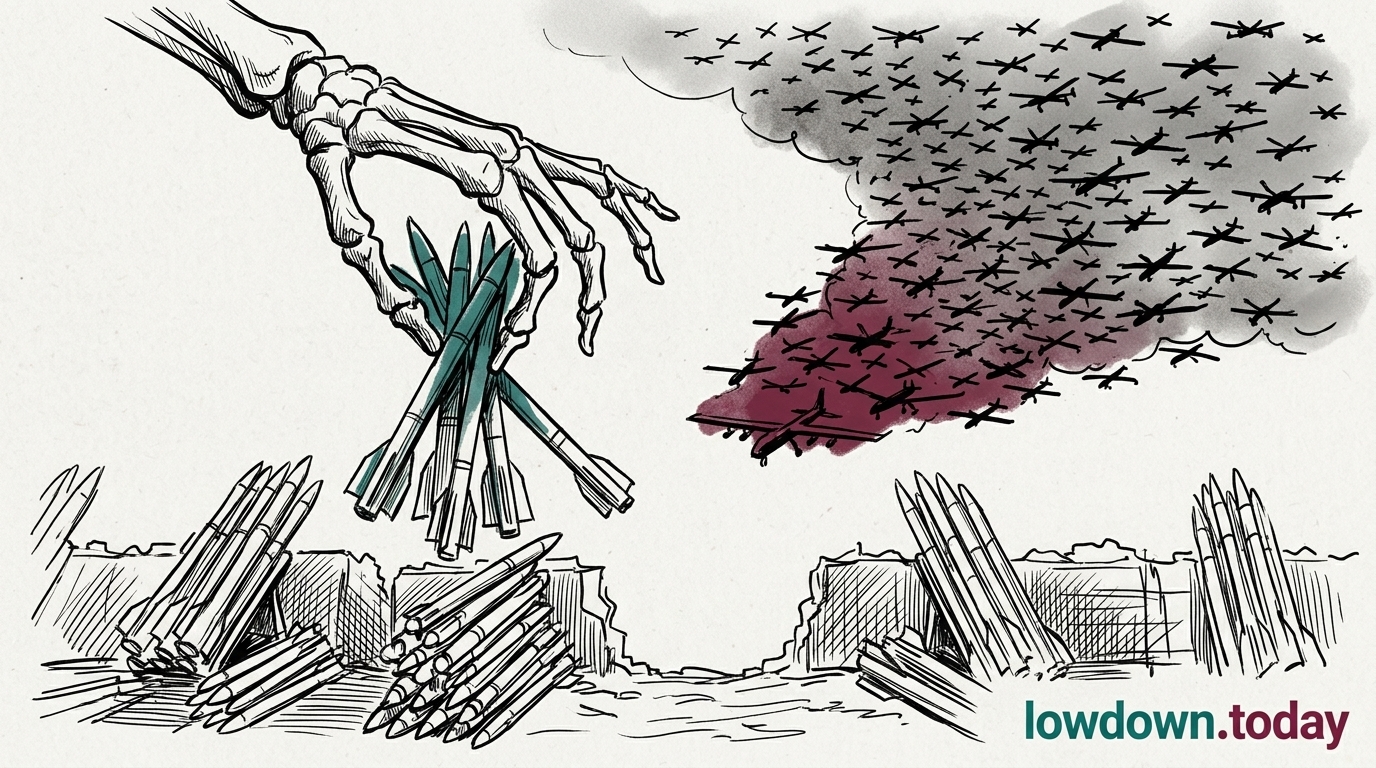
ISW confirmed the first mounting of DPRK Type-75 MLRS on Russian autonomous UGVs near Kharkiv on 7 June, the latest step in a supply axis that escalated from shells in 2023 to troops in 2024. Pyongyang gains live battlefield data on its ordnance and on Russia's uncrewed-systems programme.
IAEA / Rafael Grossi
Grossi confirmed Chornobyl structural damage with nuclear material metres away and could not attribute the ZNPP 15-hour blackout during the agreed repair window. Six ceasefires brokered and broken at ZNPP, compounded by Rosatom's May attack on IAEA neutrality, have eroded his ability to enforce the windows he negotiates.
Emmanuel Macron / France
Macron co-signed the E3 framework whose line-of-contact baseline marks Europe's first formal acceptance that 1991 borders are not the opening position. France's role carries weight because Macron had previously proposed a European force for Ukraine, and the framework's multinational force point is the vehicle for that.
Keir Starmer / E3
Keir Starmer / E3
Starmer, Macron and Merz met Zelenskyy on 7 June and backed a five-point framework taking the line of contact as the talks baseline, conceding roughly one fifth of Ukraine in exchange for a multinational force and frozen assets. With US mediation ended, the NATO Ankara summit on 7-8 July is the next test.
Vladimir Putin / Kremlin
Putin used SPIEF to reject Zelenskyy's summit letter, citing 'elements of rudeness', and repeated the pre-agreed treaty precondition that has frozen every diplomatic round since May. The SPIEF platform's message of investor confidence was punctured by naval fires visible from St Petersburg, which Moscow declined to dispute in scale.
Ukraine / Unmanned Systems Forces
Commander Brovdi confirmed USF units tracked and set fire to Boikyi at Kronstadt, while Code 9.2 struck the Chonhar Bridge the following day. Ukraine is sequencing strikes for rear-area interdiction and political timing rather than ground gains, trading the Baltic Fleet's home base for the logistics squeeze Russia cannot absorb without rationing its own occupied territory.



