Skip to content
You can now search across every topic, entity and event.What's new
Russia-Ukraine War 2026
16JUN

Yara curtailed 25% of European output

4 min read
10:25UTC

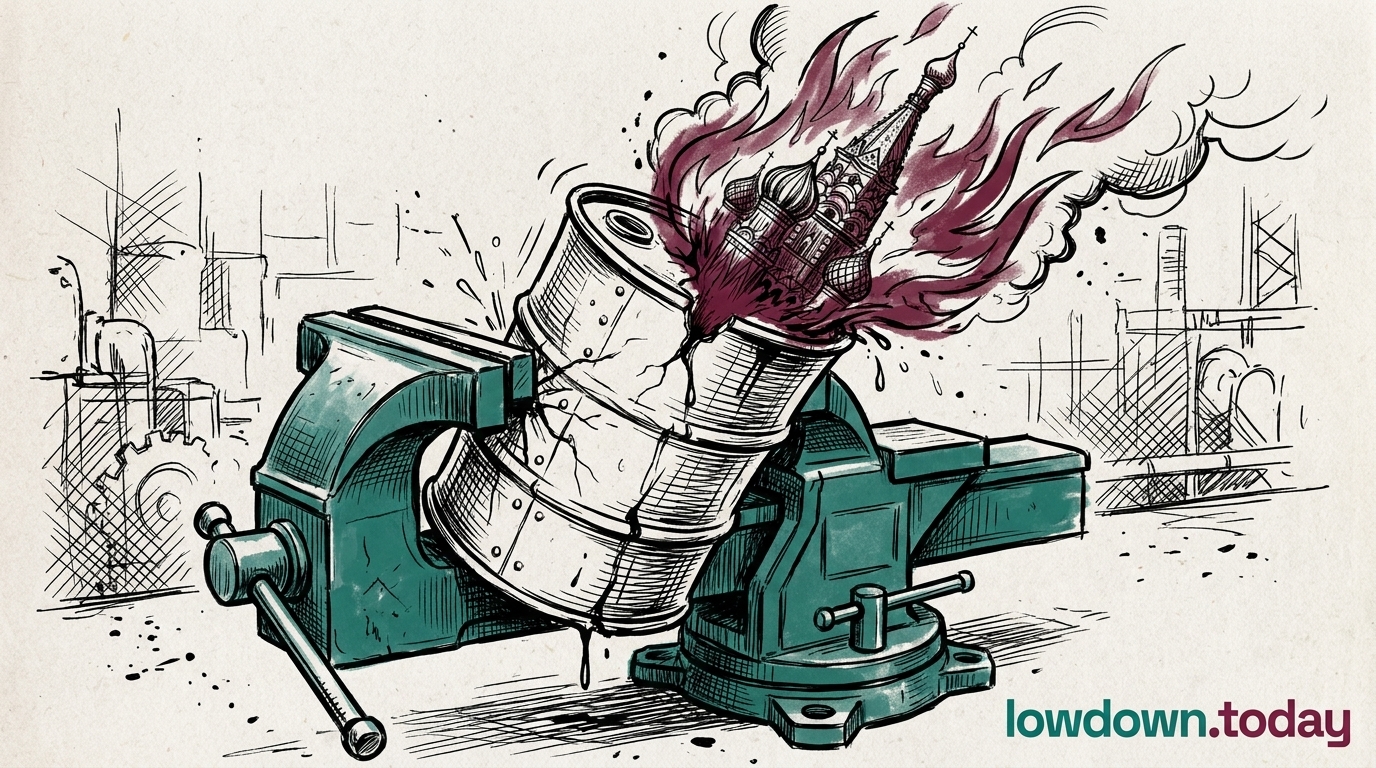
Yara International ran its European fertiliser fleet at 75% of capacity through March 2026, curtailing roughly 25% of European production, with gas accounting for around 80% of variable costs and TTF at EUR 43-47 below the EUR 70 threshold that triggered the 2022 chemical-sector exit.

ConflictDeveloping
Key takeaway

TTF at EUR 47 destroys industrial demand that EUR 70 destroyed in 2022; the threshold has migrated down.

Yara International, the world's largest mineral fertiliser producer, ran its European fleet at 75% of capacity through March 2026, curtailing roughly 25% of European production as gas accounted for around 80% of variable costs 1. Yara is a Norwegian-headquartered fertiliser company with European plants exposed directly to TTF on the marginal molecule; its disclosure was filed alongside the BASF Q1 reporting window.

Cefic data covered earlier in this topic put European chemicals capacity contraction at roughly 9% between 2022 and 2025, with around 20,000 jobs lost; Cefic is the European Chemical Industry Council, the trade body that tracks sector capacity and employment. Yara's 25% March curtailment is the live quarterly read on that running tally. TTF at EUR 43-47 through the curtailment period sat below the EUR 70 ceiling that triggered the 2022 chemical-sector exit, confirming the damage threshold has migrated downward.

Sodir's March print at 10.8 bcm and 349.3 mcm/day showed Norwegian supply tightening , and the broader storage deficit at 35.4% compounds the cost pressure on European industrials. Long-term gas contract premia shifted Europe's structural cost base above competing jurisdictions during 2022-23; Asian and US chemical capacity built into that gap, and the European fleet now competes against younger plants with a structural gas-cost disadvantage that prevailing TTF does not close.

The European nitrogen fertiliser supply tightens into the spring planting window; import dependence on Russian and Trinidadian product rises through Q2. The industries that survived 2022 are still shedding capacity at lower gas prices than the ones that triggered the original exits, which moves the threshold structurally lower for the next round of closure decisions.


Deep Analysis

In plain English

Yara is the world's largest producer of mineral fertilisers, used by farmers to grow crops. Most of Yara's European production uses natural gas as a raw material, which accounts for about 80% of the cost of producing fertiliser in Europe. When gas prices rise, Yara's production becomes more expensive. In the first quarter of 2026, gas prices in Europe were between EUR 43 and 47 per unit. That is high enough to make about 25% of Yara's European plants uneconomical to run. So Yara cut production by a quarter. Instead, European farmers will rely more on fertiliser imported from North Africa, Russia, and the Caribbean, where gas is cheaper. This matters because if European fertiliser production keeps shrinking, Europe becomes more dependent on imports for food production, which carries its own supply-chain risks.

What could happen next?
  • Risk

    If TTF holds at EUR 47+ through the spring planting window, European nitrogen fertiliser imports from Russia and North Africa increase, raising food supply-chain dependence on geopolitically sensitive sources.

  • Consequence

    The EUR 70 curtailment threshold of 2022 has migrated to EUR 47 in 2026 as the surviving fleet absorbs the fixed cost of closed plants; each future gas spike will trigger curtailment at a progressively lower absolute TTF level.

First Reported In

Update #9 · Storage 35% met, 80% trajectory still missed

Yahoo Finance· 12 May 2026
Read original
Different Perspectives
Belgium
Belgium
Belgium blocked outright confiscation of the roughly EUR 210bn in frozen Russian assets held at Euroclear in December 2025, because Euroclear would carry the legal liability. Ukraine has since proposed moving custody to the EU instead.
European Commission
European Commission
The Commission said on 2 September that Ukraine has drawn EUR 3.2bn against an EUR 8.35bn annual target, and that a revenue-mobilisation law stuck in the Rada is one of twelve conditions for the next EUR 3.7bn payment.
Steve Witkoff and Jared Kushner
The US envoys met Putin in Moscow on 5 September and Zelenskyy in Kyiv on 6 September without an announced result from more than three hours of talks. Their mediation continues with no public outcome to show for this round.
Robert Brovdi
Robert Brovdi
Brovdi said on 12 September that his Unmanned Systems Forces struck 285 Russian tankers in ten weeks. His own monthly breakdown sums to 79, and he has given no account of the remaining 206.
Sergei Lavrov
Sergei Lavrov
Lavrov said on 12 September that Russia is ready to negotiate but will not suspend military operations while it does. He treats talking and fighting as compatible policies, ruling out a ceasefire as a precondition for further talks.
Belarus
Belarus
Minsk announced completion of its own 37th Separate Airborne Assault Brigade near Gomel, under plans dating to August 2025 rather than a response to any single frontline event this window, keeping its hedge of hosting the war without formally joining Russia's mobilisation drive.


