Skip to content
You can now search across every topic, entity and event.What's new
Russia-Ukraine War 2026
16JUN

Brent at $73: oil forecast of $150 fails

1 min read
10:25UTC

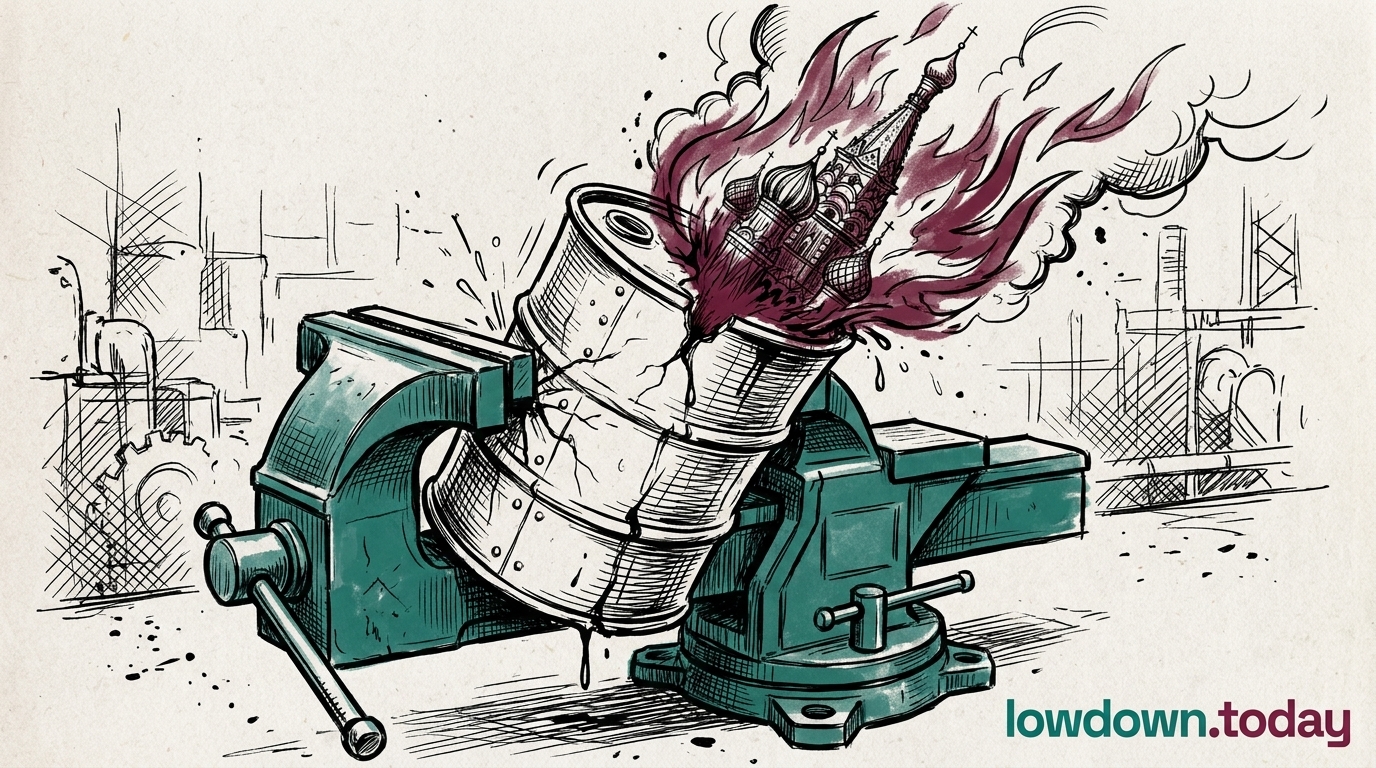
Brent crude stood at approximately $73 per barrel immediately before the 28 February 2026 strikes, with analysts forecasting a rise to $80–100 — well below the $150–200 predicted in earlier modelling — as markets priced partial, reversible Hormuz disruption rather than a formal blockade.

ConflictDeveloping
Key takeaway

Markets priced an $80–100 oil range on 28 February because they assessed Hormuz disruption as partial and reversible — the $150–200 scenario remains a live tail risk conditional on Iranian naval interdiction or prolonged conflict.

The pre-strike $150–200 oil price forecast rested on two assumptions: that Iran would execute a formal Hormuz blockade using mining and naval interdiction, and that the conflict would persist long enough for physical supply to be severely constrained. Neither condition materialised on 28 February. Iran's response comprised ballistic missile strikes, not naval interdiction; tanker avoidance is voluntary and reversible; and Saudi Arabia retains spare production capacity to partially offset any Gulf supply disruption.

A rise from $73 to $80 represents a 10% increase. At $100, the increase is 37% — still inflationary but below the recession-triggering threshold implied by $150–200 modelling. At $100, European economies already managing the energy cost legacy of the Russia-Ukraine war face additional pressure, as do emerging markets with dollar-denominated energy import bills. The Bloomberg tanker-avoidance reporting and Euronews analyst consensus both point to the $80–100 range as the February 28 baseline estimate.

The $150–200 scenario remains a live tail risk rather than a falsified prediction. It materialises if the conflict extends to include Iranian naval action in Hormuz, prolonged tanker avoidance beyond two to three weeks, or destruction of Saudi or UAE production infrastructure. Markets are pricing a shorter and more contained conflict than the worst-case scenario assumed — not ruling out further escalation.


What could happen next?
  • Meaning

  • Meaning

First Reported In

Update #2 · Five cities struck on opening night

Centre for Research on Energy and Clean Air (CREA)· 28 Feb 2026
Read original
Causes and effects
This Event
Brent at $73: oil forecast of $150 fails
The more modest oil price forecast relative to pre-strike predictions suggests markets assessed Iranian oil infrastructure damage and Hormuz risk as manageable in the short term.
Different Perspectives
Belgium
Belgium
Belgium blocked outright confiscation of the roughly EUR 210bn in frozen Russian assets held at Euroclear in December 2025, because Euroclear would carry the legal liability. Ukraine has since proposed moving custody to the EU instead.
European Commission
European Commission
The Commission said on 2 September that Ukraine has drawn EUR 3.2bn against an EUR 8.35bn annual target, and that a revenue-mobilisation law stuck in the Rada is one of twelve conditions for the next EUR 3.7bn payment.
Steve Witkoff and Jared Kushner
The US envoys met Putin in Moscow on 5 September and Zelenskyy in Kyiv on 6 September without an announced result from more than three hours of talks. Their mediation continues with no public outcome to show for this round.
Robert Brovdi
Robert Brovdi
Brovdi said on 12 September that his Unmanned Systems Forces struck 285 Russian tankers in ten weeks. His own monthly breakdown sums to 79, and he has given no account of the remaining 206.
Sergei Lavrov
Sergei Lavrov
Lavrov said on 12 September that Russia is ready to negotiate but will not suspend military operations while it does. He treats talking and fighting as compatible policies, ruling out a ceasefire as a precondition for further talks.
Belarus
Belarus
Minsk announced completion of its own 37th Separate Airborne Assault Brigade near Gomel, under plans dating to August 2025 rather than a response to any single frontline event this window, keeping its hedge of hosting the war without formally joining Russia's mobilisation drive.


