Skip to content
Welcome, thoughtbot's Giant Robots listeners!Start here
Russia-Ukraine War 2026
9JUN

Sea drones push into the Black Sea

2 min read
11:54UTC

Ukraine's maritime drone campaign left the Sea of Azov overnight on 15 July under the name Operation MoLoChKa, hitting 20 vessels in a single night.

ConflictDeveloping
Key takeaway

Shadow-fleet anonymity defeats sanctions enforcement and leaves those same ships with nobody to defend them.

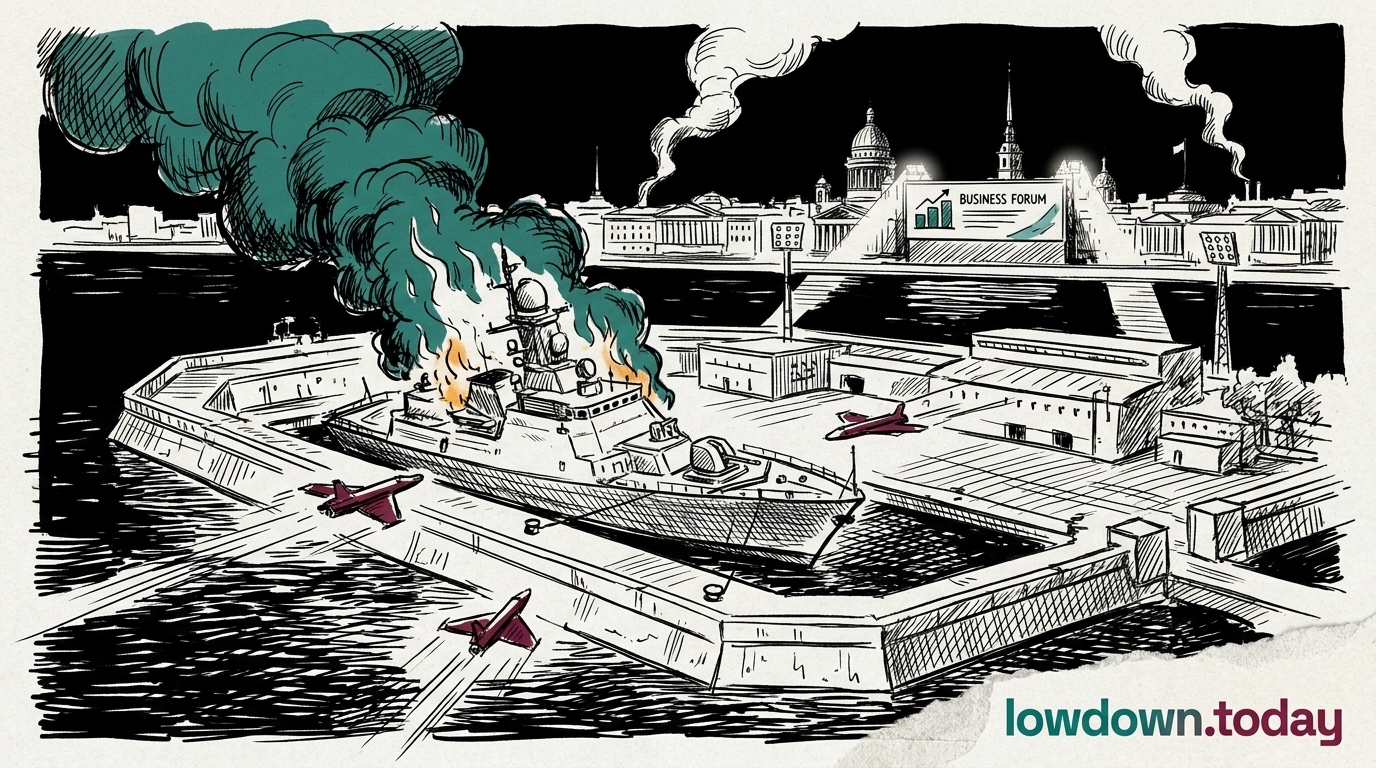
Ukraine's maritime drone campaign moved out of the Sea of Azov and into the Black Sea overnight on 15 July, under the name Operation "MoLoChKa", striking 20 vessels in one night: 17 oil tankers, two gas tankers and a tugboat⁠1. Two of the named targets, the Louise 1 and the Banda, were running dark on AIS, the automatic identification system merchant ships are required to broadcast, while carrying Russian crude in breach of the price cap set by the G7 group of industrial democracies and the EU. An SBU Sea Baby uncrewed boat had hit the tanker Blue near Yalta a week earlier, on 8 July. The Unmanned Systems Forces struck twelve more vessels on 17 July, taking the 6 to 17 July total to 159 shadow-fleet vessels across both seas⁠2.

Eleven days before the expansion, the same campaign was a chokepoint tactic confined to the Azov, where it cut tracked traffic by 55%. The Azov is shallow, narrow and effectively closed; the Black Sea is neither, and holding vessels at risk across it demands range and endurance the Azov operations never had to demonstrate.

The G7 and EU price cap runs on insurance certificates and port-entry checks, and a tanker that switches off its transponder, reflags through a shell registry and transfers cargo ship-to-ship outside territorial waters encounters none of them. Sea drones do not need to establish ownership before they arrive. The harder a vessel works at being untraceable, the fewer parties can be identified to protect it, and opaque ownership stops being cover and starts being exposure.

Deep Analysis

In plain English

Ukraine has been using naval drones to attack tankers that carry Russian oil while avoiding Western sanctions. This campaign expanded from the smaller Sea of Azov into the much larger Black Sea overnight on 15 July, under the name Operation MoLoChKa, hitting 20 vessels in a single night. Twelve more were struck two days later, taking the running total to 159 ships hit between 6 and 17 July. The tankers being targeted are part of what is often called Russia's "shadow fleet": ageing ships that turn off their tracking signals and use flags of convenience to keep moving Russian oil to buyers despite the price cap Western governments have imposed. By hitting them directly, Ukraine is making that trade physically dangerous rather than only illegal on paper.

First Reported In

Update #24 · Fedorov sacked as the front stands still

Militarnyi· 19 Jul 2026
Read original →
Causes and effects
Different Perspectives
South Korean foreign ministry
Seoul said on 20 October it will withdraw some Kyiv embassy staff, citing no constructive steps from Kyiv since it recalled its ambassador over the disclosure of two North Korean prisoners. A chargé d'affaires and consular staff stay, and Seoul says its aid continues.
Alexander Lukashenko
Lukashenko said on 22 October that talks with the US show progress despite problems, which he said were highlighted with the exchange of political prisoners for the lifting of sanctions. He said Minsk keeps its promises and wants the US to deliver its side in full.
Moldovan government (Daniella Misail-Nichitin)
Moldova has pulled its border guards and customs officers from four crossings on Ukrainian soil after Russian strikes near the border. Interior Minister Daniella Misail-Nichitin said Chisinau is weighing moving Ukrainian checkpoints onto Moldovan territory.
Péter Magyar
Péter Magyar
Magyar told RTL that Ukrainian maize may cross Hungary in sealed trains bound for Western Europe. He set one condition: the cargo must only transit the country.
Donald Tusk
Donald Tusk
Tusk said Warsaw would seek an explanation from Kyiv for the drone's route across Poland. He said Poland allows no operations over its territory without its explicit consent.
Mindaugas Sinkevičius
Lithuania's prime minister said the Ukrainian drone that exploded in Pasvalys district on 18 October carried explosives and entered from Poland through the Schengen zone. Earlier drones over Lithuania had come from Belarus, not through allied airspace.

Written with AI from Lowdown's published reporting. Not individually reviewed by an editor. Editorial standards.