Skip to content
You can now search across every topic, entity and event.What's new
Russia-Ukraine War 2026
24APR

WTI flips to +172,580 net long

3 min read
11:21UTC

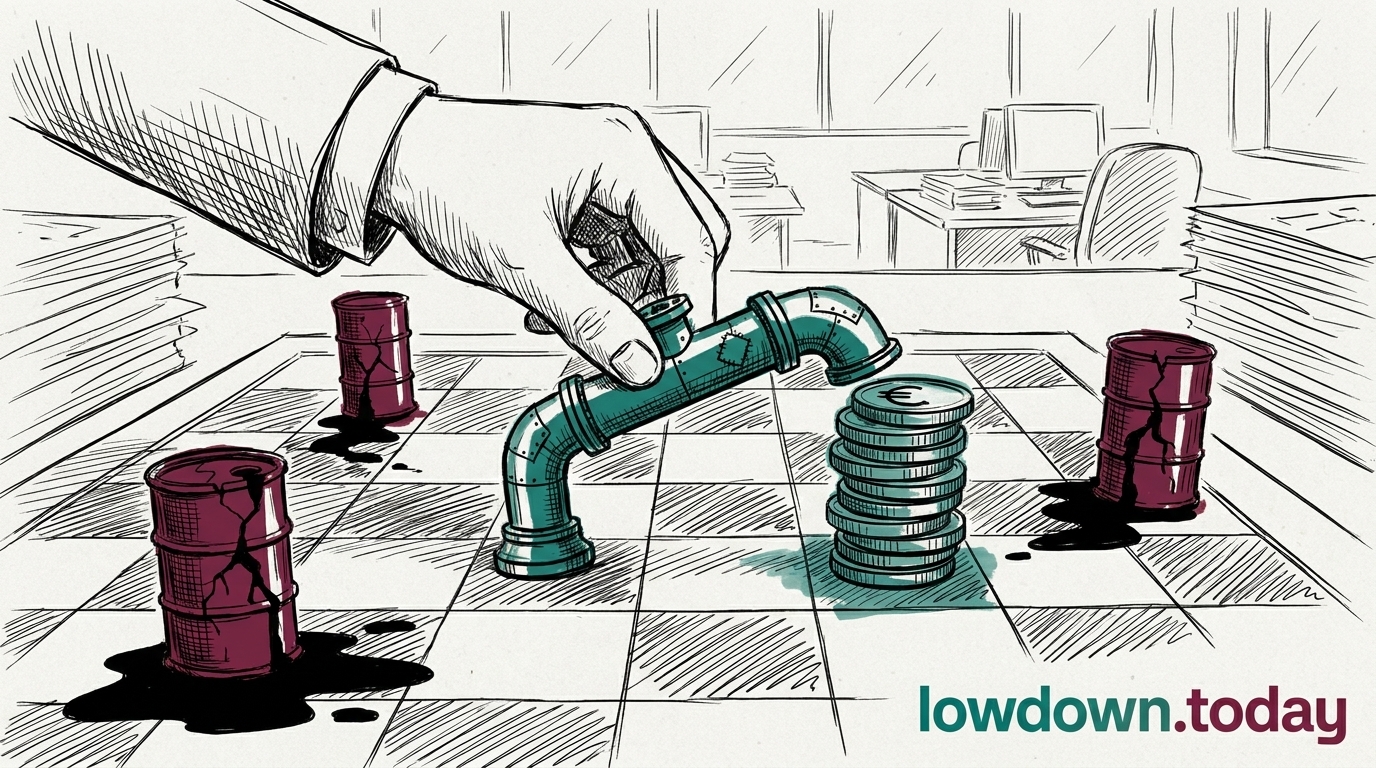
CFTC Commitments of Traders for 19 May put NYMEX WTI non-commercial net long at +172,580 contracts, a 177,000-contract swing in three weeks that the Iran MOU then carried out four sessions later.

ConflictDeveloping
Key takeaway

WTI longs piled in on a supply story before the deal; the MOU then carried the offside position out.

CFTC Commitments of Traders for 19 May put NYMEX WTI-Physical non-commercial net long at +172,580 contracts, against net short -4,723 on 28 April 1. That prior short was the starting point logged in the 12 May report ; the swing since is roughly +177,000 contracts in three weeks. Brent Last Day went the other way, flipping to net short -24,966 from a prior +58,259, so the two benchmarks that normally track each other split hard 2.

The build is dated 19 May. The MOU landed four sessions later on 23 May. The crowd rotated max-long WTI on its own logic, the 7.9mb US crude draw and 134C legitimising Russian supply, not on any Iran headline. The deal punished a position already set; it did not create it. Reading the inversion as MOU-driven inverts the causation and mistimes the unwind risk.

The deleveraging has started: WTI open interest fell 78,977 week-on-week 3. The 29 May COT is the tell on how violent the carry-out runs once the $14 drop hits the offside length. On products, the compressing Brent-WTI keeps European gasoline in basin: TC2 sat around WS230 and $19,300/day on 7 May, and that arb stays shut at this spread, which traps EBOB length on the Continent.

Deep Analysis

In plain English

Every week, the US futures regulator publishes a snapshot of who is betting which way on oil prices. On 19 May, that snapshot showed something striking: traders had shifted from betting oil prices would fall to a very large bet that prices would rise, all within three weeks. About 177,000 extra contracts swung from 'short' (expecting prices to fall) to 'long' (expecting prices to rise) on US crude. This build-up happened before Trump's Iran announcement and was fuelled by a big drop in US oil stockpiles and confidence that Russian oil shipments were legally protected. When the Iran news arrived on 23 May, those bets were suddenly caught on the wrong side of a falling market.

Deep Analysis
Root Causes

Two independent signals converged to drive the ~177,000-contract WTI repositioning. First, the 7.9mb US crude draw to 445mb (EIA, week to 15 May) signalled domestic refinery demand running ahead of import replenishment ; a fundamentals-based case for WTI long.

Second, GL 134C's 18 May reinstatement resolved the compliance-risk overhang that had kept managed money short WTI: when in-transit vessel cover was uncertain post-GL 134B, the trade was short WTI (domestic supply at risk) / long Brent (Atlantic-basin disruption premium). GL 134C closed that trade.

The Brent side inverted simultaneously: ICE Brent Last Day non-commercial flipped to net short -24,966 from net long +58,259, a reversal of ~83,000 contracts. This is the Brent long being unwound as the Atlantic-basin disruption premium from Hormuz closure deflated ; a two-leg rotation, not a unidirectional move.

What could happen next?
  • Risk

    A net long of +172,580 WTI contracts (19 May) that started deleveraging before the Iran MOU implies the unwind was incomplete; next COT release (29 May, for 27 May positions) will confirm whether the remaining long was forced out on the $14 decline or held.

  • Consequence

    Brent-WTI compression to $1-2 from the prior $4-5 shuts the TC2 transatlantic gasoline arbitrage, trapping EBOB supply in the European basin and softening NWE gasoline barge premiums.

First Reported In

Update #2 · GL 134C reverses the cliff, Brent -$14

CFTC· 26 May 2026
Read original
Different Perspectives
Turkey
Turkey
Turkey, a major buyer of Russian diesel cargoes, loses that access under Moscow's first producer-binding export ban, in force from 8 July to 31 July. Ankara hosted the same week's NATO summit pledging EUR 70bn to Ukraine, sitting on both sides of the fuel-and-alliance ledger.
NATO
NATO
NATO leaders meeting in Ankara on 7 and 8 July pledged EUR 70bn in equipment, assistance and training for Ukraine across 2026, with a 2027 sustainment commitment and a $40bn Drone Edge counter-drone initiative. European allies now fund the vast majority of that package, filling the gap left by Washington's idled crude waiver.
India
India
India's state refiners continued buying discounted Urals crude as June's price fell to $63.18 a barrel, insulating New Delhi from the OFAC waiver gap still constraining Western buyers. Indian refiners could pick up diesel-export share as Russia's producer-binding ban shuts out its former customers.
China
China
China's independent refiners kept importing discounted Urals crude through June as the price fell to $63.18 a barrel, down 26% month-on-month per CREA. Beijing has said nothing on Moscow's new diesel ban, leaving Chinese refiners a likely beneficiary if Turkish and Brazilian buyers seek replacement cargoes.
United States
United States
No successor licence has been issued since General License 134C lapsed on 17 June, leaving a 26-day gap, the longest of the war, in the Russian crude waiver. Washington's silence is tightening the channel without any stated decision, as Treasury weighs whether to let it die.
Ukraine
Ukraine
Ukraine's long-range strike campaign shifted from refineries to seaborne fuel tankers crossing the Sea of Azov, cutting tracked vessel traffic 55% between 30 June and 11 July, per Starboard Maritime Intelligence. The shift targets Russia's export revenue directly rather than just domestic supply, adding pressure alongside the collapsing Urals price.
