Skip to content
Briefings are running a touch slower this week while we rebuild the foundations.See roadmap
Russia-Ukraine War 2026
24APR

Pakistan Hormuz deal: 40 ships of 2,000

2 min read
11:21UTC

Islamabad secured passage for 20 more vessels, but the deal covers a fraction of the queue and preserves Iran's legal claim over the strait.

ConflictDeveloping
Key takeaway

Pakistan's Hormuz deal reinforces Iran's sovereignty claim while covering under 2% of stranded vessels.

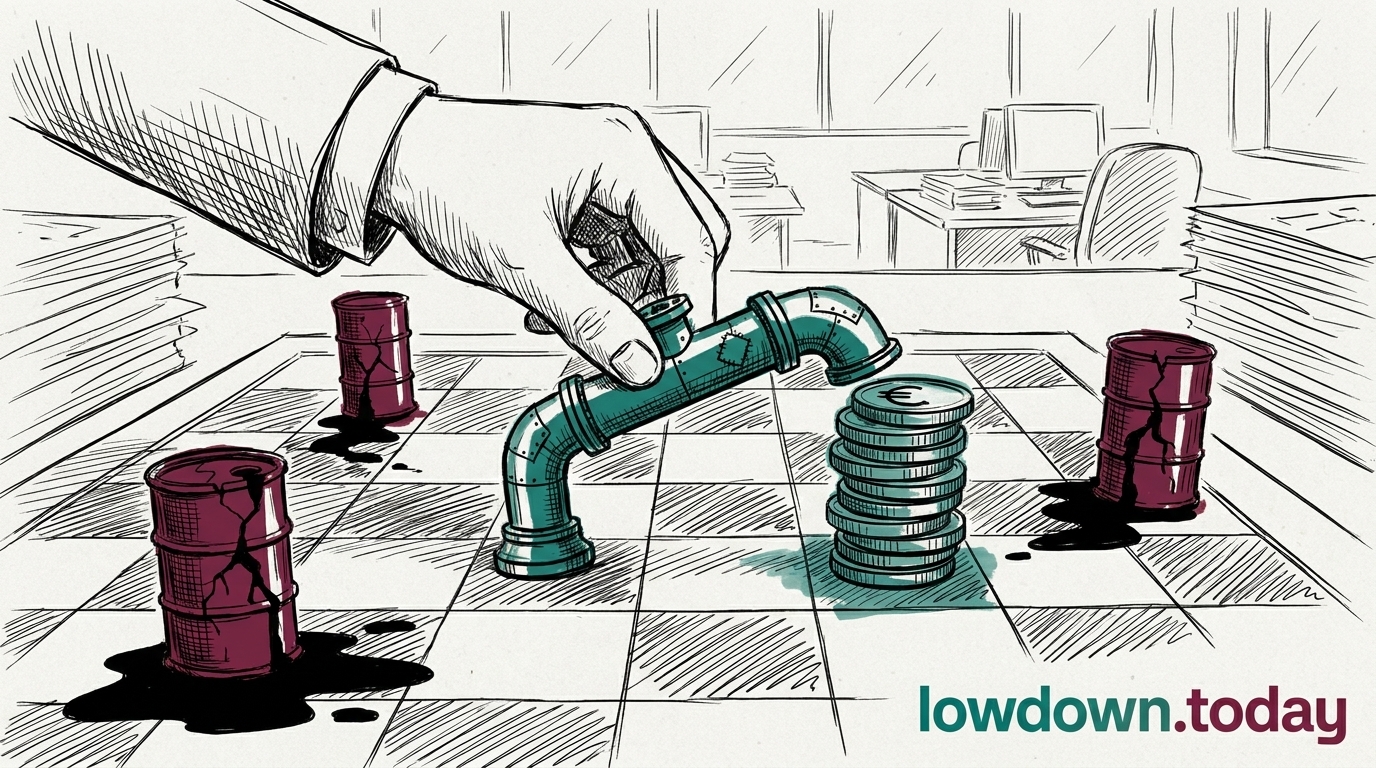
Pakistan secured a second bilateral deal with Iran: 20 more vessels at two per day, bringing the total to approximately 40 Pakistani-flagged ships 1. Iran's state media framed it as a bilateral arrangement, not a concession on Hormuz sovereignty. Against approximately 2,000 stranded ships , 40 vessels represents less than 2% of the queue.

Prime Minister Shehbaz Sharif held what Pakistani officials described as "extensive discussions" with Iranian President Masoud Pezeshkian. Finance Minister Ishaq Dar called the deal a "harbinger of peace." It is not. Every bilateral deal reinforces Tehran's leverage by demonstrating that Hormuz passage now flows from Iranian permission, not international law. Each agreement concedes the premise that Iran controls the strait .

Deep Analysis

In plain English

The Strait of Hormuz has about 2,000 ships stuck waiting to pass through. Pakistan negotiated a deal to get 40 of its own ships through, two per day. That is less than 2% of the queue. The deal is significant not for the ships it moves but for what it implies: Pakistan accepted that Iran's permission is required to transit an international waterway. International law says Iran has no right to charge that toll or require that permission. Every bilateral deal like this one makes it slightly harder to argue that Iran is violating international law, because sovereign states are effectively recognising Iran's authority by asking for its approval.

First Reported In

Update #51 · Iran hits aluminium plants; Hormuz emptying

PressTV· 29 Mar 2026
Read original
Different Perspectives
EU Council / European Commission
With Orban's veto lifted and Magyar's Tisza government not placing a replacement block, the European Commission is signalling the first 90 billion euro Ukraine loan tranche for late May or early June 2026. Disbursement depends on Magyar's 5 May government formation proceeding to schedule.
Germany
Germany
Russia's Druzhba northern branch transit halt from 1 May removes one of Germany's residual non-Russian crude supply options. The timing compounds Berlin's exposure in the same week Ukrainian strikes drive Russian refinery throughput to its lowest since December 2009.
IAEA / Rafael Grossi
Grossi confirmed the Zaporizhzhia Nuclear Power Plant lost external power for its 14th and 15th times within a single week in late April, with the Ferosplavna-1 backup feeder damaged 1.8 km from the switchyard. He was negotiating a further local ceasefire; the previous IAEA-brokered repair lasted less than a week.
Japan
Japan
Japan authorised direct PAC-3 exports to the United States on 30 April, breaking its post-1945 arms export restrictions to replenish Iran-war-depleted US stockpiles. The White House global Patriot export freeze remains in place; Japan's historic policy shift benefits US readiness without reaching Ukraine.
Kazakhstan
Kazakhstan
Russia's Druzhba northern branch transit halt from 1 May cuts Kazakhstan's access to the German crude market. Astana routes most of its export crude through Russian infrastructure, meaning Moscow's unilateral decision directly constrains Kazakh export diversification despite Kazakhstan's stated neutrality on the war.
Péter Magyar / Tisza Party / Hungary
Magyar targets 5 May for government formation ahead of the 12 May constitutional deadline. Orbán lifted the EU loan veto before leaving office; Magyar supports Hungary's opt-out but has not placed a new veto, leaving the first 90 billion euro tranche on track for late May disbursement.
