Skip to content
Briefings are running a touch slower this week while we rebuild the foundations.See roadmap
Russia-Ukraine War 2026
16APR

Majlis codifies Hormuz toll in law

2 min read
14:27UTC

The blockade that began as a military measure is becoming domestic legislation, with projected revenues reaching $800 million per month.

ConflictDeveloping
Key takeaway

Iran is converting a wartime blockade into permanent law, making reversal a sovereignty question.

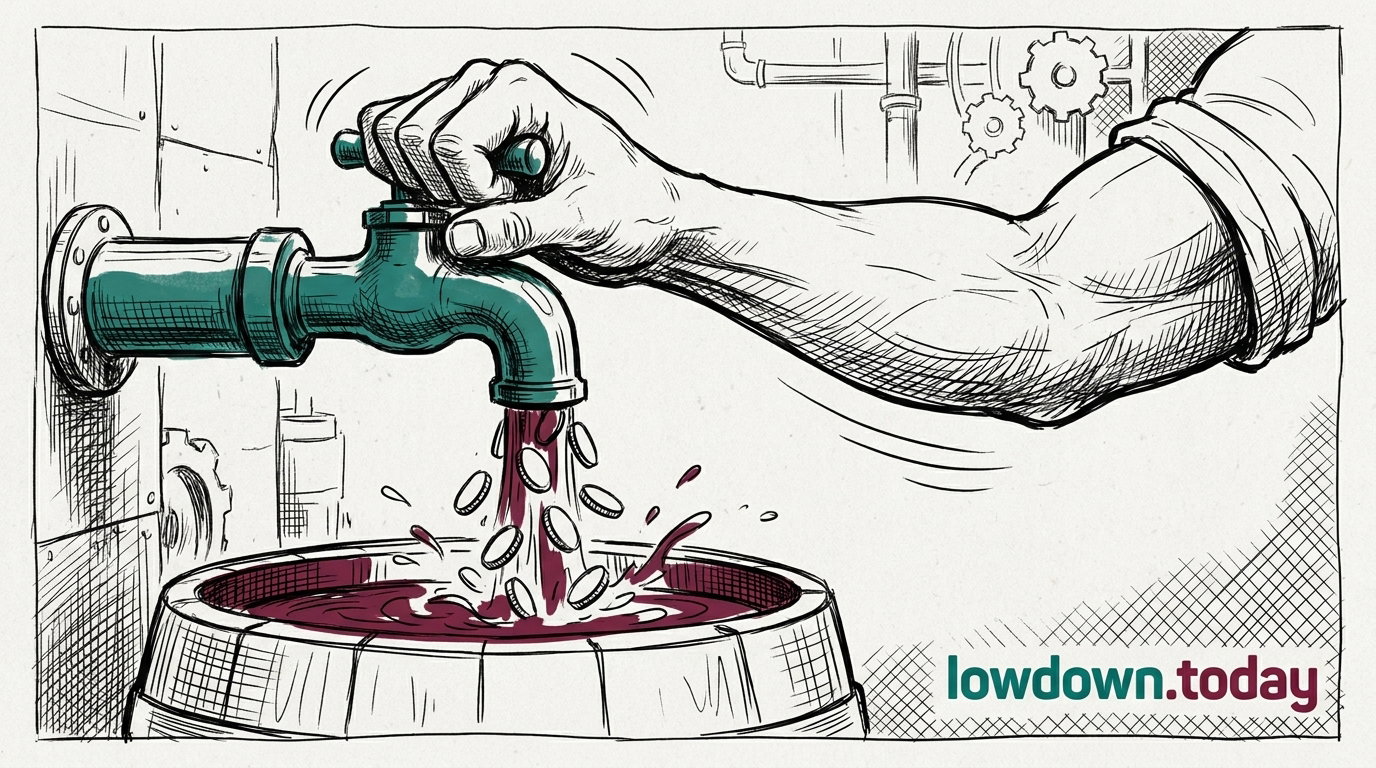
Iran's Majlis began drafting legislation on 31 March to codify the IRGC's Hormuz toll into permanent domestic law. 1 A vote was expected before the end of March but cannot proceed until Parliament reconvenes. At projected scale, revenue estimates reach $600 million to $800 million per month from oil tankers and LNG carriers combined.

The legislative step matters because it changes the nature of what the toll is. An operational wartime measure can be reversed by the military that imposed it. A law can only be reversed by the Parliament that passed it, with Guardian Council approval, after a political process that no Iranian politician has incentive to initiate. Shadow fleet vessels already account for 80% of Hormuz transits , and the toll is being paid by state-backed Chinese container ships. The infrastructure is built. Legislation is the lock.

The last time a state imposed transit fees on a major international waterway was the Ottoman Empire's Bosphorus tolls, abolished by the 1936 Montreux Convention. Iran's version is being codified in real time during an active war. The NPT withdrawal bill remains frozen in the same parliament : the Majlis has not sat in 31 days, with no reconvening date announced. When it does sit, both bills advance simultaneously.

Deep Analysis

In plain English

Iran's parliament is writing a law to permanently charge ships a toll to cross the Strait of Hormuz. The law has not passed yet because parliament has not met in over a month. The difference between a wartime toll and a permanent law is significant. A wartime toll can end when the war ends. A law can only be changed by parliament, which means it could last for decades regardless of how the war ends. The last time a country charged transit fees on a major international waterway was the Ottoman Empire, which charged Bosphorus tolls until a 1936 international agreement abolished them. Iran is trying to do the same thing in 2026.

What could happen next?
  • Precedent

    If enacted, this would be the first domestic law codifying a sovereign charge on an international strait in modern maritime history, challenging UNCLOS innocent passage rights.

    Long term · 0.85
  • Consequence

    Reversing the toll post-war becomes a sovereignty dispute requiring treaty revision rather than a military question, making it functionally permanent.

    Medium term · 0.8
  • Risk

    When parliament reconvenes, both the toll bill and the NPT withdrawal bill advance simultaneously, presenting the international community with two irreversible legislative facts at once.

    Short term · 0.7
First Reported In

Update #53 · Trump drops Hormuz goal; toll becomes law

NBC News / Lloyd's List· 31 Mar 2026
Read original
Different Perspectives
China
China
Beijing has not publicly commented on the dual Oreshnik launch. China's declared position of urging restraint and dialogue sits awkwardly alongside its continued economic ties with Russia; the weapons escalation tests whether Beijing's neutrality framing can survive a European IRBM normalisation event.
IAEA
IAEA
Director General Grossi condemned the ZNPP reactor-6 turbine building strike and stated "there should be no attack of any kind from or against the plant." The agency confirmed normal radiation levels but has not resolved attribution; Rosatom CEO Likachev warned the region is "one step closer to an incident."
Turkey
Turkey
Ankara hosted Istanbul Round 2 at Ciragan Palace on 2 June and secured a 1,200-for-1,200 prisoner exchange, consolidating Turkey as the war's sole diplomatic venue after Rubio confirmed US mediation has ended. Erdogan's leverage over both parties grows with each round.
European Union
European Union
EU Ambassador Mathernova answered Lavrov's evacuation demand with "We stay in Kyiv. We stay with Ukraine." The Verkhovna Rada approved the EUR 90bn EU loan on 28 May; the EUR 9.1bn first tranche, the EU's first explicit defence-procurement financing, arrives mid-June.
United States
United States
Rubio declared US mediation stagnated on 22 May and confirmed no talks were occurring, then received Lavrov's evacuation demand three days later without ordering embassy drawdown. Washington's leverage now runs through the GL 134C sanctions cliff on 17 June rather than any active diplomatic channel.
Ukraine
Ukraine
Zelenskyy called Russia's 2-3 day ceasefire counter-offer at Istanbul Round 2 "shortsighted" and submitted a full peace memorandum covering EU membership, international guarantees, phased sanctions relief and frozen-asset reparations. Kyiv's position is that a partial ceasefire freeze aids Russian reconstitution; only an all-domain 30-day pause is acceptable.
