Skip to content
Briefings are running a touch slower this week while we rebuild the foundations.See roadmap
Russia-Ukraine War 2026
11APR

Magyar cabinet formed; €9.1bn tranche June

2 min read
16:48UTC

Péter Magyar's cabinet formed on 12 May 2026; the incoming foreign minister pledged Hungary will stop abusing EU veto rights, and the €9.1 billion first tranche is now confirmed for early June.

ConflictDeveloping
Key takeaway

Magyar's 12 May cabinet formation removes the structural Hungary veto, putting the €9.1bn first tranche on an early-June disbursement schedule.

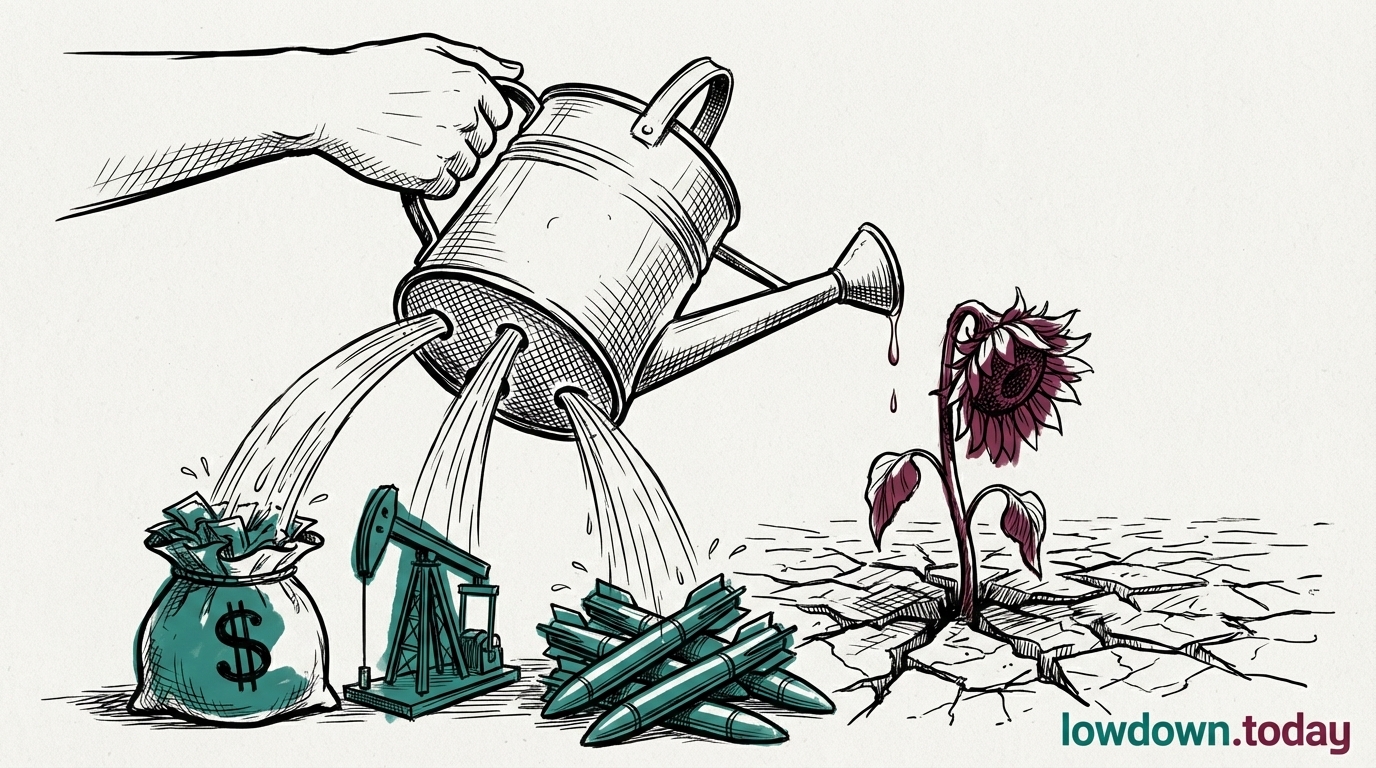
Péter Magyar formed his cabinet on 12 May 2026, completing the government formation that followed his party's 137-seat two-thirds supermajority victory on 12 April 1. The incoming foreign minister pledged that Hungary will stop abusing EU veto rights 2. The €9.1 billion first tranche, comprising €5.9 billion military aid and €3.2 billion budget support, is now confirmed for early June, sliding from the late-May window previously expected.

Magyar had targeted 5 May for government formation , missing that self-set target before completing cabinet on 12 May. The constitutional assembly session on 9 May had set the stage . Hungary's exclusion from EU joint borrowing, a consequence of its prior veto posture, means it opts out of the financial obligations of the €90 billion package while not blocking the remaining 26 member states from proceeding.

The disbursement mechanics require three steps after Hungary's formal position change: the European Commission finalises its three-document coordination package, the EU Council re-stages its vote, and the tranche issues. The early-June target implies those steps clear within two to three weeks of the 12 May cabinet formation. EU Council approval of the €90 billion Ukraine loan on 23 April established the authorisation; what remained was the Hungary veto blocking the council's disbursement vote.

For Ukraine's fiscal position, the tranche matters beyond its face value. The €5.9 billion military component is the equivalent of roughly 19% of Ukraine's annual defence budget at 2025 spending levels, arriving at a point when the country has been absorbing a 800-drone barrage at the start of the week. Early-June disbursement versus a Q3 slip is a question of whether the parliamentary calendar holds against the three-document coordination dependency.

Deep Analysis

In plain English

Hungary is a member of the European Union and has had a say, sometimes a blocking say, in EU decisions on Ukraine. For the past two years, Hungary's leader Viktor Orbán repeatedly vetoed or delayed EU aid to Ukraine, often in ways that aligned with Russian interests. Orbán lost the April 2026 election to Péter Magyar, whose new government was sworn in on 12 May. Magyar's foreign minister immediately pledged that Hungary would stop blocking EU decisions on Ukraine. As a direct result, 9.1 billion euros in EU money for Ukraine is expected to flow in early June. That includes nearly 6 billion euros for military equipment and 3.2 billion euros for Ukraine's government budget. It is the first tranche of a 90 billion euro programme that Orbán had been delaying.

Deep Analysis
Root Causes

Hungary's role as an EU veto point on Ukraine stems from two structural features. First, EU foreign policy and major financial decisions require unanimous member-state approval, giving any single member effective blocking power. Second, Orbán's domestic political economy since 2014 included a sustained financial and political relationship with Moscow, including the Paks II nuclear power plant contract with Rosatom, that created material incentives to block Ukraine sanctions and support packages.

Magyar's election removes the proximate cause but not the structural vulnerability: unanimous voting in the EU Council remains intact, and any future government in any member state retains the same blocking power.

What could happen next?
  • Consequence

    The 9.1 billion euro tranche flowing in early June provides Ukraine's defence procurement with confirmed medium-term funding, reducing Kyiv's dependence on US military aid tranches subject to Congressional or White House discretion.

  • Precedent

    The Orbán-to-Magyar transition demonstrates that EU member states can remove a Russia-adjacent veto player through domestic electoral processes, a template for monitoring similar dynamics in Slovakia and Serbia.

First Reported In

Update #16 · 800 drones, three ceasefires, one cliff

Kyiv Independent· 13 May 2026
Read original
Different Perspectives
Rafael Grossi, IAEA Director General
Grossi's Update 349 of 7 May recorded a drone strike on ZNPP's radiation monitoring laboratory on 3 May. Rosatom's 17 May public attack on the Secretariat's neutrality degrades the diplomatic ground Grossi needs for the sixth repair ceasefire at day 60 on the single backup line.
Indian Government / Embassy Moscow
The Indian Embassy in Moscow confirmed on 18 May that an Indian national was killed and three hospitalised at a refinery construction site in the 17 May barrage. India is among the largest buyers of discounted Russian crude; the fatality forces a diplomatic protest without changing the purchasing posture.
Recep Tayyip Erdogan, Turkish President
Erdogan met Zelenskyy in Ankara for nearly three hours on 15 May before the Istanbul session, recovering Turkey's 2022 mediator role and reducing Trump's leverage by hosting bilateral talks without Washington in the room. Turkey hosts the NATO Ankara summit on 7-8 July; the Istanbul format gives Erdogan standing at both tables simultaneously.
Viktor Orban / Hungarian Government
Budapest's new cabinet, formed 12 May, holds the institutional veto point on the EU tranche disbursement ahead of the first-half June window. Hungary has previously leveraged EU loan tranches to extract bilateral concessions; the combination of a fresh cabinet and a tight disbursement timeline makes Budapest the single highest-leverage actor in the EU track this fortnight.
European Council / Commission
The Commission is preparing a three-document disbursement package for the 9.1-billion euro first tranche of the EU loan to Ukraine, targeting first-half June, but delivery depends on the Magyar cabinet, which formed on 12 May, not blocking the mechanism. The 20th sanctions package remains in force against Russia.
Donald Trump / US Treasury
Treasury issued GL 134C with a 48-hour gap after GL 134B expired, confirming the waiver series functions as permanent monthly management rather than a wind-down instrument. Washington was absent from the Istanbul room; Treasury Secretary Bessent framed the Cuba carve-out as protecting 'most vulnerable nations', maintaining the fiction that the 30-day bridge has a humanitarian rationale.
