Skip to content
You can now search across every topic, entity and event.What's new
Russia-Ukraine War 2026
11APR

Iran publishes the flattering oil figure

2 min read
16:48UTC

Oil minister Mohsen Paknejad disclosed $18 billion in wartime oil sales, all of it earned before the current blockade closed the sea lane.

ConflictDeveloping
Key takeaway

Iran disclosed pre-blockade oil earnings of $18 billion and no figure at all for the period since.

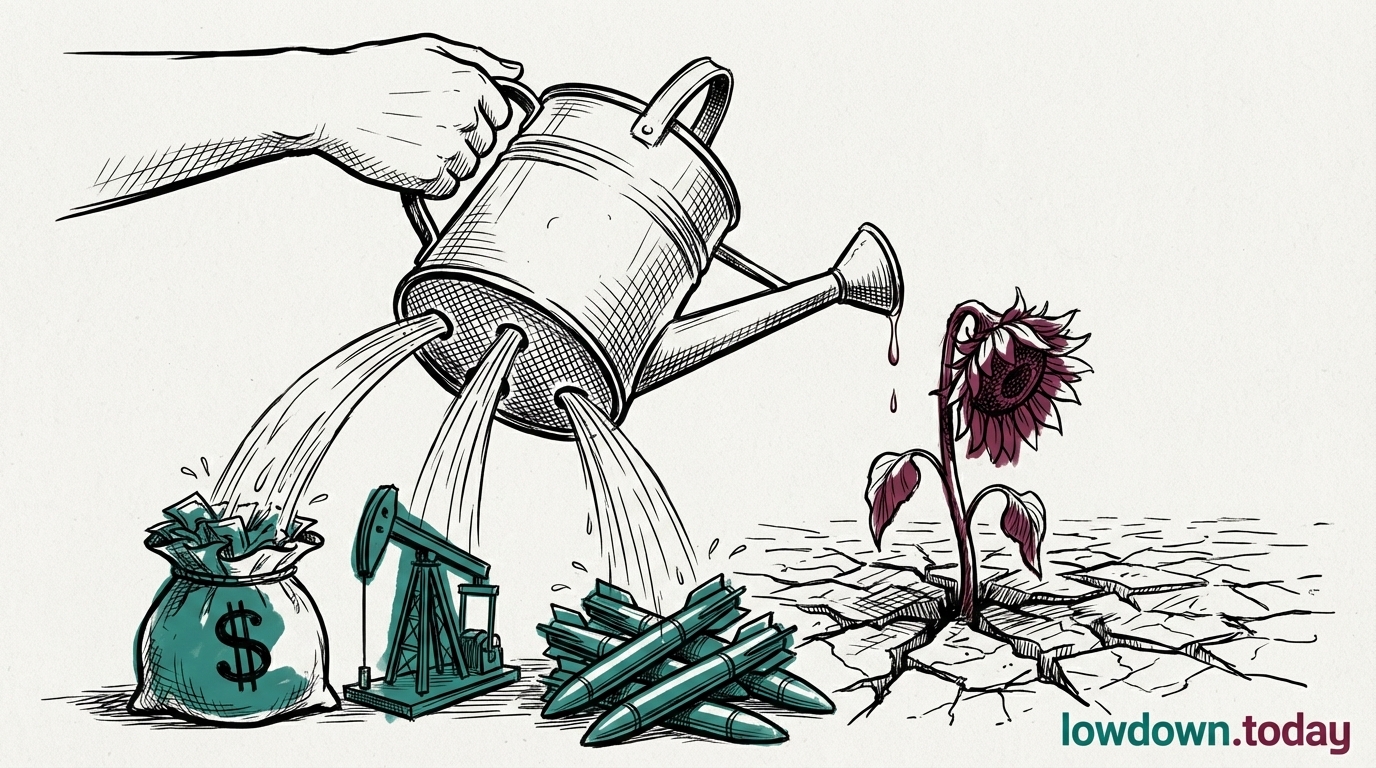
Iran's oil minister Mohsen Paknejad disclosed $11.5 billion in oil sales between 28 February and 7 April and $6.5 billion between 7 April and 10 July, in remarks Reuters reported on 25 July 1. The combined $18 billion amounts to more than 60% of the oil revenue Iran budgeted for the year, earned across the war's first phase and the ceasefire that followed it.

Both periods close before the fighting resumed on 8 July. Neither says anything about what Iran has sold since the blockade came back into force, and Reuters could attribute no comparable figure to the weeks since; Shana, the oil ministry's own news agency, could not be reached. Any reading of these numbers as Iran shrugging off the present campaign is a reading the numbers do not support.

What they do support cuts against the framing much of the coverage of this war, including ours, has carried. Sanctions, a revoked oil waiver and five months of bombardment did not collapse Iranian oil income across the periods disclosed. That sat alongside genuine domestic damage over the same months, with the free-market rial passing 189,450 toman to the dollar : a state earning hard currency abroad while its citizens' savings evaporated at home.

Selective disclosure of a lagging favourable figure is a communications choice, not a transparency one. Iran ran a comparable pattern through the 1980s Tanker War, publishing aggregate trade totals that survived sanctions while staying silent on the shipment-level detail that would have let outsiders calculate throughput in real time. The number that matters now is the one no Iranian ministry or state outlet has released: sales made since 8 July, with the blockade back in force and Hormuz traffic collapsed. Until that figure appears, whether the blockade is working remains an open question rather than an answered one.


Deep Analysis

In plain English

Iran's oil minister says the country earned $18 billion from oil sales in two separate periods this year, together worth more than 60% of what the government had budgeted to earn from oil for the whole year. That sounds like proof sanctions and blockades are not working. But look closely at the dates: both periods end before 10 July, before the current naval blockade at the Strait of Hormuz began squeezing Iran's oil exports again. So this $18 billion tells us Iran coped well earlier in the war. It tells us nothing about how Iran's oil trade is doing right now, because nobody has published a number for that yet.

Deep Analysis
Root Causes

Iran's ability to move $18 billion of oil in under five months rests on a well-established sanctions-evasion architecture: ship-to-ship transfers in international waters, flag-switching through intermediary vessels, and discounted sales to Chinese teapot refineries that do not report the trade through standard customs channels the way OECD buyers would.

That infrastructure is built for evading financial sanctions, not for moving cargo through a physically blockaded strait; whether it survives a naval blockade at Hormuz, rather than a paperwork blockade in Washington, is precisely the unanswered question the missing post-10-July figure would resolve.

What could happen next?
  • Meaning

    The disclosed figures undercut a pure strangulation narrative for the war's first five months, without saying anything about the current blockade phase.

    Immediate · Assessed
  • Opportunity

    A future disclosure covering the post-10-July period would be the clearest available test of whether the reimposed blockade is actually working.

    Short term · Reported
  • Risk

    Absent a verified figure, both sides can claim vindication, Iran citing resilience and Washington citing blockade pressure, from the same data gap.

    Medium term · Suggested
First Reported In

Update #162 · Munitions, not Iran, halted US bombing

Iran International (citing Reuters)· 26 Jul 2026
Read original
Different Perspectives
Belarus
Belarus
Minsk announced completion of its own 37th Separate Airborne Assault Brigade near Gomel, under plans dating to August 2025 rather than a response to any single frontline event this window, keeping its hedge of hosting the war without formally joining Russia's mobilisation drive.
European Union / Operation IRINI states
Italy, Greece and Poland boarded the sanctioned tanker Toa Payoh off Pantelleria under a standing EU mandate rather than a national decision, extending enforcement from the Channel and Baltic and the Black Sea and Azov into the Mediterranean. Italian Defence Minister Guido Crosetto praised the crew; the captain's refusal to produce documentation left detention unconfirmed.
Poland and the NATO eastern flank
Warsaw's Coordination Team said explicitly its forces tracked the 30 July missile incursion and were ready to shoot it down, then flew air cover for an EU tanker interdiction three days later. Poland is simultaneously the war's nearest spillover victim and a contributor to enforcing sanctions against the state causing that spillover.
Ukraine (government, defence establishment and civilians)
Kyiv runs its manpower crisis through acting Defence Minister Yevhen Khmara, whose formal appointment waits for parliament's 18 August return, and a fortnight-old Commander-in-Chief, Mykhailo Drapatyi. Reported attacks on enlistment officers rose from 5 cases in 2022 to 341 in 2025, reaching Odesa's Territorial Recruitment Centre staff directly on 2 August.
Kremlin and Russian domestic economic voices
Moscow has not addressed July's advance-rate collapse or Sberbank's OFZ warning; Novak's diary ran to OPEC+ quota diplomacy with no diesel item logged since 15 July. Economist Nikolai Korzhenevsky calls the Central Bank's RUB 2.3tn in bank lending effectively deficit monetisation, a framing Sberbank's Skvortsov, with his own institutional interest, has not disputed.
IAEA (Rafael Grossi)
IAEA inspectors logged Zaporizhzhia's 22nd loss of off-site power, ten of them in the last three months, after a thunderstorm knocked out the plant's sole surviving backup line. Grossi reads the accelerating frequency, not any single outage, as the safety signal now that the plant's redundancy is exhausted.



