Skip to content
You can now search across every topic, entity and event.What's new
Russia-Ukraine War 2026
5APR

Zelenskyy reveals ten offshore factories

2 min read
19:51UTC

Ukraine's wartime export ban is fracturing. One manufacturer sold 1,000 interceptors for $3.5 million while holding a EUR 300 million state contract.

ConflictDeveloping
Key takeaway

Grey-market factories signal Ukraine's export ban is fracturing under commercial pressure.

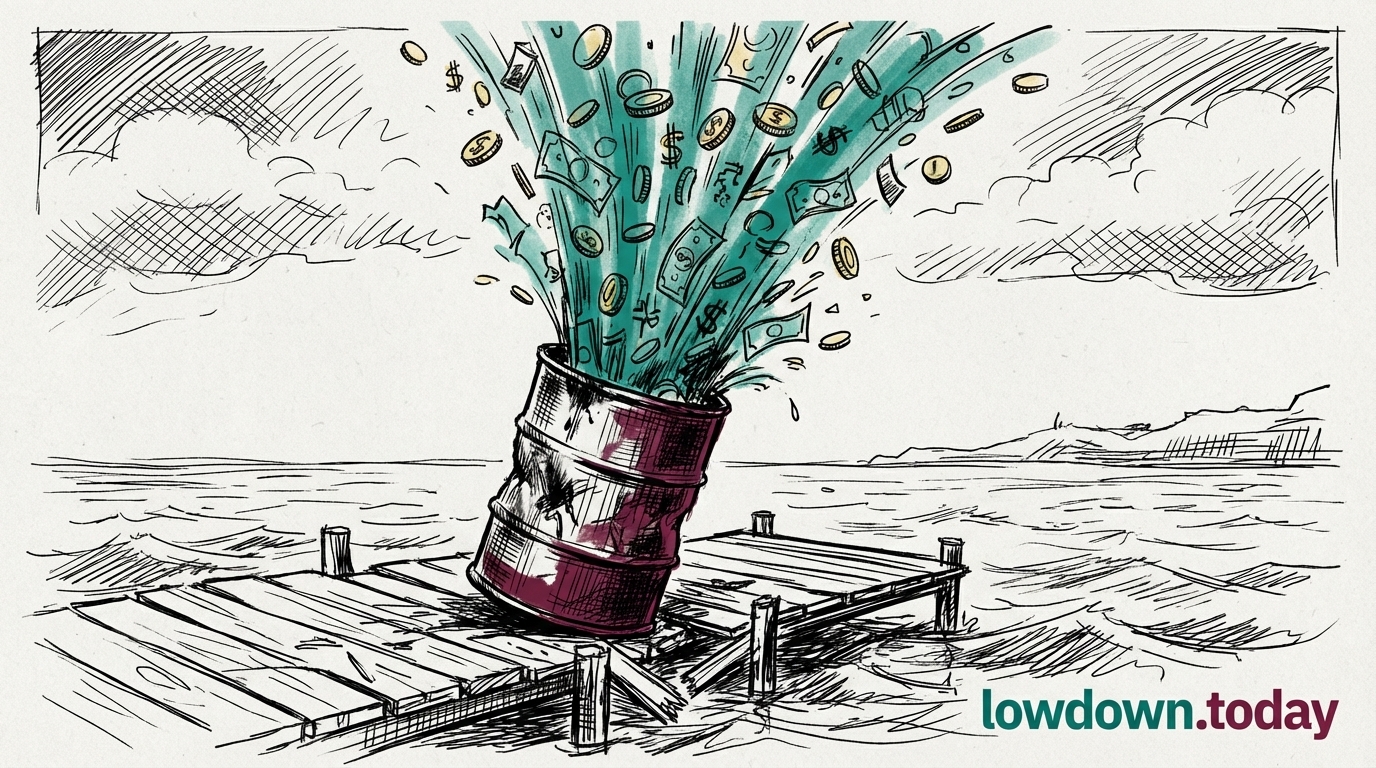
Volodymyr Zelenskyy disclosed on 28 March that approximately 10 drone factories have been built abroad to circumvent Ukraine's wartime export ban.1 One company sold 1,000 interceptor drones to a foreign buyer for $3.5 million while simultaneously holding a EUR 300 million state production contract. At least one European country purchased drones without warheads and then requested Ukrainian operators to accompany them.

The economics explain the leakage. Ukrainian interceptors cost $2,500 to $5,000 per unit.2 A PAC-3 Patriot interceptor costs $13.5 million. That price ratio makes Ukrainian systems irresistible to any buyer facing drone threats, and demand from 11 nations remains blocked by the export ban . Manufacturers with excess capacity and uncertain state payment timelines have rational incentives to seek foreign hard-currency buyers.

Ukraine can technically build 1,000 interceptors per day but is budget-limited to roughly half that. The funding gap, perhaps $5 million to $10 million daily, represents the difference between a cottage industry and a global export platform. Zelenskyy warned the "window of opportunity" is narrowing: private manufacturers are outpacing state coordination.


Deep Analysis

In plain English

Ukraine bans the export of its drones because it is still at war and does not want its most effective weapons reaching enemy hands. But the manufacturers making these drones need cash now, not promises from a government with constrained budgets. So roughly 10 factories have been built outside Ukraine in secret, allowing the drones to be sold to foreign buyers without technically violating the export ban. Zelenskyy revealed this publicly, which is unusual. It signals he sees both the problem (the state is losing control of its most valuable technology) and an opportunity (these exports could become a significant revenue source if formalised).

Deep Analysis
Root Causes

The export ban was enacted in 2022 as a wartime security measure to prevent battlefield-proven designs from reaching adversaries. The problem is that Ukrainian drone manufacturers have matured from cottage workshops into industrial producers, and the state payment infrastructure has not kept pace.

When a manufacturer holds a EUR 300 million state contract but also sells 1,000 units abroad for $3.5 million, the state contract is providing production certainty while the export sale provides cash flow. This is structurally identical to how Soviet-era arms exporters operated in the 1980s: state backing for capacity, grey market for liquidity.

What could happen next?
  • Risk

    Grey-market drone exports undermine Ukraine's ability to control proliferation of its most advanced battlefield technologies, with no guarantee buyers' security practices are adequate.

    Immediate · High
  • Opportunity

    Lifting or restructuring the export ban could generate $2–3 billion annually in hard currency revenue, reducing Ukraine's dependence on Western military aid.

    Short term · Medium
  • Consequence

    The existence of 10 shadow factories signals that Ukrainian drone manufacturers are already operating as a de facto global defence export industry without state oversight.

    Immediate · High
  • Precedent

    If Ukraine formalises exports, it establishes the first wartime-proven small-drone export market, reshaping the global defence procurement landscape for sub-$10,000 strike systems.

    Long term · Medium
First Reported In

Update #3 · Anduril wins $20 billion counter-drone deal

Euromaidan Press· 30 Mar 2026
Read original
Different Perspectives
Turkey
Turkey
Turkey, a major buyer of Russian diesel cargoes, loses that access under Moscow's first producer-binding export ban, in force from 8 July to 31 July. Ankara hosted the same week's NATO summit pledging EUR 70bn to Ukraine, sitting on both sides of the fuel-and-alliance ledger.
NATO
NATO
NATO leaders meeting in Ankara on 7 and 8 July pledged EUR 70bn in equipment, assistance and training for Ukraine across 2026, with a 2027 sustainment commitment and a $40bn Drone Edge counter-drone initiative. European allies now fund the vast majority of that package, filling the gap left by Washington's idled crude waiver.
India
India
India's state refiners continued buying discounted Urals crude as June's price fell to $63.18 a barrel, insulating New Delhi from the OFAC waiver gap still constraining Western buyers. Indian refiners could pick up diesel-export share as Russia's producer-binding ban shuts out its former customers.
China
China
China's independent refiners kept importing discounted Urals crude through June as the price fell to $63.18 a barrel, down 26% month-on-month per CREA. Beijing has said nothing on Moscow's new diesel ban, leaving Chinese refiners a likely beneficiary if Turkish and Brazilian buyers seek replacement cargoes.
United States
United States
No successor licence has been issued since General License 134C lapsed on 17 June, leaving a 26-day gap, the longest of the war, in the Russian crude waiver. Washington's silence is tightening the channel without any stated decision, as Treasury weighs whether to let it die.
Ukraine
Ukraine
Ukraine's long-range strike campaign shifted from refineries to seaborne fuel tankers crossing the Sea of Azov, cutting tracked vessel traffic 55% between 30 June and 11 July, per Starboard Maritime Intelligence. The shift targets Russia's export revenue directly rather than just domestic supply, adding pressure alongside the collapsing Urals price.



