Skip to content
Briefings are running a touch slower this week while we rebuild the foundations.See roadmap
Pandemics and Biosecurity
9JUN

USDA ends mandatory H5N1 interstate cattle tests

3 min read
09:58UTC

USDA APHIS ended mandatory pre-movement H5N1 testing for lactating dairy cattle travelling interstate from states without confirmed outbreaks on 1 May, the same day Idaho recorded its first infected herd.

ScienceDeveloping
Key takeaway

USDA dropped interstate cattle screening on the day Idaho's outbreak began, removing the asymptomatic detection layer.

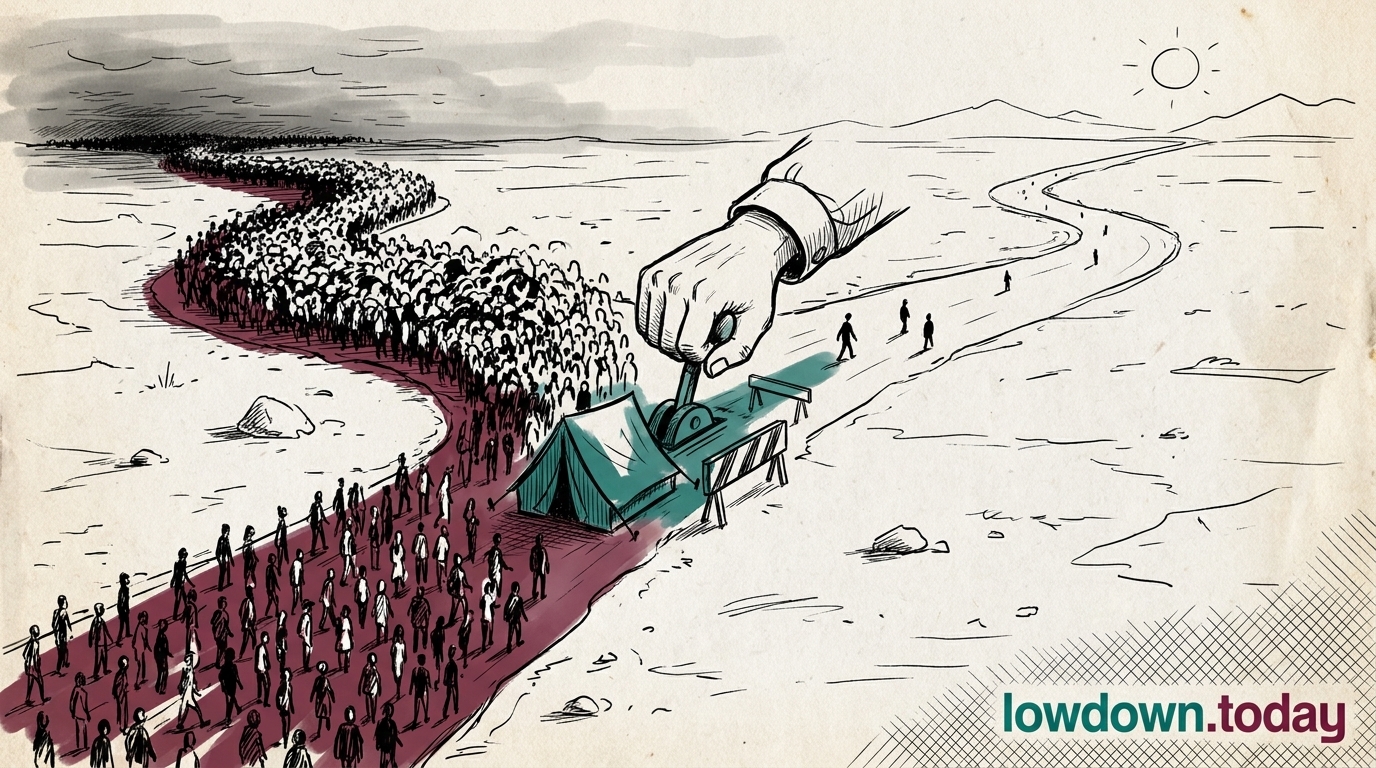
USDA APHIS (the Animal and Plant Health Inspection Service, the USDA division responsible for livestock disease surveillance) ended mandatory pre-movement H5N1 testing for lactating dairy cattle travelling interstate from states without confirmed outbreaks, effective 1 May 2026. 1 The agency stated that its Dairy Herd Status Programme and National Milk Testing Strategy provide sufficient surveillance coverage. The policy took effect on the same day Idaho confirmed its first dairy herd infection , opening a structural gap at the moment the fastest-escalating state in the outbreak began its surge.

The practical effect of pre-movement testing was detection at the point of interstate transfer: infected cows from herds not yet showing clinical signs would test positive before they entered a new state's herd. Without that gate, detection depends on destination-state surveillance finding clinical signs after arrival. For B3.13, whose ISG-suppression mechanism delays the fever and respiratory symptoms that typically flag sick cattle, the window between arrival and detectable illness may be longer than the testing regime assumed.

The timing sits alongside the Emory aerosol study , which established that B3.13 is present in milking-parlour air before dairy cows display overt symptoms. Both findings describe a pathogen that outruns clinical-sign detection; the APHIS rollback removes the one screening point that operated independently of symptom presentation. APHIS has not indicated any trigger conditions that would reinstate mandatory testing.

Deep Analysis

In plain English

Before 1 May 2026, any dairy cow travelling from one US state to another had to be tested for **H5N1** bird flu if the destination state had confirmed outbreaks. The **US Department of Agriculture** (specifically its animal health division, **APHIS**) ended that requirement, saying its national milk-testing programme would catch infections just as well. The problem is timing: milk testing catches infected herds after the cows have already moved and potentially spread the virus. Pre-movement testing catches them before. On the exact day the rule was dropped, Idaho confirmed its first infected herd, and that herd count reached 59 within twelve days. Critics argue the two events together illustrate why the rule existed.

Deep Analysis
Root Causes

**USDA APHIS** sits at a structural conflict of interest: its core mission is to protect agricultural production, and H5N1 mandatory testing imposes costs on producers (testing fees, movement delays) that generate industry pressure to relax requirements when case counts appear to plateau.

The decision was issued in the absence of any public epidemiological justification beyond APHIS's assertion that its milk-testing programme provides sufficient coverage. No CDC co-signature appeared on the rollback notice. This reflects a second structural cause: H5N1 in dairy cattle occupies a legal gap between USDA's agricultural jurisdiction and CDC's public-health jurisdiction, and no formal joint decision-making mechanism governed the rollback.

A third cause is the political economy of the 2026 midterm cycle. Dairy farming has disproportionate political weight in Idaho, Wisconsin, and Michigan; reducing testing burdens on producers in those states carries electoral logic that independent biosecurity governance would not apply.

What could happen next?
  • Risk

    Without pre-movement testing, Idaho-origin infected cattle can reach herds in other states before bulk-milk surveillance detects the infection, potentially extending the outbreak to states that have been clear.

    Short term · 0.78
  • Consequence

    Congressional oversight pressure on USDA APHIS will increase if the Idaho surge (ID:3108) continues to expand, given the politically visible timing of the rollback on 1 May.

    Short term · 0.7
  • Precedent

    The rollback establishes passive bulk-milk surveillance as the US standard surveillance instrument, replacing active pre-movement testing; this precedent will govern how any subsequent wave is monitored.

    Medium term · 0.72
First Reported In

Update #2 · B3.13 gets better at humans as testing ends

Cheese Reporter / APHIS· 12 May 2026
Read original
Causes and effects
This Event
USDA ends mandatory H5N1 interstate cattle tests
Removing interstate movement testing eliminates the surveillance layer that previously intercepted H5N1 infections before infected animals crossed state lines.
Different Perspectives
World Health Organization
WHO's DON606 recalibration to confirmed-only reporting gives the clean baseline the CDC model rests on, but the apparent fall from 1,040 to 534 carries misinterpretation risk WHO communications have not pre-empted. The PABS deadlock ahead of IGWG7 and continuing MBP134/remdesivir assessment without authorisation make WHO the body most able to accelerate the two decisions that could change the outbreak's trajectory.
European Union (ECDC)
ECDC's Week 23 CDTR tracked four simultaneous non-Ebola signals: the Dermatophilus congolensis novel-transmission cluster across France, Germany and Spain; a 4.2-fold malaria surge in Mayotte; the Salmonella ST2045 multi-country cluster; and two new Saudi MERS cases. The continental early-warning layer is carrying a full multi-pathogen picture while Bundibugyo dominates headlines.
Uganda
Uganda
Uganda's 19 confirmed cases are concentrated in Kampala and Wakiso, an urban cluster that applied the 2022 Sudan-ebolavirus playbook; the Bwera border laboratory shortens cross-border confirmation to same-day. Uganda's regulatory authority must co-sign before MBP134 or remdesivir can dose any patient.
Democratic Republic of the Congo
Kinshasa shares Bundibugyo sequence data in real time with no treaty-guaranteed access to the vaccines that data informs, and its health minister called the US entry ban discriminatory while negotiating an early lift. DRC accounts for 515 of 534 confirmed cases and faces IS-controlled access blockades in Mambasa that health authorities cannot resolve.
United States (HHS/CDC)
HHS expanded the Ebola entry ban to green-card holders on 5 June, widening a restriction expiring around 17 June against WHO advice. The CDC simultaneously published the R0=2.51 modelling, the sharpest analytical contribution to the response, from a federal bench that holds the NIH and acting CDC director roles in one person.
Imperial College London / Cori and Ferguson
Anne Cori and Neil Ferguson place the case-fatality ratio at 30 to 40 per cent and read the 6.8-to-1 suspected-to-confirmed ratio as evidence that the laboratory figure understates true lethality. Many people die before a swab reaches them.
