Skip to content
Welcome, thoughtbot's Giant Robots listeners!Start here
Pandemics and Biosecurity
3OCT

Pandemic Fund adds $220.6m, still no vaccine

3 min read
13:42UTC

The Pandemic Fund activated up to 220.6 million dollars on 5 June; the US State Department committed 270 million bilaterally. Set against May's summit pledges, the mobilised aggregate approaches 990 million dollars.

ScienceDeveloping
Key takeaway

Close to a billion dollars is mobilised, but no licensed vaccine, treatment or rapid test exists.

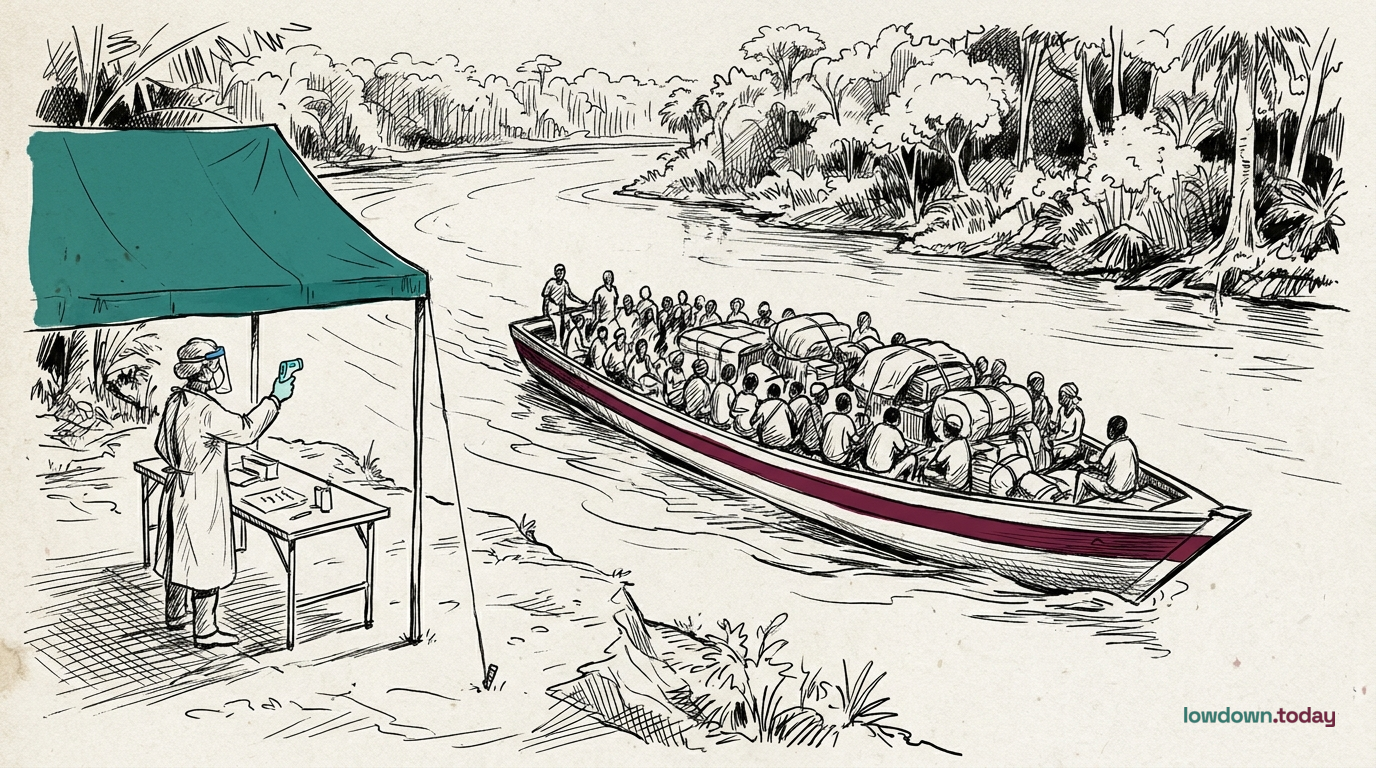
The Pandemic Fund activated up to 220.6 million dollars in emergency grant financing on 5 June, behind a joint Africa CDC and WHO Continental Strategic Preparedness and Response Plan⁠1. The Pandemic Fund is the World Bank-hosted financing mechanism set up after Covid-19 to bankroll outbreak response. The US State Department committed a further 270 million dollars bilaterally as of 12 June, funding implementers such as International Medical Corps, which had screened more than 6,300 people and flagged 41 suspected cases for isolation⁠2.

Set against the roughly 500 million dollars pledged at the Africa CDC summit in May, the mobilised aggregate approaches 990 million dollars. The money has arrived faster than any vaccine, treatment or test, and the Pandemic Fund's own statement names why that is not the relief it sounds: no vaccine, no treatment and no rapid, reliable diagnostic exists for this virus.

That is the constraint cash cannot move. Emergency financing buys hospital beds, burial teams, fuel and field laboratories, but it cannot compress the regulatory clock on the treatment trial that only began this week, and it cannot conjure a bedside test that no one has built. The response has fixed its financing and shifted its binding constraint from money to the clinical pipeline, which runs on its own timetable.

Deep Analysis

In plain English

Nearly one billion dollars has been committed to fight this outbreak. That money comes from three main sources: the World Bank's Pandemic Fund, the US government, and pledges made at an Africa CDC summit in May. It pays for screeners, isolation units, contact tracers, transport, and supplies. But the Pandemic Fund's own statement names a stark problem: there is no approved vaccine, no approved drug, and no quick bedside test for this type of Ebola. The money can improve how well the response operates, but it cannot buy a pharmacological solution that does not yet exist. This is what outbreak economics looks like when preparedness R&D investment ran out before the pathogen emerged.

What could happen next?
  • Consequence

    The $270 million US bilateral commitment funds implementers including International Medical Corps, the same funders simultaneously maintaining the US entry ban on DRC, Uganda and South Sudan nationals (ID:4053), creating a foreign-policy contradiction visible to both the DRC government and the implementing organisations on the ground.

  • Risk

    Disbursement latency in the Pandemic Fund's FIF mechanism means some portion of the $220.6 million may not reach field implementers until late July, after the CDC model's August worst-case window has already opened.

First Reported In

Update #7 · Bundibugyo's fork stays open

US Department of State· 16 Jun 2026
Read original →
Different Perspectives
IGWG co-chair Tovar da Silva Nunes
The Brazilian co-chair closed the eighth pathogen-sharing session on 18 September without an agreed annex text, the second session in a row to end that way. He presented the outcome as continued commitment, with adoption due at the World Health Assembly in May 2027.
Fraport
Fraport
The Frankfurt Airport operator has told staff to watch for fever, hessenschau reported, after six airport workers caught malaria. Germany does not require insecticide spraying of arriving aircraft cabins, and parasite genotyping to trace the source is due at the end of October.
European Centre for Disease Prevention and Control
ECDC reported the eight Frankfurt Airport malaria cases on 18 September and considers repeated arrivals of infected mosquitoes on aircraft likely. It has not ruled out local mosquitoes, and awaits genotyping due at the end of October.
Pan American Health Organization
PAHO counted 53,957 measles cases in the Americas by 19 September and is supporting Peru's response in Puno and Arequipa. It warns that October's Señor de los Milagros festivities and Pope Leo XIV's November visit could increase transmission.
Bangladesh Directorate General of Health Services
The DGHS recorded 1,030 measles-related deaths and 172,720 suspected cases by 14 September, after a campaign that reached 19.75 million children. Its disease-control director, Halimur Rashid, said further vaccination rounds were expected within two weeks.
Minapharm
Minapharm
The Egyptian drugmaker and its Berlin subsidiary ProBioGen were awarded up to US$16.5m by CEPI on 27 August to take a Bundibugyo vaccine into a Phase 1 trial in Africa. Final manufacture is planned for Cairo, making it CEPI's first Bundibugyo candidate with an African producer.
