Skip to content
You can now search across every topic, entity and event.What's new
Pandemics and Biosecurity
21JUL

Houston ready for Bundibugyo, no CDC

3 min read
09:12UTC

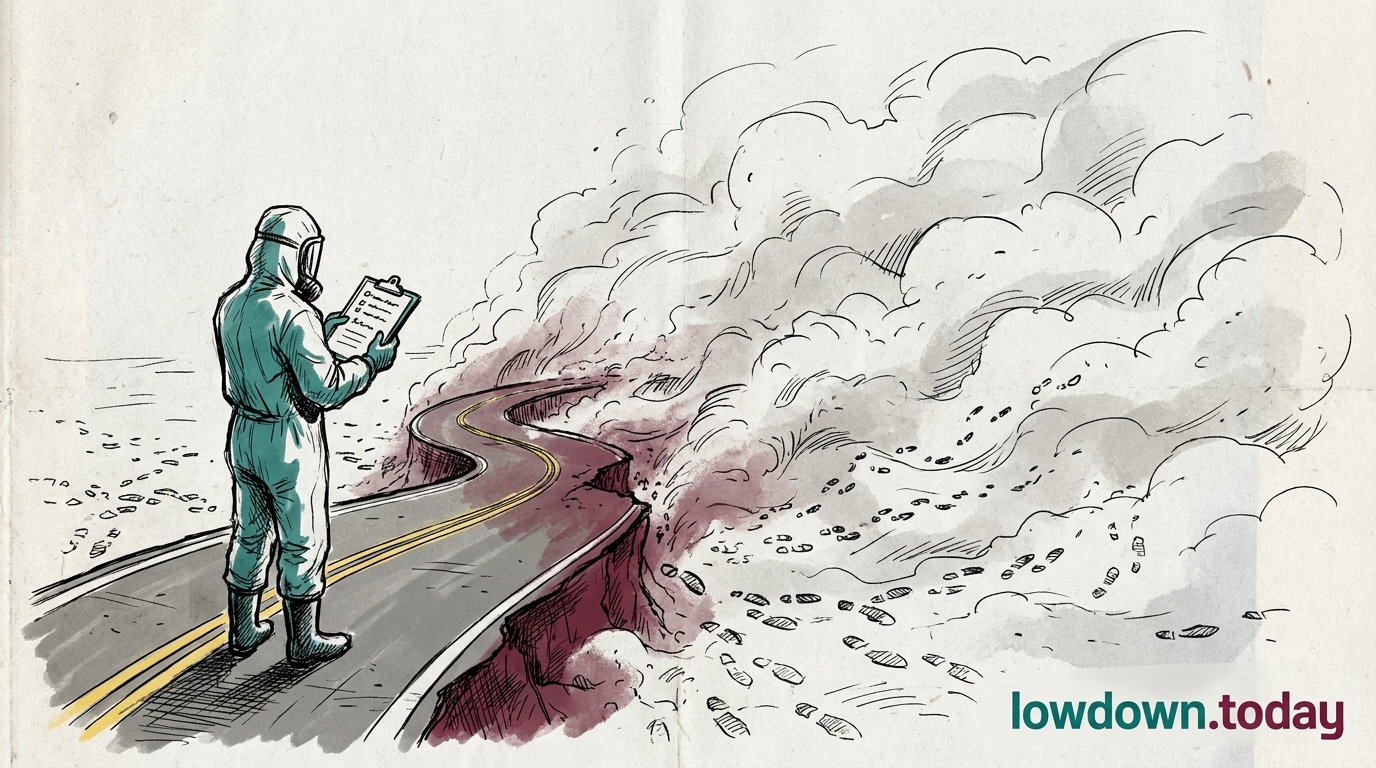
Houston Health Department's FIFA26 page lists Bundibugyo on its BioFire Special Pathogens Panel; DR Congo opens against Portugal at NRG Stadium on Wednesday 17 June, with no named federal CDC partner in the coordination chain.

ScienceDeveloping
Key takeaway

Houston can test for Bundibugyo on Monday; no federal CDC partner is named in the FIFA26 coordination chain.

The Houston Health Department's published FIFA26 preparedness page lists the BioFire Global Fever Special Pathogens Panel as the regional reference assay, with Bundibugyo ebolavirus explicitly named alongside Reston, Sudan, Tai Forest and Zaire species 1. The department operates the regional reference laboratory for 17 Texas counties. DR Congo opens its Group K World Cup fixture against Portugal at NRG Stadium on Wednesday 17 June, 31 days from the PHEIC. Argentina opens Group J against Algeria at Arrowhead Stadium in Kansas City on Tuesday 16 June. A BioFire panel sequence-confirms a suspected case in roughly four hours, the same window the 2014 Dallas presumptive-Ebola case took to triage.

Federal CDC participation is absent from publicly available Houston and Dallas mass-gathering health coordination documentation. CBS News Texas, covering World Cup health preparation on Thursday 14 May, noted the federal CDC's absence and quoted Philip Huang, head of Dallas County Health and Human Services, on the multinational arrival pressure 2. Nahid Bhadelia is running a University of Texas infectious-disease consult line for World Cup-period queries, coordinated with the Texas health department. Bangladesh H5N1 surveillance and the H5N1 dairy outbreaks across the western US continue as parallel pressures on the same medical-countermeasures budget. The structural risk in the window before kickoff is not Ebola at the World Cup; it is the absence of federal coordination where local readiness terminates.

Deep Analysis

In plain English

Houston is hosting DR Congo's first World Cup group game on 17 June 2026, 31 days after the Bundibugyo PHEIC was declared. Tens of thousands of fans from DRC and other countries will travel through Houston. The city's health department has a sophisticated laboratory that can detect Bundibugyo in under four hours using a panel test. That is good. What is less clear is who is in charge if a hospital calls to say they have a suspected Ebola case. Normally, the US Centers for Disease Control would be the coordinating body linking the hospital, the public health department, and the airport authorities. Their name does not appear in the published Houston or Dallas FIFA coordination documents.

First Reported In

Update #3 · WHO calls Ebola PHEIC, no treatment exists

Houston Health Department· 17 May 2026
Read original
Causes and effects
This Event
Houston ready for Bundibugyo, no CDC
Local diagnostic capability is real and named; the federal coordination layer that ordinarily sits between airport, hospital and public-health authority is not.
Different Perspectives
UK Health Security Agency
UKHSA said egg consumption remains the strongest signal in its 207-case Salmonella Enteritidis investigation. The genomic cluster and 38% hospitalisation among people with available information make exposure identification a public-health priority.
GLEWS+
GLEWS+
GLEWS+ assessed spillover risk from clade B MERS in Nile Basin camels as high if the clade establishes, while rating evidence for spread in camel populations low confidence. The joint assessment makes whole-genome sequencing the next test of the threat.
WHO Regional Office for Africa
WHO's Africa office said transmission in DR Congo is outpacing control efforts after laboratory capacity reached 19 sites and treatment capacity exceeded 1,300 beds. The assessment puts access, insecurity, community deaths and late care-seeking ahead of a simple equipment shortage.
People in Guatemala
People in Guatemala
Guatemala's population now carries the region's largest reported measles burden, with 30,371 confirmed cases and 26 deaths. The scale shifts practical attention from the Mexico-centred frame that followed the World Cup's travel consequences.
Pan American Health Organization
PAHO rated regional measles risk very high after recording 47,459 confirmed cases and 44 deaths through week 28. It names vaccination coverage, accumulated susceptibles and mass gatherings with broad international participation as general risk factors.
Chinese health authorities
China reported three human H9N2 cases to WHO between 10 and 16 July: two four-year-olds recovered, a 44-year-old man remains in intensive care, the first severity signal in a cluster that has produced 173 cases and 2 deaths globally since 2015. The subtype is distinct from the H5N1 series this topic otherwise tracks.