Skip to content
You can now search across every topic, entity and event.What's new
Pandemics and Biosecurity
21JUL

CDC cuts bird-flu reports to monthly

3 min read
09:12UTC

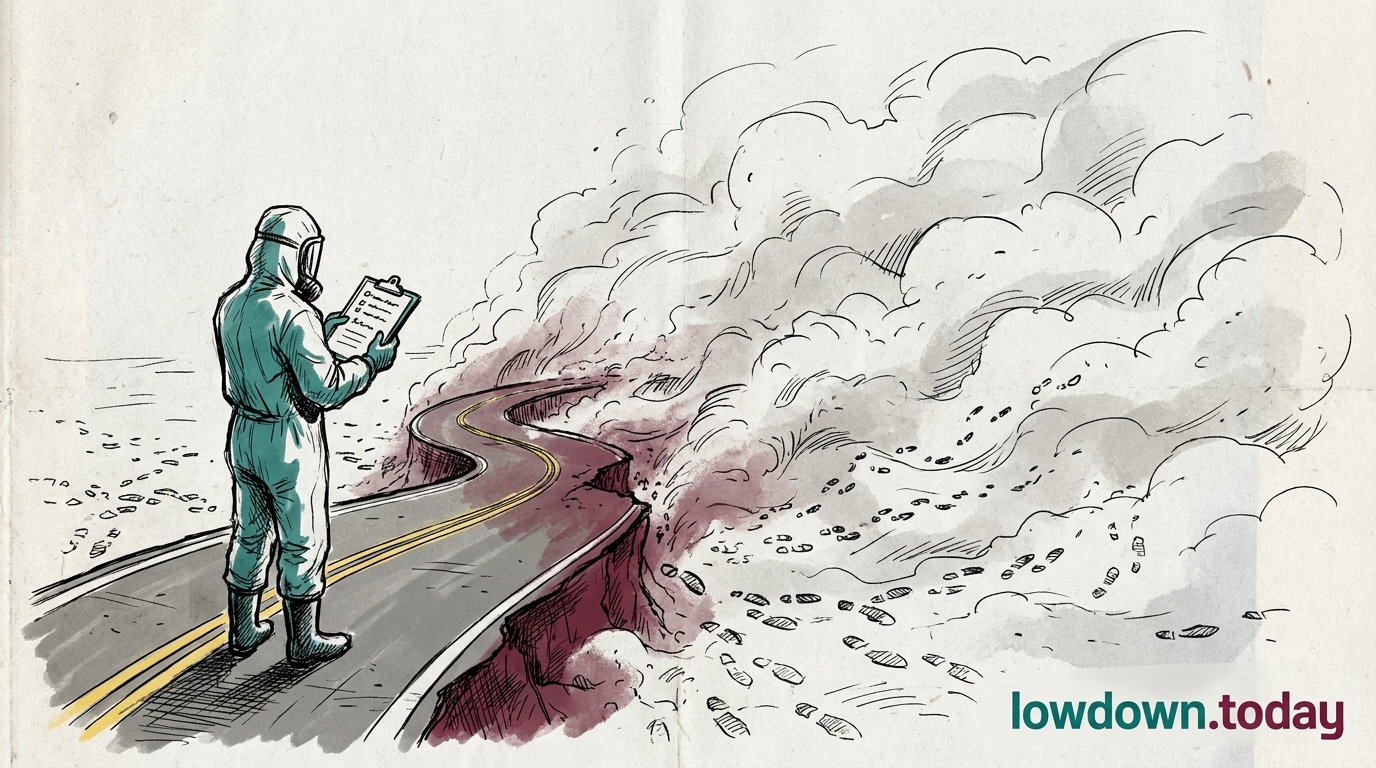
The US CDC shifted its H5N1 avian influenza reporting from weekly to monthly, with the next update due the first Friday of June, while Idaho dairy herds remained actively infected.

ScienceDeveloping
Key takeaway

The CDC moved H5N1 reporting from weekly to monthly while Idaho dairy herds stayed actively infected.

The US Centers for Disease Control and Prevention shifted its H5N1 avian influenza reporting cadence from weekly to monthly, with the next update due on the first Friday of June 1. The CDC is the principal US federal public-health agency; H5N1 is the highly pathogenic bird-flu subtype that has infected US dairy cattle since 2024.

The change comes while Idaho dairy herds remain actively infected. Idaho's outbreak had already surged from one herd to 59 quarantined herds in twelve days in May , so the slower reporting clock applies to a situation still in motion rather than a settled one. The cadence cut follows the earlier decision to end mandatory interstate pre-movement testing for cattle from unaffected states .

Less frequent reporting does not change the underlying epidemiology, but it lengthens the lag between a mammalian-transmission event and its appearance in the public record. On a pathogen whose pandemic risk turns on early detection of host-range shifts, a monthly cadence is a thinner early-warning layer than a weekly one.

Deep Analysis

In plain English

The US Centers for Disease Control and Prevention (CDC) track H5N1 bird flu, which has been infecting dairy cattle across the United States since 2024. Until recently, the CDC released updated data every week. From 29 May onwards, it will release data only once a month. Idaho dairy herds are still actively infected, with new animals catching the virus, while the CDC moves to monthly reports. If the virus spreads to a new state or mutates during a monthly reporting gap, public health officials and dairy farmers will find out later than they would have before. Human cases of H5N1 bird flu from dairy-farm work have remained uncommon. But public health experts worry that reducing surveillance reporting while an animal outbreak is still active makes it harder to detect early warning signals.

Deep Analysis
Root Causes

The reporting cadence change reflects a structural tension in how the US federal government is currently staffed for public health functions. With no permanent CDC Director, no confirmed FDA Commissioner, and Jay Bhattacharya holding dual NIH and acting-CDC roles simultaneously, the agency's epidemiological publication capacity is operating below normal bandwidth.

USDA APHIS's May 2026 decision to end mandatory pre-movement H5N1 testing for lactating dairy cattle from unaffected states removed a surveillance layer at the same time CDC is reducing its reporting frequency, creating two concurrent surveillance gaps rather than one.

What could happen next?
  • Risk

    A monthly H5N1 reporting cycle while Idaho dairy herds remain actively infected creates a three to four week window in which a cross-state transmission event or a new human case could occur without triggering the rapid federal communication that weekly reporting provided.

First Reported In

Update #5 · Ebola money arrives, the cure does not

World Health Organization· 2 Jun 2026
Read original
Different Perspectives
UK Government
UK Government
The Biological Security Strategy implementation report published 14 July commits the UK to deciding within twelve months whether to make DNA-synthesis screening mandatory, backed by GBP 1.83bn for biosecurity centres. It is a preemptive move on a threat that has not yet produced a UK incident.
Cambodia's Ministry of Health
Cambodia confirmed a nine-month-old girl in Phnom Penh as its fourth 2026 H5N1 case on 11 July, the country supplying four of the world's seven new human cases since February. The ministry's confirmed-case cadence is running well ahead of a US surveillance system that has recorded nothing new since March.
Knowledge Ecology International
KEI published proposed annex text on the day IGWG7 opened that would attach benefit-sharing duties to a product's market registration, regardless of whether the manufacturer used shared samples or only downloaded sequence data. It is the Africa Group's fallback position if the sample-based bargain fails to bind.
European Union
European Union
The EU and other industrialised states backed a hybrid model built on centralised infrastructure with more flexible access terms, the opposite design choice from the Africa Group's. Brussels wants conditions handled contractually once samples reach shared facilities, not attached to national custody of the material itself.
Africa Group / Algeria
Algeria, speaking for the Africa Group at IGWG7, backed distributed national and regional laboratories under binding access conditions, arguing that supplying states must keep legal control of samples rather than surrender them into shared infrastructure.
Uganda's Ministry of Health
Uganda discharged its last confirmed patient on 16 July and opened a 42-day countdown to declaring its own outbreak over, closing at 20 cases and 2 deaths with no new case since 21 June. This is a closing chapter running alongside DR Congo's still-worsening one, contingent on a border DRC can no longer see across.
