Skip to content
You can now search across every topic, entity and event.What's new
Pandemics and Biosecurity
21JUL

A third Ebola case leaves Africa

2 min read
09:12UTC

A US aid worker who tested positive in Bunia on 10 July was medically evacuated to Germany on 13 July, the Bundibugyo outbreak's third export beyond Africa.

ScienceAssessed
Key takeaway

A US responder flown to Germany became the Bundibugyo outbreak's third export abroad; no such lifeline exists for Congolese staff.

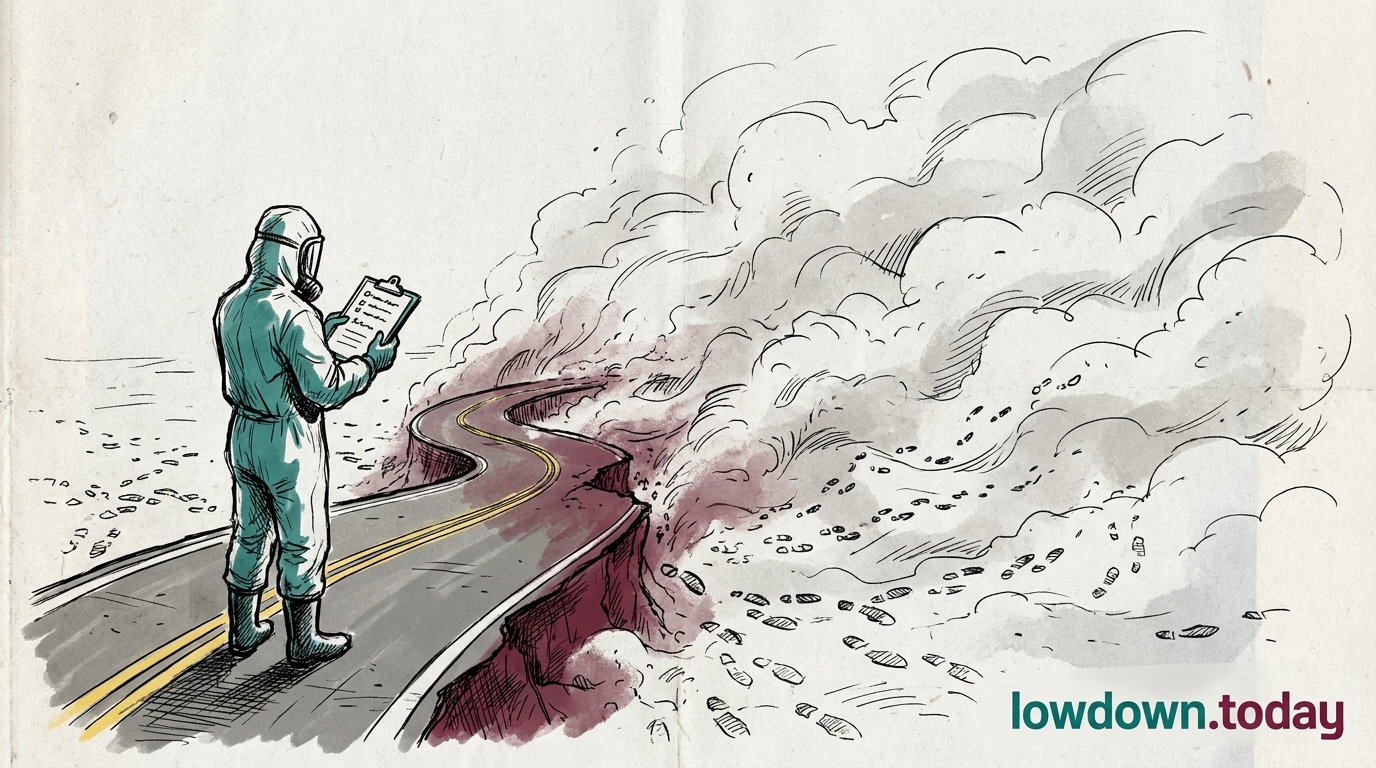
A US humanitarian worker supporting the Ebola response in Bunia, the outbreak's operational hub in Ituri Province, tested positive for Bundibugyo virus on 10 July and was medically evacuated to Germany on Monday 13 July 1. It was the outbreak's third export beyond Africa, after a French doctor carried the virus home on 24 June and the first US evacuee reached Germany in May.

The route that flies infected foreign responders to European biocontainment has now run three times. No equivalent corridor exists for the Congolese staff treating patients in Ituri, WHO face the same pathogen with far less between them and it. Well-funded evacuation for internationals sits beside far barer protection for local staff, the equity fault line the response has yet to answer.

Deep Analysis

In plain English

When a foreign aid worker catches a dangerous disease like Ebola while volunteering abroad, their home country will often fly them back for treatment in a hospital built specifically to handle highly infectious patients safely, using sealed transport and isolation wards. That is what happened here: an American responder helping fight the Ebola outbreak in Bunia, DR Congo tested positive on 10 July and was flown to Germany on 13 July. This is the third time the outbreak has left Africa, after a French doctor in June and an earlier American case in May, a reminder that aid work carries real personal risk even with modern safety protocols.

Deep Analysis
Root Causes

Germany receives Bundibugyo medevacs because it operates STAKOB, the national network of dedicated high-level isolation treatment centres built after the 2014-16 epidemic specifically to receive infected aid workers under negative-pressure transport and containment.

The outbreak's third international export in two months also reflects the sheer number of foreign responders rotating through Ituri. DR Congo's confirmed case count has passed 1,481, and every week isolation capacity lags the caseload keeps drawing more international staff into direct patient contact.

What could happen next?
  • Risk

    Repeated medevac exports could pressure Germany's limited STAKOB isolation-bed capacity if several cases require simultaneous treatment.

First Reported In

Update #10 · Ebola's responders are now the casualties

Africa CDC· 14 Jul 2026
Read original
Causes and effects
This Event
A third Ebola case leaves Africa
Each international medevac shows the response can move a foreign case to safety faster than it can protect the local staff treating the outbreak.
Different Perspectives
UK Government
UK Government
The Biological Security Strategy implementation report published 14 July commits the UK to deciding within twelve months whether to make DNA-synthesis screening mandatory, backed by GBP 1.83bn for biosecurity centres. It is a preemptive move on a threat that has not yet produced a UK incident.
Cambodia's Ministry of Health
Cambodia confirmed a nine-month-old girl in Phnom Penh as its fourth 2026 H5N1 case on 11 July, the country supplying four of the world's seven new human cases since February. The ministry's confirmed-case cadence is running well ahead of a US surveillance system that has recorded nothing new since March.
Knowledge Ecology International
KEI published proposed annex text on the day IGWG7 opened that would attach benefit-sharing duties to a product's market registration, regardless of whether the manufacturer used shared samples or only downloaded sequence data. It is the Africa Group's fallback position if the sample-based bargain fails to bind.
European Union
European Union
The EU and other industrialised states backed a hybrid model built on centralised infrastructure with more flexible access terms, the opposite design choice from the Africa Group's. Brussels wants conditions handled contractually once samples reach shared facilities, not attached to national custody of the material itself.
Africa Group / Algeria
Algeria, speaking for the Africa Group at IGWG7, backed distributed national and regional laboratories under binding access conditions, arguing that supplying states must keep legal control of samples rather than surrender them into shared infrastructure.
Uganda's Ministry of Health
Uganda discharged its last confirmed patient on 16 July and opened a 42-day countdown to declaring its own outbreak over, closing at 20 cases and 2 deaths with no new case since 21 June. This is a closing chapter running alongside DR Congo's still-worsening one, contingent on a border DRC can no longer see across.
