Skip to content
You can now search across every topic, entity and event.What's new
Pandemics and Biosecurity
14JUL

Unpaid Ituri health workers walk off

2 min read
08:46UTC

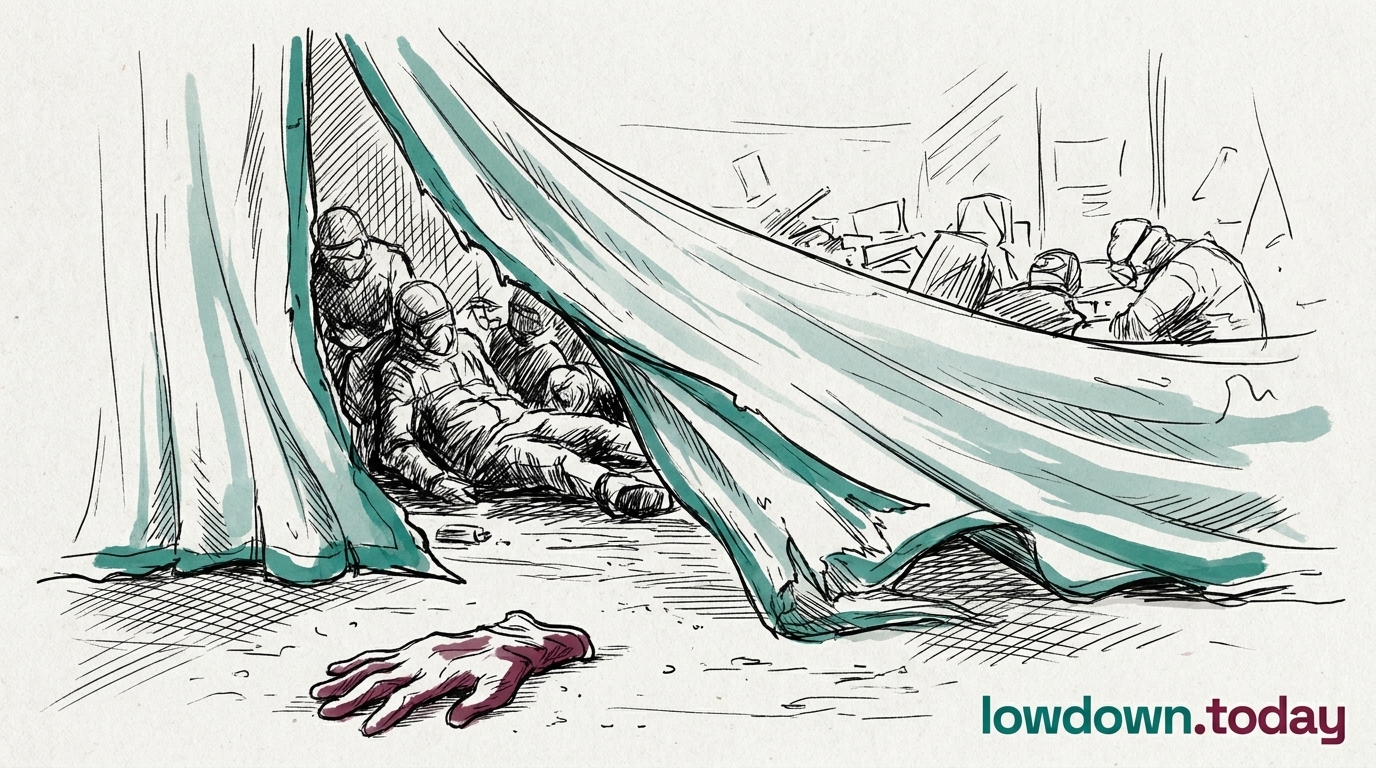
Front-line health workers in Ituri Province have walked off or threatened to strike over unpaid hazard pay and delayed salaries, according to Al Jazeera reporting.

ScienceDeveloping
Key takeaway

Unpaid Ituri health workers are striking even as pledges to the Ebola response near a billion dollars.

Front-line health workers in Ituri Province have walked off the job or threatened to strike over unpaid hazard pay and delayed salaries, according to Al Jazeera reporting 1. The province is the epicentre of the Bundibugyo Ebola outbreak, where isolating patients quickly is the task the whole response turns on.

Aggregate pledges to the response passed roughly $990 million by mid-June , yet that money has struggled to reach the pay packets of the people staffing the isolation wards. Ituri is a conflict-affected province where the ADF and M23 insurgencies constrain governance and logistics, so cash committed in Addis Ababa or Geneva does not translate cleanly into wages paid in Bunia. A strike removes the one input the outbreak cannot spare: trained hands to run the isolation wards.

Deep Analysis

In plain English

Hazard pay is extra money paid to workers doing dangerous jobs, like treating patients with a deadly disease. In outbreaks like this one, health workers are often promised this money but do not always receive it on time. In Ituri Province, DR Congo, front-line health workers walked off the job or threatened to strike because their hazard pay and regular salaries had not arrived, according to Al Jazeera. This matters because an Ebola response depends entirely on having enough trained staff willing and able to keep working.

Deep Analysis
Root Causes

Africa CDC only gained direct-implementation status from the Pandemic Fund Governing Board on 17 June, meaning donor money pledged at the 26 May summit, nearly $500 million, can now reach the response without routing through WHO or the World Bank first. That accreditation is weeks old; the disbursement chain from pledge to a paid worker's bank account still runs through national payroll systems that have not caught up with the money already committed.

Ituri's frontline staff are also drawn from the same under-resourced provincial health system that existed before the outbreak, so hazard pay was never built into standing salary structures and instead depends on ad hoc allowances, the first thing delayed when funds are in transit.

First Reported In

Update #10 · Ebola's responders are now the casualties

Al Jazeera· 14 Jul 2026
Read original
Different Perspectives
Germany (evacuation recipient)
Germany received the Bundibugyo outbreak's third international medical evacuation on 13 July, a US humanitarian worker infected in Bunia on 10 July. The evacuation, following a French doctor's 24 June departure and May's first US case, tests whether isolation and biocontainment protocols scale beyond DR Congo's own borders.
Pennsylvania Department of Public Health
PDPH retested and retracted a false-positive measles wastewater signal on 6 July, then confirmed and publicised a real airport exposure from 4 July, with commissioner Palak Raval-Nelson stressing there is no broad threat to the general public. The national count, 2,231 cases across 42 states by 9 July, is on pace to beat 2025's 2,289-case record before September.
World Health Organization
WHO published its first dedicated Blueprint on fungal disease and antifungal resistance on 1 July, estimating more than 300 million people suffer serious fungal disease annually. The Blueprint names the gap in WHO's own AMR strategy rather than waiting for an external audit to force the admission.
Africa CDC
Africa CDC
Africa CDC issued a formal 11 July appeal for responder protection, training and psychosocial support after health-worker infections tripled from 34 to 112 in a month. The appeal repeats June's unmet call for a rapid Bundibugyo diagnostic test, showing the ask has shifted from tools to basic safety and pay.
Front-line health workers, Ituri Province
Health workers in Ituri Province walked off the job or threatened to strike over unpaid hazard pay and delayed salaries, even as responder infections tripled to 112 with 35 dead. Their absence narrows the isolation workforce the CDC's model says must reach 70% coverage to avoid a 20,000-case worst case.
ECDC
ECDC
ECDC co-published the isolation and contact-tracing figures behind WHO's DON612, tracking Ituri's isolation rate rising from 35 to 44 percent while still rating EU/EEA import risk as very low. Brussels backs the WHO line against travel restrictions, the position France's own contact-tracing response, not the US entry ban, actually validated.
