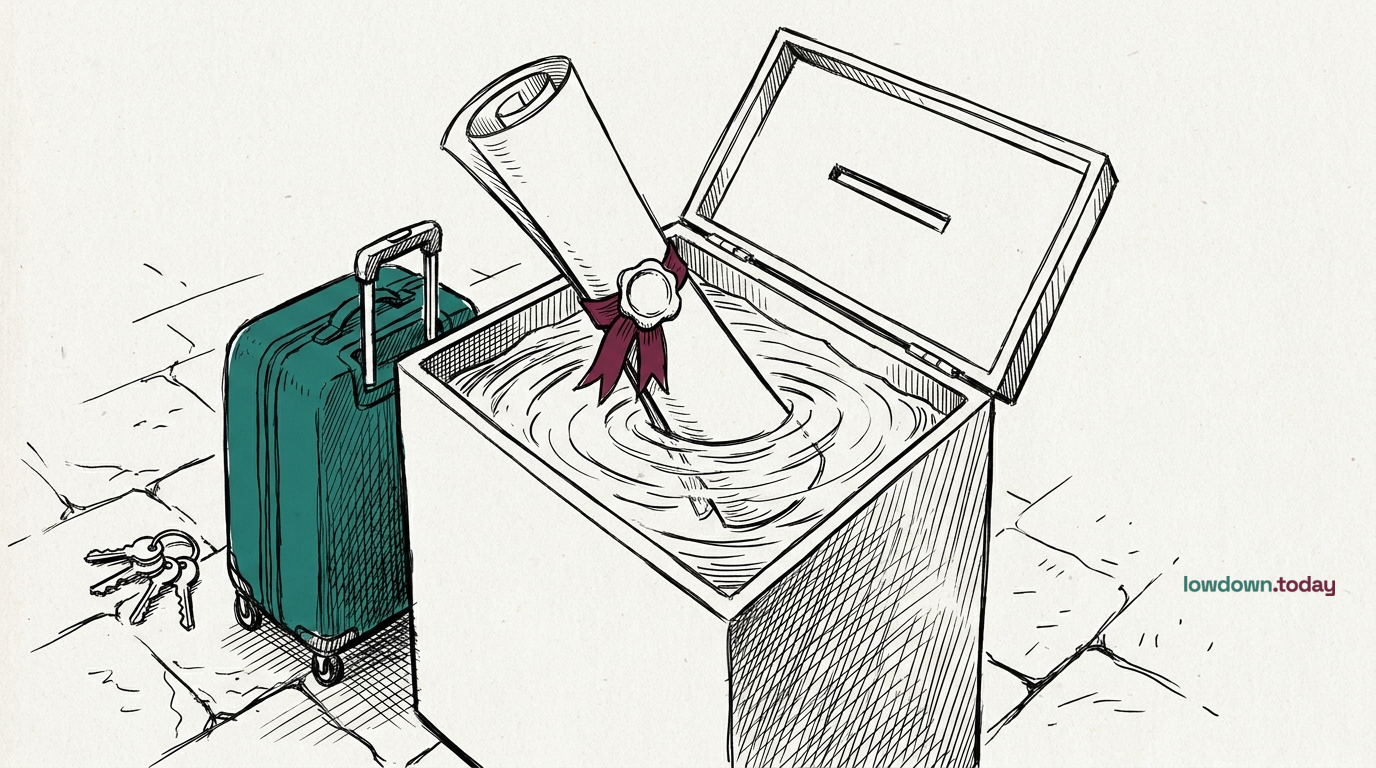
The Canary Islands parliament passed the Ley de Municipios Turísticos de Canarias on 8 July 2026 by 63 votes to nil, with 3 Vox deputies abstaining, closing a regulatory gap open since 19931. The Canary Islands are a Spanish archipelago off northwest Africa and one of Europe's busiest tourist destinations. The law creates two legal categories that trigger automatically by fixed thresholds, so a town's obligations follow its visitor load rather than the will of whoever runs the council.
The high-volume tier, turístico de excelencia, bites when registered tourist beds pass 5 times the resident population, or reach 4,000 beds, or when five-star capacity exceeds 10 per cent of the population; on the greener, less-developed islands the trigger drops to 3 times the population or 2,000 beds2. It counts beds, the plazas on the tourism register, not annual arrivals. The distinctive-asset tier, turístico de singularidad, turns on holding at least two singular tourist assets plus tourism exceeding 5 per cent of the local economy.
Cross either threshold and the town inherits binding duties: statutory planning instruments, sustainable-mobility measures, and public-service upgrades funded against the visitors it carries. Adeje, Arona and San Bartolomé de Tirajana, the last with just 54,116 residents yet drawing roughly 1.5 to 1.7 million visitors a year, clear the bed and ratio bars comfortably, with the regional tourism authority still to verify each classification.
Spain's national short-term-rental (STR) registry, the single system for licensing holiday lets, was voided by the Tribunal Supremo on federalism grounds after the court ruled Madrid had overstepped its constitutional authority, a ruling that landed as national STR inventory fell 12.4 per cent to 329,764 listings. The Canarian law routes around that fragility by legislating where competence has held, at the region and the municipality, producing a status that outlasts any one council.


