Skip to content
Welcome, thoughtbot's Giant Robots listeners!Start here
Is Britain Actually Broke?
22OCT

£4bn of £10.3bn defence funding is a budget cut

3 min read
16:23UTC

HM Treasury and the Ministry of Defence published the £10.3bn Defence Investment Plan breakdown on 30 June 2026. £3.5bn of it comes from asset sales and Treasury support, neither of which can happen twice.

EconomicDeveloping
Key takeaway

£3.5bn of the defence package cannot repeat next year, and the commitment it funds does.

HM Treasury and the Ministry of Defence published the funding breakdown for the Defence Investment Plan on 30 June 2026, identifying £10.3bn: £4.0bn from a 1p-in-every-£1 cut to departmental capital budgets, £1.1bn from asset sales, £2.4bn of Treasury support for international objectives and procurement, £0.8bn of savings from the Department for Transport and £2.0bn from the Department for Energy Security and Net Zero⁠1. A further £4.7bn is deferred, in the government's own words "to be funded at Budget 2026".

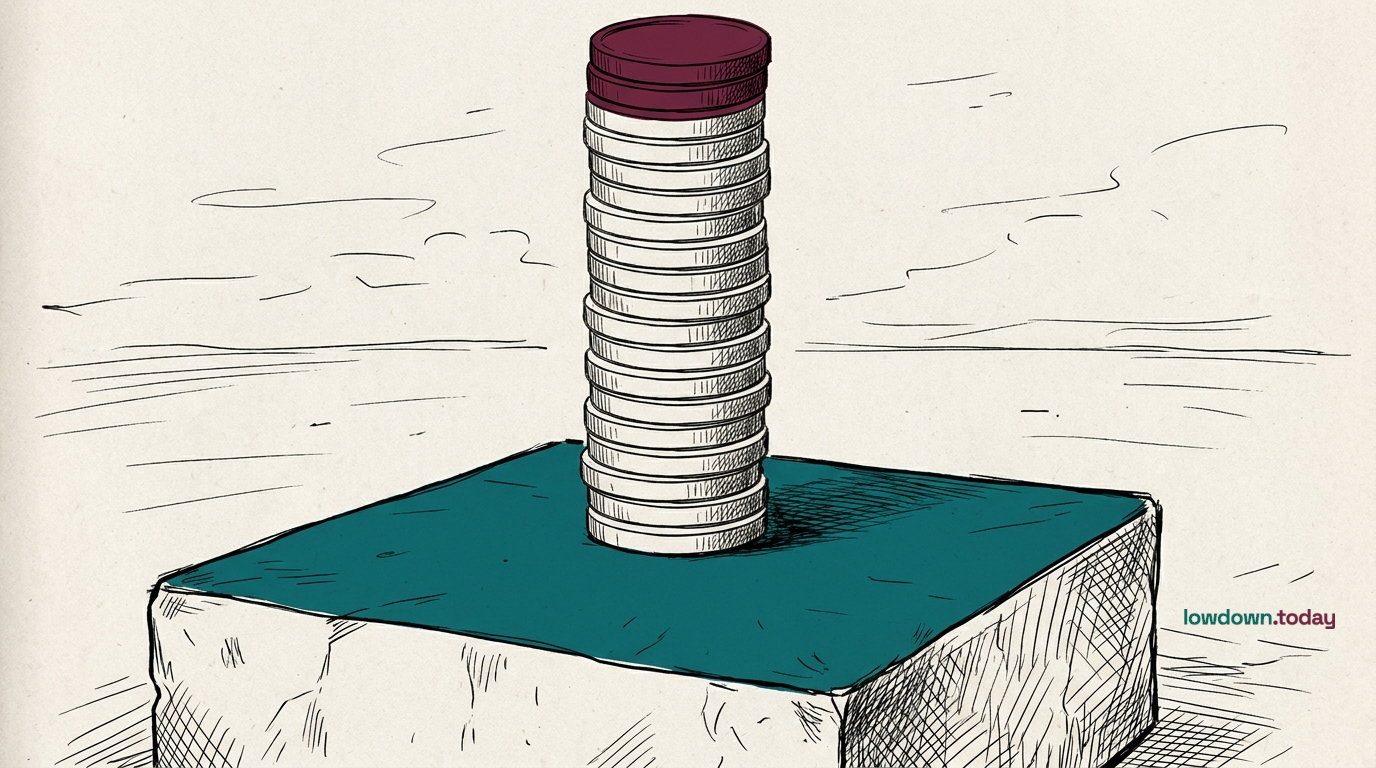
The parts do not behave the same way, which is why the single total is the misleading version. Asset sales and Treasury support come to £3.5bn between them, roughly a third of the package, and neither can be repeated next year. You can sell a building once. The defence bill arrives every year. Funding a permanent commitment with one-off receipts is a recognised presentational device in UK fiscal accounting, and it has form: the same structure appeared in the privatisation receipts of the 1980s and in local authority capital receipts through the 2010s. It ends the same way each time, when the saleable assets run out.

The capital budget cut behaves differently again. Reducing departmental investment by a penny in the pound produces a clean saving now and a cost that surfaces years later as a maintenance backlog on roads, schools and estates that were not renewed on schedule. Whether the 1p cut saves money or merely defers it depends on which projects were dropped.

One consequence has already been made explicit. A written ministerial statement of 19 March 2026 confirmed official development assistance falling to 0.3% of gross national income by 2027/28 to help pay for defence, with a stated intention to return to the long-standing 0.7% target when finances allow⁠2. The autumn Budget is where the remaining £4.7bn either becomes money or becomes another round of reprioritisation.

Deep Analysis

In plain English

The government needed to find £10.3bn to help pay for the higher defence spending it has committed to. Some of that money is a genuine ongoing saving, cutting a small share of every department's capital budget every year. But a third of it, £3.5bn, comes from selling assets and one-off Treasury support, money that can only be raised once. That matters because the defence commitment itself keeps rising every year, this one included. Money you can only raise once cannot pay for a bill that arrives annually; eventually the government has to find a repeatable source, more tax revenue or a different ongoing saving, to replace the one-off money once it is spent.

What could happen next?
  • Risk

    The £3.5bn of one-off funding (asset sales and Treasury support) cannot recur, so an equivalent gap will reopen in a future year against a defence commitment that keeps rising.

First Reported In

Update #1 · The distress moved from banks to councils

HM Treasury and Ministry of Defence· 27 Jul 2026
Read original →
Different Perspectives
Pension Protection Fund
Acting chief actuary Aaron Pang put the rise to 135.0% funded down to liabilities falling 2.1% against a 1.0% fall in assets, reflecting higher gilt yields. On Lowdown's reading, the yields that lift the Treasury's interest bill leave 4,838 company schemes with a £280.7bn surplus that does not reduce state borrowing.
Torsten Bell
Torsten Bell
The Labour figure wrote on 14 October that the IMF's October figures show the fastest fiscal consolidation in the G7. The IMF forecasts the UK deficit falling from 3.8% of GDP in 2026 to 1.4% in 2031, a squeeze still to be delivered through taxes and spending.
Tax Justice UK
Tax Justice UK
The left-leaning campaign group says ten tax reforms would raise over £60bn a year for public services, and on 22 October asked why higher taxes on extreme wealth remain politically difficult. It offers the tax-led exit to the IEA's cuts; the £60bn is its own claim, not an official costing.
Institute of Economic Affairs
The free-market think tank's Alternative Budget of 19 October would suspend the state pension triple lock for three years, freeze welfare in cash terms and move tax onto a wider VAT. It claims the day-to-day budget returns to surplus in 2027-28, its own projection rather than an official costing.
Resolution Foundation
The living-standards think tank said welfare spending ran about £2.5bn above expectations in September, City AM reported on 21 October, and its economist Greg Thwaites urged targeted energy support. Its figure lands as a Chancellor who calls welfare cuts a moral duty finalises the 28 October Budget.
Institute for Fiscal Studies
Director Helen Miller said a steady-as-she-goes Budget is not an option, with the IFS putting 2029-30 headroom at about £20bn, The Independent reported on 12 October. The IFS puts the cost of avoiding cuts and funding higher defence at around £35bn of tax rises or benefit cuts, more than any headroom estimate in circulation.

Written with AI from Lowdown's published reporting. Not individually reviewed by an editor. Editorial standards.