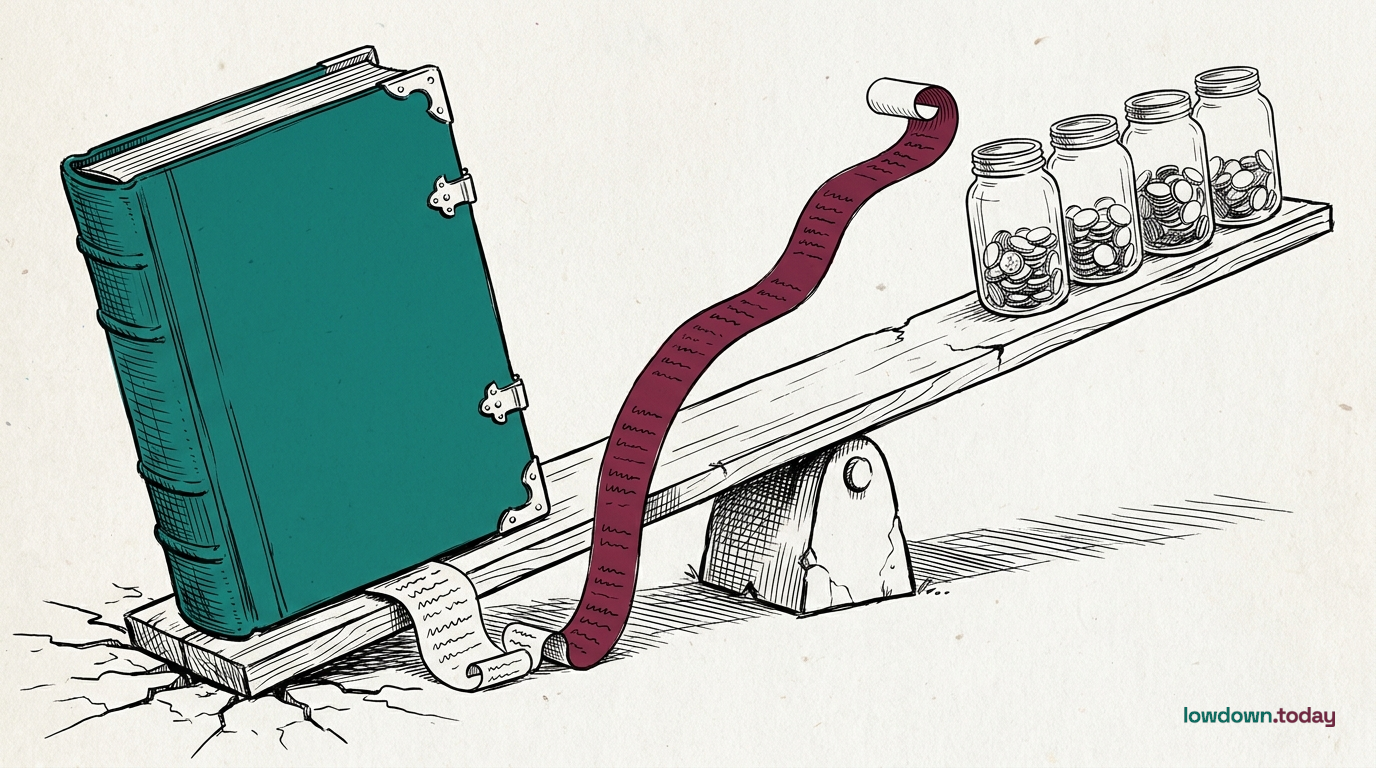
The Office for National Statistics (ONS) reported on 22 September that public sector borrowing reached £18.3bn in August, £3.5bn above the monthly path set by the Office for Budget Responsibility (OBR), the government's independent forecaster1. Borrowing for the financial year to August came to £77.3bn against an OBR profile of £69.2bn, an overshoot of £8.1bn. That gap feeds into the starting point for the forecast the OBR publishes with the Budget, against which the Chancellor's plans are judged.
In August this desk reported July's borrowing at £2.3bn over the OBR profile. Revisions have since added £2.3bn to borrowing for April to July, now £59.0bn, leaving those four months £4.6bn over profile; August's £3.5bn takes the total to £8.1bn. Most of the revision came from a £1.4bn cut to earlier tax receipts.
Benefits and interest explain about half the gap. Central government accounts for £6.3bn of the £8.1bn, with benefits £2.4bn and debt interest £2.0bn above forecast. Interest reached £8.8bn in August alone, the highest August on record, and £2.1bn of it came from a 0.3% rise in the Retail Prices Index (RPI) feeding into index-linked gilts, the government bonds whose payments rise with prices.
Public sector net debt fell to 93.8% of GDP (£2,985.5bn), from 94.1% at the end of July. As in July, the debt ratio improved while borrowing overshot. The Institute of Economic Affairs (IEA), a free-market think tank, argued on 28 September that alcohol, tobacco and landfill duties raised £5.2bn less than the OBR projected, because forecasts assume people do not change behaviour when a tax rises2. The IEA's figure covers a different comparison and does not measure this year's five-month overshoot.

