The Office for National Statistics (ONS) published its sector accounts, which track who lends and who borrows across the economy, on 30 September1. They show government borrowing at 5.2% of GDP between April and June, up from 4.2% in the first quarter. That borrowing adds to the public debt stock this desk took as its baseline in July. Financial corporations borrowed a further 0.4%. Households lent 2.4% of GDP, non-financial companies 0.6% and overseas lenders 2.8%; as published, the lending and borrowing figures differ by 0.2 points of GDP.
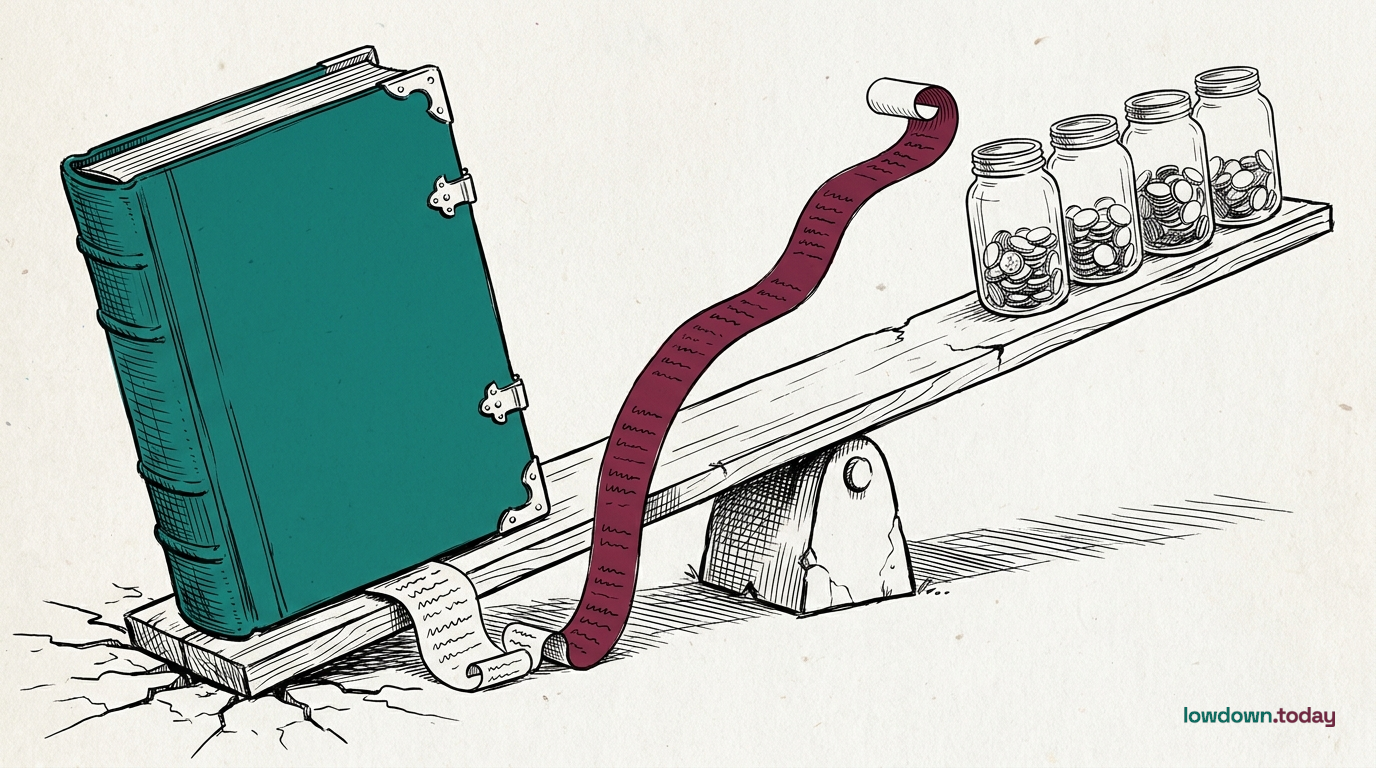
In these accounts one sector's borrowing always equals another's lending. A claim that households are fine therefore partly restates the fact that the state is borrowing.
The household saving ratio, which includes pension saving, was 8.8%, and real disposable income per head rose 1.0% after a 0.8% fall in the first quarter2. The ONS says the rise came mainly from social benefits, a category that includes the state pension, rather than from wages. Benefits count as household income in the accounts, so part of the household cushion is the other side of the state's deficit.
A correction to this desk's own record follows. In July this desk printed the first-quarter saving ratio as 8.9%; on the revised series it was 8.6%, so the cushion was thinner than we printed. Second-quarter GDP growth was revised up to 0.5%, from 0.4%.

