Skip to content
You can now search across every topic, entity and event.What's new
Is Britain Actually Broke?
3SEP

One number is a model, one a count

2 min read
15:29UTC

The Office for Students counted 102 of 279 providers forecasting a deficit in their own filed returns, 8.4 points below the modelled figure this desk has been publishing for the same year.

EconomicDeveloping
Key takeaway

OfS counted 36.6% of providers in deficit against its own modelled 45%.

The Office for Students (OfS) counted 102 of 279 providers, or 36.6%, forecasting a deficit for 2025-26 in the Annual Financial Return each one filed itself, in the annual report it published on 14 May 2026 1. That is up from 84 providers, 30.1%, the cycle before, and the report puts restructuring costs at £218.2m in 2024-25, a rise of 20.7%. The Annual Financial Return is the yearly account of its own finances that every registered provider must send the regulator.

The 45% and 41% this ledger has carried come from the same regulator for the same academic year. Each figure is accurate for the year it names, 45% of English providers in deficit for 2025-26 and 41% in 2026-27. Both come from the OfS update of November 2025, where they appear as the regulator's own modelled scenario for what happens "without mitigating action" 2.

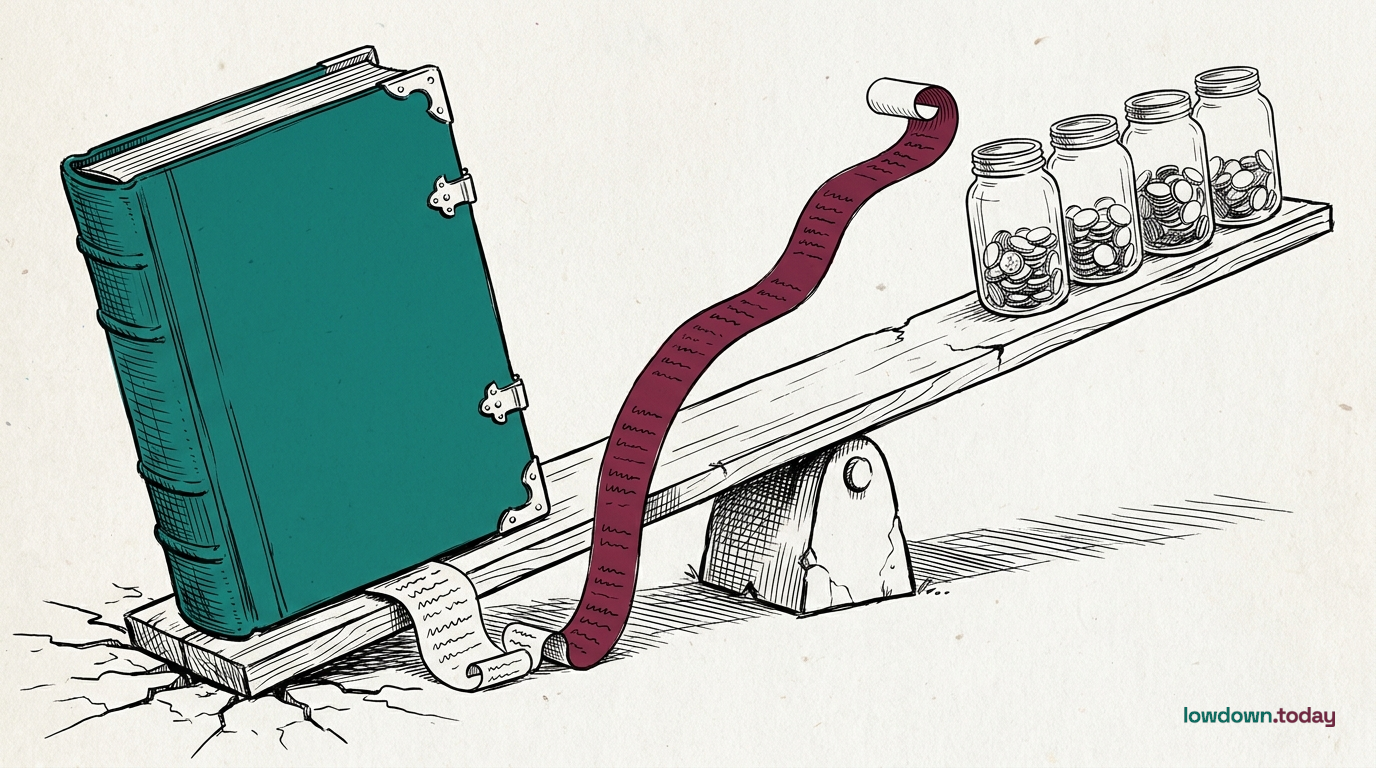
8.4 points separate the model from the count. One figure is a modelled downside case, the other a tally of what the sector actually submitted, from one regulator, for one academic year. Neither replaces the other, and this desk's cell will now name the model as a model rather than presenting it as a count.

No 2026-27 deficit count appears anywhere in the May report, so the 41% has nothing in the register to check it against, and saying so beats implying otherwise. A student feels the difference as the gap between a warning and a course that closes. The report itself predates this window by three and a half months and appears here because no outlet reported it.

Deep Analysis

In plain English

English universities and colleges report to their regulator, the Office for Students, on whether they expect to spend more than they earn. Two different exercises produced two different numbers for the exact same academic year. One number, published in November 2025, modelled a worst-case scenario if nothing changed and found 45% of providers would be in deficit. The other, published on 14 May 2026, simply counted what 279 providers actually told the regulator in their own financial returns: 36.6%, or 102 providers. Neither number is wrong; they measure different things, a projected worst case against providers' own current forecast.

Deep Analysis
Root Causes

The two OfS figures for 2025-26 measure different things by design. The 45% comes from a modelled scenario built on autumn 2025 recruitment data and assumes no further mitigating action is taken; the 36.6% comes from providers' own Annual Financial Return forecasts, filed as their current best estimate.

A model of a downside case and a count of what institutions actually submitted will diverge whenever real behaviour departs from the modelled assumption, which is exactly what discipline rule 2 means by naming a projection as the projector's own.

A second structural cause is timing: the 45% figure was modelled in November 2025, before providers had filed their most current AFR forecasts; the 36.6% count reflects a later filing round in which some providers had already taken cost action the earlier model could not see.

What could happen next?
  • Meaning

    OfS's 36.6% figure is a count of what providers themselves filed, not a projection, and is more current than the modelled 45% figure this desk previously carried.

  • Precedent

    The prior year's forecast for the same metric moved three times before an audited outturn was known, so this year's figures should be expected to move again before 2025-26 is audited.

First Reported In

Update #3 · Debt ratio fell; borrowing missed by £2.3bn

Office for Students· 3 Sept 2026
Read original
Causes and effects
This Event
One number is a model, one a count
A regulator's downside model and a tally of what providers actually filed are different exercises, and neither supersedes the other.
Different Perspectives
Structural case for reading the fall as genuine improvement
The debt ratio fell, borrowing fell year-on-year in cash terms by £6.0bn over the financial year to date, and two gilt auctions cleared at bid-to-cover ratios of 3.39 and 3.58 times with no sign of buyers demanding a premium for risk. On that reading, the state of Britain's public finances has not deteriorated this fortnight.
Office for Students
Office for Students
OfS's November 2025 modelled scenario puts 45% of providers in deficit for 2025-26; its separate May 2026 annual report, counting what providers actually filed for the identical year, puts the figure at 36.6%. Neither publication reconciles the two for the reader.
Regulator of Social Housing
The RSH's Q1 survey of 195 landlords found cash interest cover falling to 59% and described recovery as "slower than previously forecast", while recording the same sector raising £4.3bn and lifting its twelve-month development forecast to £16.0bn, a three-year high.
Chartered Institute of Public Finance and Accountancy
CIPFA's External Assurance Review, published by MHCLG on 18 August, found Worcestershire County Council does not anticipate exiting Exceptional Financial Support before 2028 at the earliest, based on the council's own overspend concentrated in adult and children's social care.
Ministry of Housing, Communities and Local Government
MHCLG's own guidance page still lists all 36 named authorities as support agreed "in-principle", stating final amounts and capitalisation directions follow "once confirmed", a status unchanged since February despite the list growing to 36 authorities by 18 August.
Office for Budget Responsibility
The OBR's Economic and Fiscal Outlook, the forecast the ONS bulletin was checked against, dates to 3 March 2026 and will not be updated until 28 October, with no change made in this window to the 1.4% long-run productivity assumption that most moves its debt projections. It made no comment on this fortnight's releases directly.