Skip to content
Briefings are running a touch slower this week while we rebuild the foundations.See roadmap
Iran Conflict 2026
15MAY

Beijing's Hengli reply stops at the embassy

2 min read
13:51UTC

China's Washington embassy called the OFAC Hengli Petrochemical designations 'illegal unilateral sanctions' on Saturday 25 April; no MOFCOM elevation followed.

ConflictDeveloping
Key takeaway

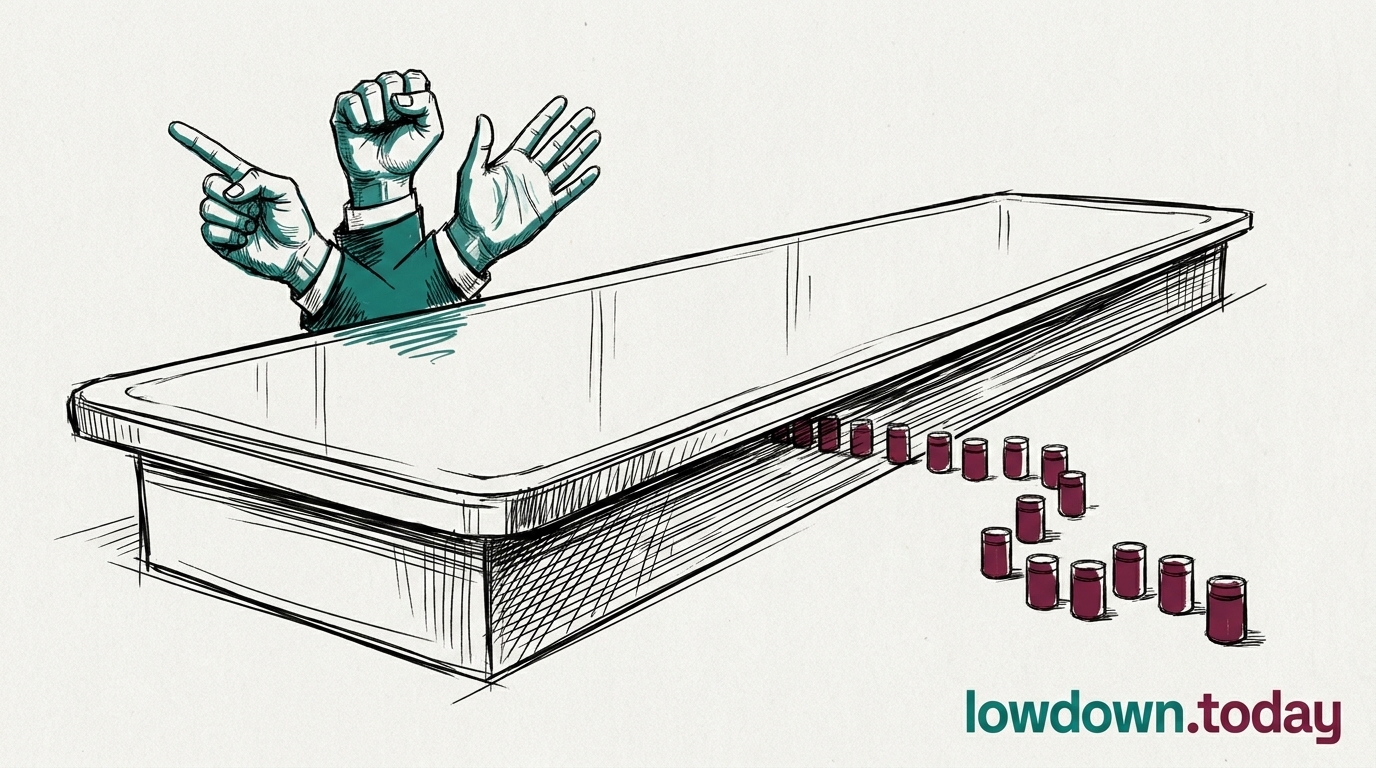
An embassy-level response to a designation against China's second-largest independent refinery is a deliberately under-weighted reply.

China's Washington embassy issued a statement on Saturday 25 April opposing the OFAC designation of Hengli Petrochemical as "illegal unilateral sanctions". The response stayed at the embassy floor; no MOFCOM elevation followed. MOFCOM is China's Ministry of Commerce, the cabinet-level body that issues China's retaliatory trade and sanctions instruments; an embassy statement is the lowest-rank state response in the Chinese diplomatic ladder.

Hengli is China's second-largest independent refinery. The OFAC action on Friday 24 April designated Hengli plus 39 entities under the sb0472 statutory authority and was the first US designation to cite Iranian-nuclear-programme financing as the legal basis . A response that stops at embassy level on a sanctions action against a domestic industrial player of Hengli's size signals Beijing's unwillingness to risk a trade escalation cycle with Washington in the current quarter.

The operational consequence is that Chinese-owned dark-fleet tonnage continues to dominate the surviving Hormuz traffic without a state-level escalation challenge to the legal predicate. OFAC has not yet published a GL-V wind-down deadline or authorised counterparty scope for Hengli's customers; that text, when it arrives, will set the price refiners and traders must pay to exit Hengli-related supply chains. Until MOFCOM elevates, Beijing's position on the nuclear-financing framing remains a verbal-only objection from the lowest rung of its diplomatic apparatus.

Deep Analysis

In plain English

When the United States sanctions a Chinese company, Beijing has several ways to respond. At the top end, China's Ministry of Commerce (MOFCOM) can issue counter-sanctions or formal retaliatory trade measures. Below that, the foreign ministry can issue a ministerial protest. At the bottom sits an embassy statement from Washington, which is what China chose for **Hengli Petrochemical**, its second-largest independent refinery. An embassy statement signals objection without risking trade escalation. China wants to keep buying Iranian oil through Hengli and similar refineries, but has decided this particular designation does not warrant a response that could trigger a broader trade confrontation with Washington.

What could happen next?
  • Meaning

    If OFAC extends Hengli-style designations to Chinese state-owned refineries such as Sinopec or PetroChina, Beijing cannot respond at embassy level; MOFCOM counter-measures and potential Anti-Foreign Sanctions Law invocation would become the required response.

    Short term · Assessed
  • Meaning

    Hengli's existing Iranian crude allocation will be redistributed to Chinese state-owned refineries at a discount, meaning Chinese demand for Iranian oil does not fall; the designation changes the buyer, not the volume.

    Short term · Assessed
  • Meaning

    The embassy-level response is read by OFAC as a green light to proceed with further designations of privately held Chinese entities buying Iranian crude, accelerating the enforcement cadence established by GL-V.

    Short term · Assessed
First Reported In

Update #80 · Three carriers, zero instruments

Lloyd's List· 26 Apr 2026
Read original
Different Perspectives
Gulf shipping and insurance markets
With Hormuz and Bab el-Mandeb both hostile at once, war-risk underwriters face their first dual-chokepoint pricing problem; the rerouting hedge that absorbed one closure is gone for Israeli-linked hulls. Any deal that reopens Hormuz without a Houthi stand-down clause delivers only partial shipping relief.
Russia and China
Russia and China
Russia and China met IAEA chief Grossi jointly in Geneva on 5 June to coordinate an advance blocking position against Washington's censure resolution, the first documented instance of proactive pre-session obstruction rather than reactive post-vote dissent. Beijing's move came four days after OFAC designated Shanghai Qianye Energy under Iran energy sanctions.
Saudi Arabia
Saudi Arabia
Saudi Arabia was left out of the emergency $4.01 billion Patriot waiver Qatar received on 2 May as its own PAC-3 stocks ran near-empty from intercepting Iranian salvoes over Aramco facilities. Riyadh is on a standard 18-month FMS queue behind a production line booked through 2030, with no equivalent priority to Qatar's Al Udeid basing role.
Houthis (Ansar Allah)
The Houthis declared a complete ban on Israeli Red Sea navigation on 8 June and struck Jaffa, their first attack on Israeli territory since April, seven days after the Tasnim authorisation to activate other fronts including Bab el-Mandeb. The declaration put both chokepoints under hostile authority simultaneously.
Iran
Iran
Iran agreed the 9 June mutual halt after the Mahshahr exchange and coordinated with Russia and China to block Washington's IAEA censure resolution, using the Board as a second front while the bilateral pause held on the military one. Tehran's acceptance of the Lebanon carve-out contradicts the linkage position it stated on 1 June.
Benjamin Netanyahu and the IDF
Israel struck the Karun Petrochemical plant at Mahshahr on 8 June over Trump's explicit objection, then agreed a halt with Iran the following day scoped on Israeli terms with Lebanon carved out. Netanyahu's posture is that the IDF will not accept Iranian missile factories as off-limits regardless of US diplomatic timelines.