Skip to content
Briefings are running a touch slower this week while we rebuild the foundations.See roadmap
Iran Conflict 2026
13MAY

B-2s sent; Iran buried arsenal survives

3 min read
12:29UTC

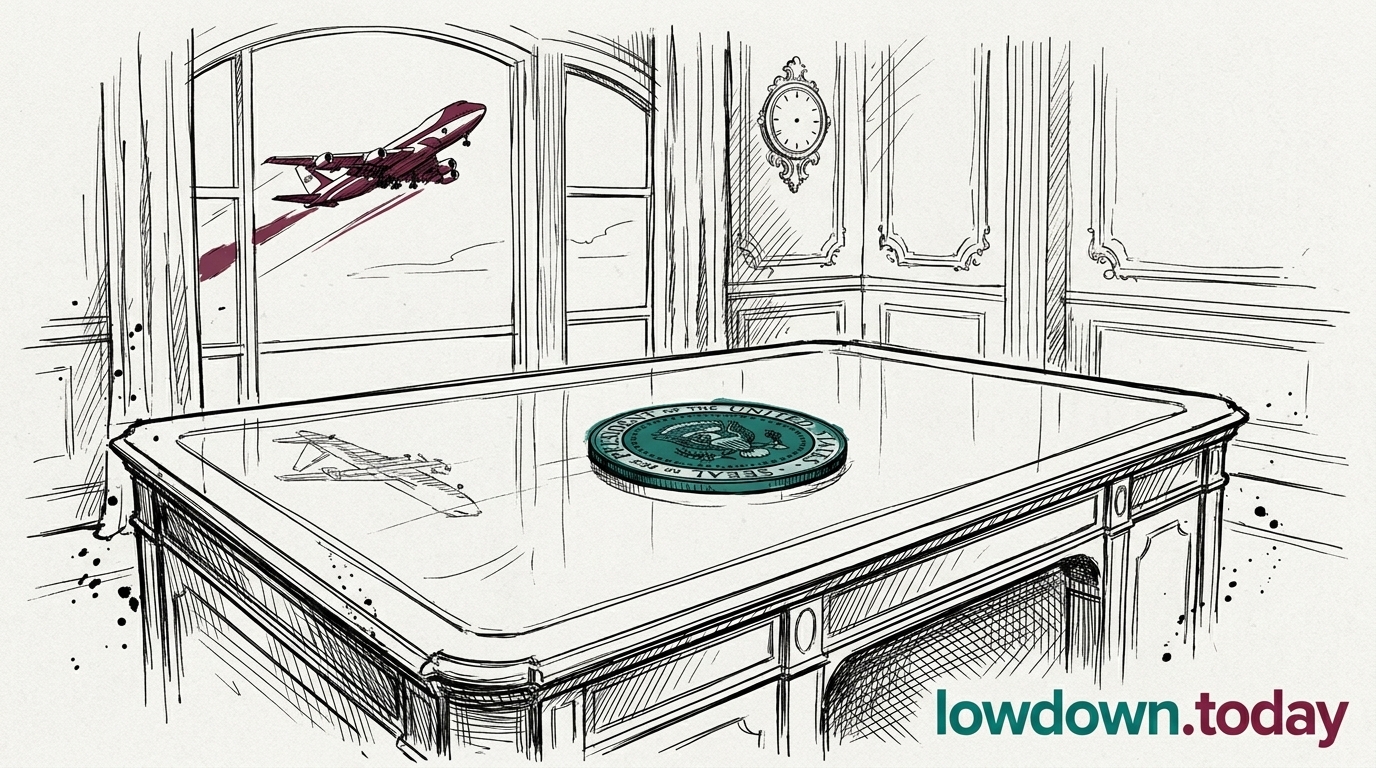
The US Air Force sent its most restricted bomber against hardened underground missile sites, confirming that three days and 2,000-plus munitions had not destroyed Iran's buried arsenal.

ConflictDeveloping
Key takeaway

The B-2 deployment with standard 2,000-lb JDAMs rather than the 30,000-lb Massive Ordnance Penetrator confirms the US is targeting hardened-but-not-deepest Iranian facilities, leaving the hardest underground sites either unaddressed or requiring escalation to a weapon the US has not yet committed.

B-2 Spirit stealth bombers flew from Whiteman Air Force Base in Missouri to strike hardened, underground Iranian Ballistic missile facilities, CENTCOM confirmed. The bombers delivered GBU-31 general-purpose munitions — 2,000-pound GPS-guided penetrating bombs — against targets that the campaign's initial barrage of more than 2,000 munitions across 24 of Iran's 31 provinces failed to destroy.

The B-2 is the US Air Force's most restricted combat asset. The fleet numbers roughly 20 aircraft, each valued at approximately $2.1 billion, and has been used in combat only a handful of times: Afghanistan in October 2001, Libya in March 2011, an ISIS camp in Libya in 2017. Each deployment followed the same logic — the target could not be reached by other means. That the B-2 was sent on day three confirms that the F-15Es and F-35s conducting the bulk of operations could not penetrate the facilities in question.

Iran has spent decades hardening its Ballistic missile infrastructure against this scenario. Facilities are buried under metres of rock and reinforced concrete, dispersed across the country after the Stuxnet cyberattack demonstrated in 2010 that the US and Israel would target strategic capabilities by any available means. The GBU-31 can breach moderate fortifications but has limited penetration depth against deep bunkers; the US possesses the 30,000-pound GBU-57 Massive Ordnance Penetrator, designed for those deep targets and deliverable only by the B-2 and the newer B-21. CENTCOM's confirmation of GBU-31 use suggests the facilities struck were moderately hardened — or that the deepest Iranian bunkers were not this sortie's objective.

After three days of the heaviest aerial campaign against a single country since the 2003 Iraq invasion, Iran's underground missile capability has not been eliminated. The IRGC claimed during the same period that it fired four anti-ship ballistic missiles at USS Abraham LincolnCENTCOM stated the missiles "didn't come close." Whether those missiles missed or were intercepted, they were launched. The infrastructure that produced and sheltered them remains at least partially intact.

Deep Analysis

In plain English

America has only about twenty B-2 stealth bombers in existence — they are irreplaceable and represent decades of investment. Flying them from Missouri to Iran and back requires multiple aerial refuelling aircraft and extraordinary logistics. The bomb choice matters as much as the aircraft: the US used a standard heavy bomb, not the special 30,000-lb 'Massive Ordnance Penetrator' built specifically to destroy Iran's deepest bunkers. This tells analysts two things: the facilities struck were genuinely hardened beyond what conventional strike aircraft could reach, but they were not Iran's most deeply buried sites. Iran's deepest infrastructure — including some nuclear facilities buried under mountains — may still be intact. The initial campaign of over 2,000 bombs across 24 provinces failed to destroy these sites, so the US had to send its most expensive, irreplaceable aircraft for a follow-up. That is an admission that Phase 1 was incomplete.

Deep Analysis
Synthesis

The B-2 deployment signals that Phase 1 of the campaign — publicly described as comprehensive — failed its stated objective of eliminating Iran's long-range missile threat. Committing the US Air Force's most strategically scarce conventional asset (approximately twenty airframes) to Phase 2 targets that 2,000+ munitions could not reach establishes a structural pattern: each escalatory rung reveals hardened targets requiring greater force, and the campaign has no defined terminus where the target set is exhausted.

Root Causes

Iran's systematic underground dispersal of missile and nuclear infrastructure was a direct institutional lesson from watching US forces destroy Iraq's above-ground military in 1991 and 2003. Fordow (buried under a mountain near Qom, operational by 2011) and the subsequent dispersal of missile production to tunnel complexes were explicitly engineered to survive a US air campaign and retain retaliatory capability long enough to impose unacceptable costs.

Escalation

The confirmation that 2,000+ initial munitions failed to destroy key underground missile facilities, requiring B-2 follow-on strikes, points toward a longer campaign than 'four weeks or less' implies. If GBU-31 B-2 strikes also prove insufficient for the deepest sites, the next escalatory rung is GBU-57 MOP deployment — which would almost certainly target nuclear infrastructure and would represent a categorically different strategic action with no precedent in the conflict thus far.

What could happen next?
  • Meaning

    Iran's ballistic missile production capacity survived 2,000+ initial munitions across 24 provinces; the campaign has degraded but not eliminated the threat it was ostensibly launched to address, and the administration's initial framing of a comprehensive first strike was operationally overstated.

    Immediate · Assessed
  • Risk

    If B-2/GBU-31 strikes also prove insufficient against the deepest facilities, the administration faces a binary: deploy GBU-57 MOPs against nuclear-adjacent infrastructure — a major escalation — or accept an openly incomplete outcome that leaves Iran's most hardened assets intact.

    Short term · Suggested
  • Risk

    Committing B-2s to the Iran campaign during a period of elevated Indo-Pacific tension reduces the US conventional deterrent signal to China at a strategically sensitive moment, creating a window of reduced Pacific deterrence posture.

    Medium term · Suggested
  • Precedent

    The first confirmed B-2 deployment against Iran's underground infrastructure demonstrates that the US will escalate to its most capable conventional strike systems when initial campaigns are insufficient, a precedent that will inform Iranian, Chinese, and North Korean decisions about the depth and hardening required to survive a US air campaign.

    Long term · Assessed
First Reported In

Update #12 · Rubio rewrites war's legal case in Congress

The Aviationist· 3 Mar 2026
Read original
Different Perspectives
Oil markets
Oil markets
Brent fell $1.05 to $106.0 on summit Day 1 but remains $5-7 above the post-ceasefire equilibrium analysts modelled in March; the market is pricing a holding pattern, not a breakthrough. OilPrice.com and Aramco CEO Nasser converge on buffer-exhaustion before Hormuz reopens if the blockade extends past mid-June.
Iranian dissidents and human rights monitors
Hengaw documented a five-prison simultaneous execution cluster on 13 May, with Gorgan appearing for the first time in the wartime register. Espionage charges framed as Israel-linked moharebeh now extend across Mashhad, Karaj, and Gorgan, using the war as judicial cover for protest-era detainees.
BRICS / Global South
Araghchi's Delhi appearance positioned Iran as a victim of US aggression before non-Western foreign ministers, with Deputy FM Bagheri Kani calling on BRICS to act against US aggression. India, as the largest non-Chinese user of Iranian-routed crude, faces pressure to balance bloc solidarity against its own shipping and sanctions exposure.
China
China
Beijing accepted the Nvidia chip clearance on summit Day 1 and gave Rubio verbal acknowledgement of Iran as an Asian stability concern, having already put Pakistan on paper as the mediatory channel on 13 May (ID:3253), deflecting the US ask for direct Chinese action without refusing it.
Iran (government and civilian diplomatic track)
Araghchi denied any Hormuz obstruction at BRICS Delhi on 14 May while Iran's SNSC had finalised a Hormuz security plan the day before. Israel Hayom's single-sourced 15-year freeze offer gives Tehran a deployable figure in non-Western forums regardless of corroboration; the state attributed 3,468 wartime deaths with no independent verification.
United States (Trump administration and Senate moderates)
Trump signed a chip clearance for 10 Chinese firms on summit Day 1 and zero Iran instruments across 76 days; Rubio and Vance made verbal Iran asks without paper. Murkowski voted yes on the 49-50 war-powers resolution after Hegseth told the Senate that Article 2 makes an AUMF unnecessary.