Skip to content
Briefings are running a touch slower this week while we rebuild the foundations.See roadmap
Iran Conflict 2026
11MAY

House kills War Powers Resolution on Iran

1 min read
14:01UTC

The House narrowly rejected a War Powers Resolution on Iran 219-212 on Saturday; Senate Democrats are forcing their own vote this week as the 60-day clock approaches 29 April.

ConflictDeveloping
Key takeaway

Three deadlines converge in 10 days with zero executive instruments behind them.

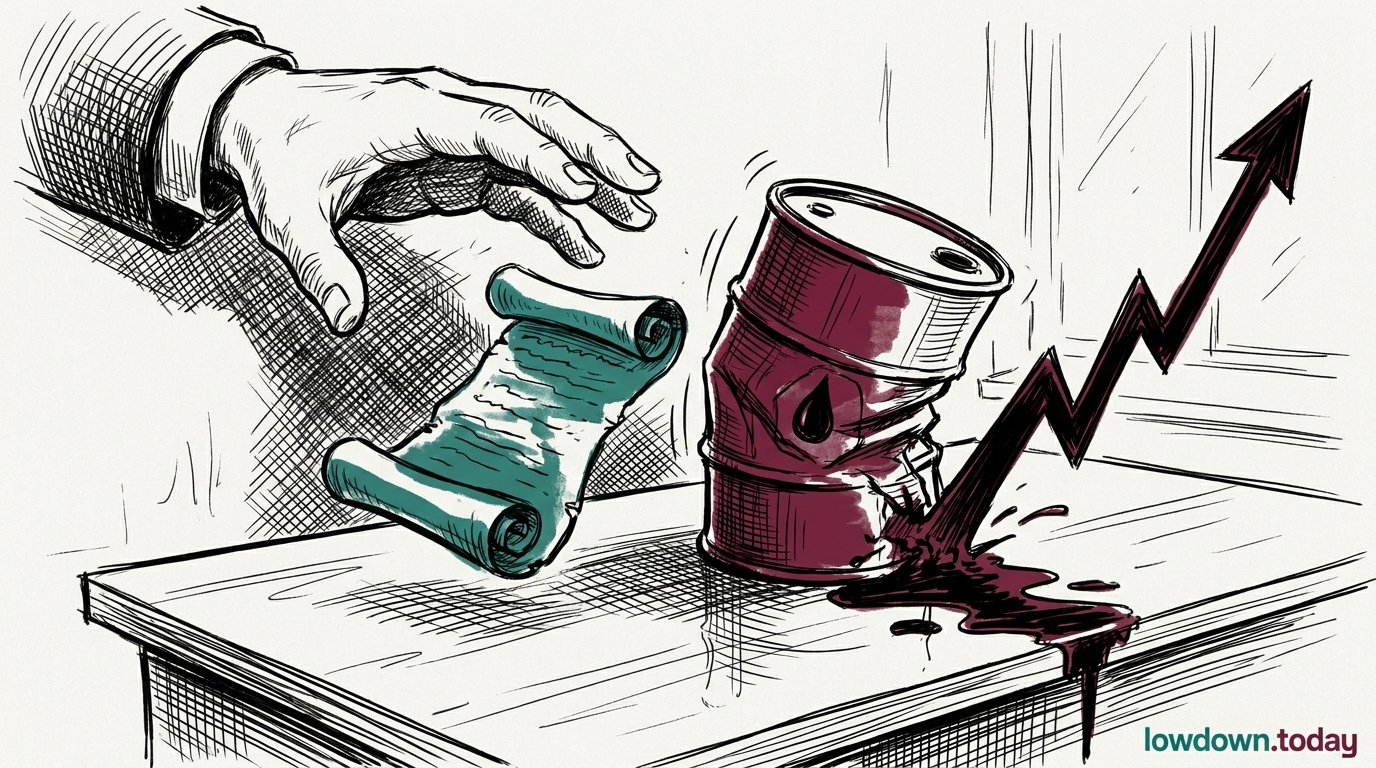
The House of Representatives rejected the War Powers Resolution (WPR) on Iran 219-212 on Saturday. Seven votes changed would have passed it. Senate Democrats, led by Mark Warner, announced they are forcing a vote this week. Even if the Senate passes a resolution, Trump would veto, and override requires two-thirds .

The blockade announcement on Sunday, which followed the House vote, adds a new question. A naval blockade is an act of war under international law. Whether it constitutes a fresh introduction of forces into hostilities, requiring separate congressional notification under the WPR, is a live legal question .

GL-U lapses this Saturday . The ceasefire window closes the following Wednesday. The WPR 60-day clock runs out around 29 April. All three fall within a 10-day window; none has a presidential instrument behind it.

Deep Analysis

In plain English

The War Powers Resolution is a law from 1973 that says the US president must get approval from Congress within 60 days of sending troops into combat, or withdraw them. It was passed after the Vietnam War, when Congress felt it had lost control of military decisions. The 60-day clock on the Iran war started on 28 February when strikes began. That means Congress's deadline to act falls around 29 April. On 12 April, the House of Representatives voted 219-212 to reject a resolution that would have required Trump to end the military action. That is a razor-thin margin: just four votes from passing. Senate Democrats are now forcing their own vote in the upper chamber this week. Even if the Senate passes it, Trump would almost certainly veto it, and overriding a veto requires two-thirds of Congress, which the Democrats do not have. The practical effect is political: Democrats are creating a public record of opposition without enough votes to stop the blockade.

What could happen next?
  • Precedent

    A 219-212 House vote on War Powers Resolution establishes the narrowest majority ever to reject WPR application to an active US combat operation, weakening the precedent for future congressional oversight.

    Long term · Assessed
  • Risk

    The blockade, announced after the House WPR vote, may constitute a new introduction of forces into hostilities, restarting the 48-hour notification clock and creating separate legal exposure.

    Immediate · Medium
  • Consequence

    Three converging deadlines, GL-U expiry 19 April, ceasefire 22 April, WPR clock 29 April, give Congress and allies a compressed window before the legal architecture collapses simultaneously.

    Short term · Assessed
First Reported In

Update #67 · Trump blockades Iran on a tweet

NBC News· 13 Apr 2026
Read original
Different Perspectives
Israel
Israel
Israeli strikes on Hezbollah positions in Lebanon continued through the weekend, maintaining the secondary front. The IDF has publicly named Mojtaba Khamenei as an assassination target; his courier-governance mode complicates targeting but does not remove him from the order.
Russia
Russia
Putin told a Moscow press conference that Washington, not Tehran or Moscow, killed the Russia-custody uranium arrangement by demanding US-territory-only storage. Neither Tehran nor Washington has corroborated the account, which appeared in second-tier outlets only, consistent with a trial balloon rather than a formal position.
United Kingdom
United Kingdom
HMS Dragon was redeployed from the Eastern Mediterranean to the Middle East on 9 May, the first physical European platform commitment to the Gulf. The Ministry of Defence called it "prudent planning" while publishing no rules of engagement, no tasking order, and no vessel name, committing a named asset to a conflict zone before the political instrument authorising it exists.
United Arab Emirates
UAE air defences intercepted two Iranian drones over its territory on 10 May, a kinetic escalation six days after the Fujairah oil terminal strike that drew no formal protest. The three-state simultaneous operation, not the severity of individual strikes, appears to have crossed the threshold at which the GCC states collectively began responding.
Saudi Arabia
Saudi Arabia
Riyadh issued the first formal Gulf-state protest of the conflict on 10 May, demanding an "immediate halt to blatant attacks on territories and territorial waters of Gulf states", ending 10 weeks of channelling displeasure through OPEC+ quota discussions. The protest forecloses Saudi Arabia's preferred quiet-channel role and reduces the functioning back-channel architecture to Pakistan alone.
Qatar
Qatar
Doha is simultaneously a strike target, the site of the Safesea Neha attack 23 nautical miles offshore, and an active MOU mediator: Qatar's prime minister met Rubio and Vance in Washington the same weekend. Whether Qatar issues its own formal protest or maintains its dual role is the critical escalation indicator for the week of 11 May.