Skip to content
You can now search across every topic, entity and event.What's new
Iran Conflict 2026
10MAY

Iran hangs a 15th uprising protester

3 min read
14:22UTC

Abbas Akbari Feyzabadi was hanged in Isfahan on Monday for taking part in January's protests, the 15th execution tied to the uprising. His sentence was carried out before his family was told.

ConflictDeveloping
Key takeaway

Iran's execution tempo over the January protests continues unbroken while its diplomats negotiate abroad.

Abbas Akbari Feyzabadi was executed on Monday 25 May in Isfahan province on a charge of moharebeh, enmity against God, for taking part in the January 2026 protests, according to i24 News and the Oslo-based monitor Iran Human Rights (IHRNGO) 1. Iranian authorities accused Akbari Feyzabadi of opening fire on security forces and attacking government buildings, and carried out his Supreme Court-upheld sentence before notifying his family.

He was the 15th person put to death over the January uprising, the wave of protests that swept Iran early in the year and met a lethal state response. His case is distinct from that of Mojtaba Kian, executed a day earlier on espionage charges . The two hangings on consecutive days mark different tracks of the same crackdown: one framed as wartime espionage, the other as armed rebellion.

For the reader: moharebeh is a capital charge under Iranian law for waging war against the state, applied here to protest activity that the authorities say turned violent. The pre-notification execution, carrying out the sentence before telling the family, is a pattern rights monitors have documented repeatedly through the war.

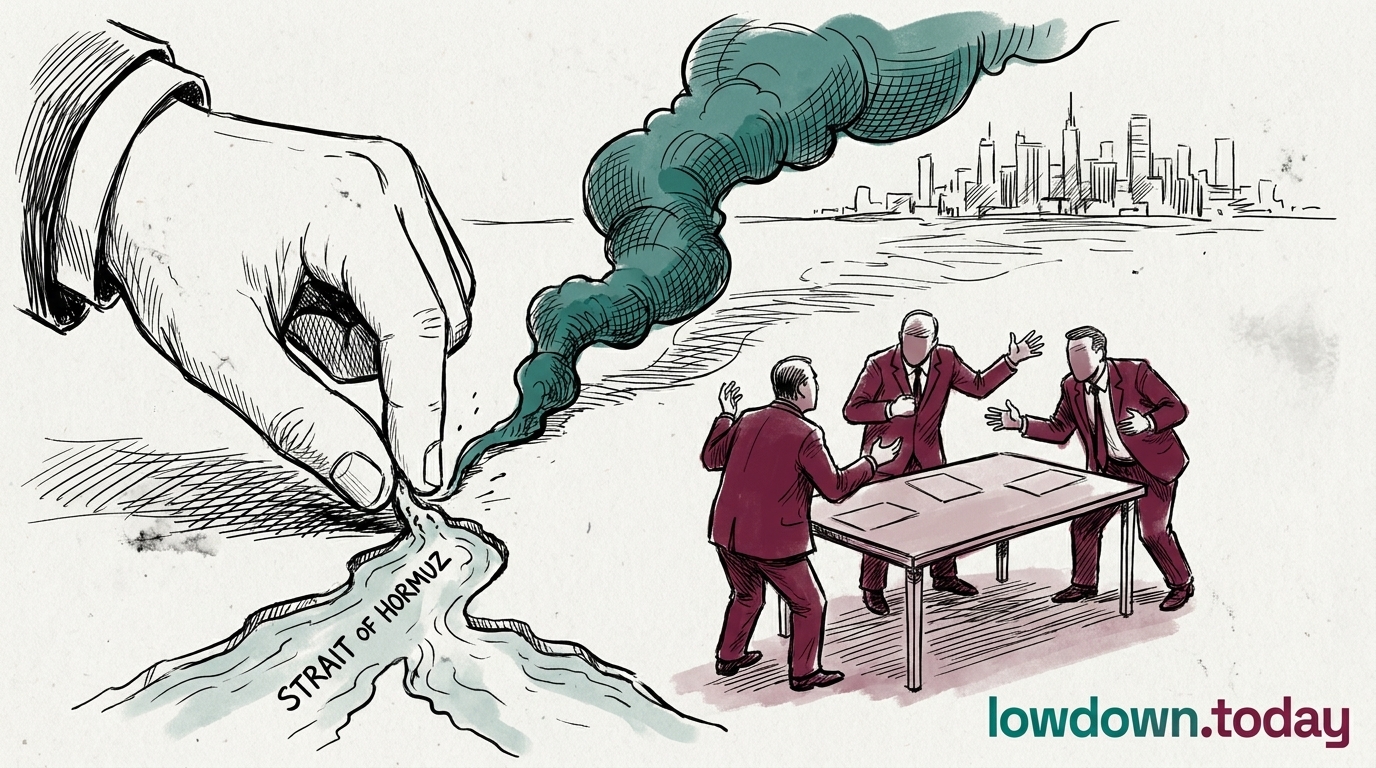
The rights record runs in parallel to the diplomacy, not behind it. Amnesty International's 2026 execution register passed 200 earlier this month , and Akbari Feyzabadi's death adds to a count that has not slowed while negotiators talk. The table in Beijing and the gallows in Isfahan ran on the same Monday, and only one of them produced a document.


Deep Analysis

In plain English

Iran executed Abbas Akbari Feyzabadi in Isfahan province on 25 May. He was the 15th person put to death for taking part in the January 2026 protests, which erupted after Supreme Leader Ali Khamenei was killed in the US-Israeli strikes that started the war. He was charged with 'enmity against God', a capital offence under Iran's Islamic Penal Code, based on accusations that he fired on security forces and attacked government buildings. Iran Human Rights (IHRNGO) in Oslo documented the execution and confirmed the family received no prior notification. The executions for protest activity continue even as Iranian officials hold diplomatic talks aimed at ending the war, a pattern Iran has followed in previous conflicts and protest crackdowns.

What could happen next?
  • Consequence

    The 15-execution pace for January-uprising activity means European governments conditioning any Iran sanctions relief on human-rights improvements face a rising evidentiary record that makes conditionality politically harder to waive.

  • Risk

    If the pace of executions accelerates beyond 15 before any MOU is signed, parliamentary scrutiny in EU member states may add human-rights conditions to any sanctions-waiver instrument that requires European legal frameworks to implement.

First Reported In

Update #107 · Two markets, two prices on one Iran deal

i24 News· 25 May 2026
Read original
Different Perspectives
Oil markets / Lloyd's of London
Brent fell to near $87.33 on 80 per cent deal-probability pricing, but Lloyd's has not de-listed Hormuz from its war-risk register and shipping diversions continue at 139 vessels. Insurance markets are lagging futures: physical risk remains while financial markets have spent the good news before the paper exists.
India
India
Modi is expected to raise the deaths of three Indian sailors in the 11 June CENTCOM strike on the MT Settebello with Trump at G7 sidelines, the first non-party leader to put the blockade's human cost into a formal bilateral. New Delhi is also a major Iranian oil buyer whose import volumes the sanctions-relief terms will govern.
Israel (Netanyahu)
Israel (Netanyahu)
Netanyahu stated Israel is not party to the deal on 12 June; Defence Minister Katz ruled out the Lebanon withdrawal Iran's draft demands, inserting a third blocker the US-Iran negotiating channel cannot resolve. Israel's position tethers Hormuz reopening to a Lebanon settlement Washington has not brokered.
Pakistan (mediator, Sharif/Naqvi)
Sharif declared a final agreed text on 12 June before either principal confirmed it, running two Tehran visits in under a week without securing a written IRGC or Khamenei response. Islamabad's incentive to claim a diplomatic win outpaces its standing to deliver either capital's signature.
Iran foreign ministry (Araghchi)
Araghchi declared digital signing within days while setting dilute-in-Iran as a non-negotiable red line on the 440.9 kg HEU stockpile, a standing Tehran position he cannot override without authorisation from Khamenei, reachable only by courier. The FM track is sprinting to close before the IRGC reasserts control.
Trump administration / CENTCOM
Vance called the deal still TBD on 12 June while CENTCOM downed Iranian drones over Hormuz for a second consecutive night and the White House register stayed blank. Washington holds the ship-out position on HEU and has not signed an Iran instrument in over 100 days of conflict.



