Skip to content
Briefings are running a touch slower this week while we rebuild the foundations.See roadmap
Iran Conflict 2026
1MAY

COSCO ships pay IRGC toll at Hormuz

3 min read
10:38UTC

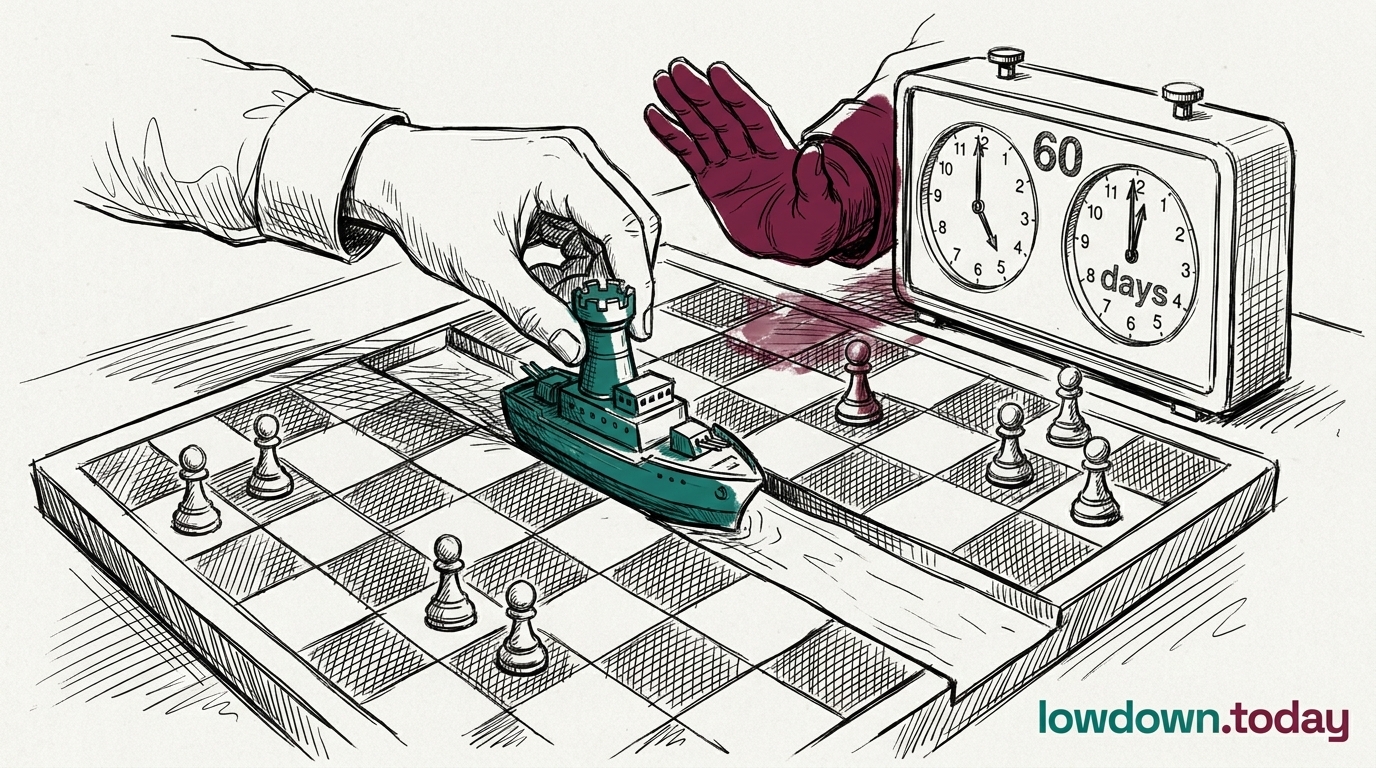
Two COSCO container vessels completed the Strait transit on their second attempt, normalising Iran's toll corridor at the container shipping level.

ConflictDeveloping
Key takeaway

China is helping normalise Iran's Hormuz toll by paying it with state-backed ships.

Two COSCO container ships, the CSCL Indian Ocean and CSCL Arctic Ocean, transited the Strait of Hormuz on 30 March. 1 They are the first container vessels operated by a major state-backed Chinese company to cross since the war began. An earlier attempt on 27 March was aborted with a U-turn near Iranian waters; the successful crossing took roughly 12 hours via Larak and Qeshm islands.

Container traffic matters differently from tanker traffic. Tankers moved through Hormuz under shadow-fleet arrangements and favoured-nation exemptions. Container ships carry manufactured goods, consumer products, and supply chain inputs. Their passage signals the IRGC's toll corridor is expanding beyond crude oil into general commerce. NBC News and Lloyd's List confirmed at least two vessels paid the IRGC approximately $2 million each to transit. 2 More than 20 vessels have used the tolled corridor since it opened.

The aborted 27 March attempt followed by success three days later suggests terms were negotiated in the interval, likely between Beijing and the IRGC directly. China is operationalising the toll at the container level, a step beyond tanker exemptions. For consumers beyond The Gulf, the toll will eventually surface not just in petrol prices but in the cost of electronics, clothing, and anything else that crosses the Indian Ocean.

Deep Analysis

In plain English

The Strait of Hormuz is the world's most important oil passage. Since the war began, Iran has been charging ships a toll to cross it, roughly $2 million per vessel. Two large Chinese state-owned ships crossed on 30 March after paying the toll. This matters because China is the world's largest trading nation. When Chinese state companies pay the toll, they signal to every other country that the toll is legitimate and here to stay. Iran's parliament is now drafting a law to make the toll permanent. The Strait went from a free international waterway to a paid checkpoint in 32 days. That cost eventually reaches consumers as higher prices on petrol, electronics, and imported goods.

Deep Analysis
Root Causes

China's supply chains depend on cross-Hormuz shipping for oil imports and Indian Ocean container transit. The two COSCO ships represent a pragmatic decision that the cost of continued blockage exceeds the political cost of paying the toll.

Beijing has leveraged its position as Iran's largest trading partner and diplomatic backer to secure transit. The aborted 27 March attempt followed by success three days later suggests direct negotiation between Chinese officials and the IRGC in the intervening period. China is operationalising its neutrality as commercial access, not political endorsement.

What could happen next?
  • Consequence

    China's state-backed commercial participation legitimises the toll system, making it far harder for any future administration to demand its removal as a non-negotiable condition.

    Immediate · 0.85
  • Consequence

    The toll corridor expanding from tankers to container shipping embeds the cost into consumer goods prices globally within weeks.

    Short term · 0.8
  • Precedent

    First instance of a major state-backed shipping operator paying an IRGC-operated toll, establishing the system as commercially viable and diplomatically tolerated.

    Medium term · 0.9
  • Risk

    Once codified in Iranian domestic law, reversing the toll requires a sovereignty concession no Iranian government can make without domestic political destruction.

    Long term · 0.8
First Reported In

Update #53 · Trump drops Hormuz goal; toll becomes law

gCaptain / Bloomberg· 31 Mar 2026
Read original
Different Perspectives
Oil markets
Oil markets
Brent fell $1.05 to $106.0 on summit Day 1 but remains $5-7 above the post-ceasefire equilibrium analysts modelled in March; the market is pricing a holding pattern, not a breakthrough. OilPrice.com and Aramco CEO Nasser converge on buffer-exhaustion before Hormuz reopens if the blockade extends past mid-June.
Iranian dissidents and human rights monitors
Hengaw documented a five-prison simultaneous execution cluster on 13 May, with Gorgan appearing for the first time in the wartime register. Espionage charges framed as Israel-linked moharebeh now extend across Mashhad, Karaj, and Gorgan, using the war as judicial cover for protest-era detainees.
BRICS / Global South
Araghchi's Delhi appearance positioned Iran as a victim of US aggression before non-Western foreign ministers, with Deputy FM Bagheri Kani calling on BRICS to act against US aggression. India, as the largest non-Chinese user of Iranian-routed crude, faces pressure to balance bloc solidarity against its own shipping and sanctions exposure.
China
China
Beijing accepted the Nvidia chip clearance on summit Day 1 and gave Rubio verbal acknowledgement of Iran as an Asian stability concern, having already put Pakistan on paper as the mediatory channel on 13 May (ID:3253), deflecting the US ask for direct Chinese action without refusing it.
Iran (government and civilian diplomatic track)
Araghchi denied any Hormuz obstruction at BRICS Delhi on 14 May while Iran's SNSC had finalised a Hormuz security plan the day before. Israel Hayom's single-sourced 15-year freeze offer gives Tehran a deployable figure in non-Western forums regardless of corroboration; the state attributed 3,468 wartime deaths with no independent verification.
United States (Trump administration and Senate moderates)
Trump signed a chip clearance for 10 Chinese firms on summit Day 1 and zero Iran instruments across 76 days; Rubio and Vance made verbal Iran asks without paper. Murkowski voted yes on the 49-50 war-powers resolution after Hegseth told the Senate that Article 2 makes an AUMF unnecessary.