Skip to content
Briefings are running a touch slower this week while we rebuild the foundations.See roadmap
Iran Conflict 2026
25APR

One in five Lebanese now displaced

3 min read
20:34UTC

One million Lebanese — nearly one in five — have been driven from their homes in 18 days, with 300,000 children among them and shelters overflowing.

ConflictDeveloping
Key takeaway

Lebanon's displacement crisis compounds an existing Syrian refugee burden on a fiscally collapsed state.

1,049,328 people — 19% of Lebanon's population — have been displaced since Israeli operations began, the International Organisation for Migration reported 1. More than 300,000 children are among them. Over 130,000 are sheltered across more than 600 collective sites. The International Rescue Committee reported thousands sleeping in streets.

The pace has accelerated sharply. Displacement stood at 800,000 on 11 March , reached 830,000 by 14 March , and passed one million after the IDF's 36th Armoured Division deployed to southern Lebanon alongside the 91st Galilee Division already in theatre. New evacuation orders for Tyre, Nabatieh, and surrounding villages triggered panic on the roads out, with residents reporting gunfire on evacuation routes.

Lebanon's 2006 war displaced roughly one million people over 33 days. This conflict matched that figure in eighteen. The comparison understates the strain: in 2006, Lebanon had not yet suffered the financial collapse that began in October 2019 — the World Bank called it one of the worst economic crises globally since the mid-nineteenth century — or absorbed the more than one million Syrian refugees who remain in the country. Hospitals, shelters, and municipal water systems were running beyond capacity before the first evacuation order.

The IOM's appeal for $19 million is modest against a displacement exceeding one million 2. Israel's evacuation zone covers 1,470 square kilometres — 14% of Lebanese territory . A Northern Command officer indicated the ground operation could continue until late May , and two armoured divisions are committed. Lebanon's currency has lost over 95% of its value since 2019; the state has no fiscal capacity to absorb this crisis domestically, and international funding has not materialised at the required scale.

Deep Analysis

In plain English

Nearly one in five Lebanese people have been forced from their homes. This is happening in a country already hosting roughly 1.5 million Syrian refugees — one of the highest refugee-to-population ratios anywhere in the world. Lebanon's economy effectively collapsed in 2019. Its currency lost over 98% of its value, the central bank is insolvent, and the Beirut port explosion in 2020 destroyed critical infrastructure. The emergency shelter system being activated now was already degraded before the first missile landed. The IOM's $19 million appeal covers roughly 90 minutes of this conflict's total daily cost.

Deep Analysis
Synthesis

The 1,049,328 displacement figure sits atop a country hosting an estimated 750,000–1.5 million Syrian refugees — meaning Lebanon's total displaced-and-refugee burden may approach 40–50% of its population. International humanitarian framing treats Lebanon as a single-front crisis; the compounded reality means response frameworks calibrated to either crisis alone will be structurally inadequate for both.

Root Causes

Lebanon's absorptive capacity is structurally near-zero independent of this conflict: the 2019 financial crisis eliminated government fiscal capacity, the pound's collapse destroyed household savings, and the 2020 Beirut explosion damaged hospitals and infrastructure that would otherwise anchor shelter operations. These pre-conditions convert displacement into destitution faster than in comparable conflicts.

Escalation

Two armoured divisions committed to an operation projected through late May guarantees displacement will deepen considerably. Evacuation orders covering Tyre and Nabatieh — significant urban centres — signal the IDF is moving well beyond the buffer-zone logic that defined the 2006 operation.

What could happen next?
  • Risk

    Shelter system saturation will force mass sleeping in streets before IOM funding mobilises, accelerating communicable disease risk among 300,000 displaced children.

    Immediate · Assessed
  • Consequence

    Displacement at 19% of population will translate into permanent emigration for a significant fraction of Lebanon's remaining professional and middle class.

    Medium term · Assessed
  • Risk

    Hezbollah's continued operational capacity means displaced populations cannot safely return during active operations, extending displacement duration well beyond prior Lebanese conflicts.

    Short term · Assessed
  • Meaning

    Lebanon's absorption of its own displaced while hosting Syrian refugees marks the collapse of its role as a regional humanitarian buffer state.

    Long term · Suggested
First Reported In

Update #40 · Larijani dead; Israel hunts the new leader

MEMO 886· 18 Mar 2026
Read original
Causes and effects
This Event
One in five Lebanese now displaced
The displacement of 19% of Lebanon's population in 18 days has exceeded the pace of the 2006 war, which displaced a comparable number over 33 days. Two Israeli armoured divisions are committed to a ground operation projected to last months, and Lebanon's infrastructure — already broken by economic collapse and hosting over a million Syrian refugees — cannot absorb a crisis of this speed.
Different Perspectives
International human rights monitors (NetBlocks, IHR, Hengaw)
NetBlocks recorded 1,704 cumulative hours of near-total internet blackout for roughly 90 million Iranians on Day 74, while IHR documented ongoing executions under emergency provisions. These organisations are the only active monitoring windows into a civilian population cut off from the global internet for 71 consecutive days.
UK / France coalition
The Royal Navy confirmed HMS Dragon's Hormuz deployment on its own website on 11 May, converting a press-reported presence into declared force posture; UK and French defence ministers hosted a coalition meeting the same day. Britain and France are now the only named contributors to a Hormuz escort mission all five allies Trump originally asked had declined.
Saudi Aramco / Gulf producers
Saudi Aramco CEO Amin Nasser warned on 11 May that a Hormuz closure could remove 100 million barrels of weekly supply from global markets (roughly 15 million barrels per day for a week), a figure that dwarfs any OPEC+ swing capacity. The warning functions as both a price-floor signal and a public pressure on Washington to protect transit.
Beijing / Chinese Government
China has not publicly acknowledged the four Hong Kong-registered entities designated on 11 May or extended MOFCOM's Blocking Rules cover to HK-domiciled firms. Xi Jinping hosts Trump on 14–15 May having already de-risked state-bank balance sheets via NFRA's quiet loan halt, entering the summit partially compliant before any negotiation.
Tehran / Iranian Government
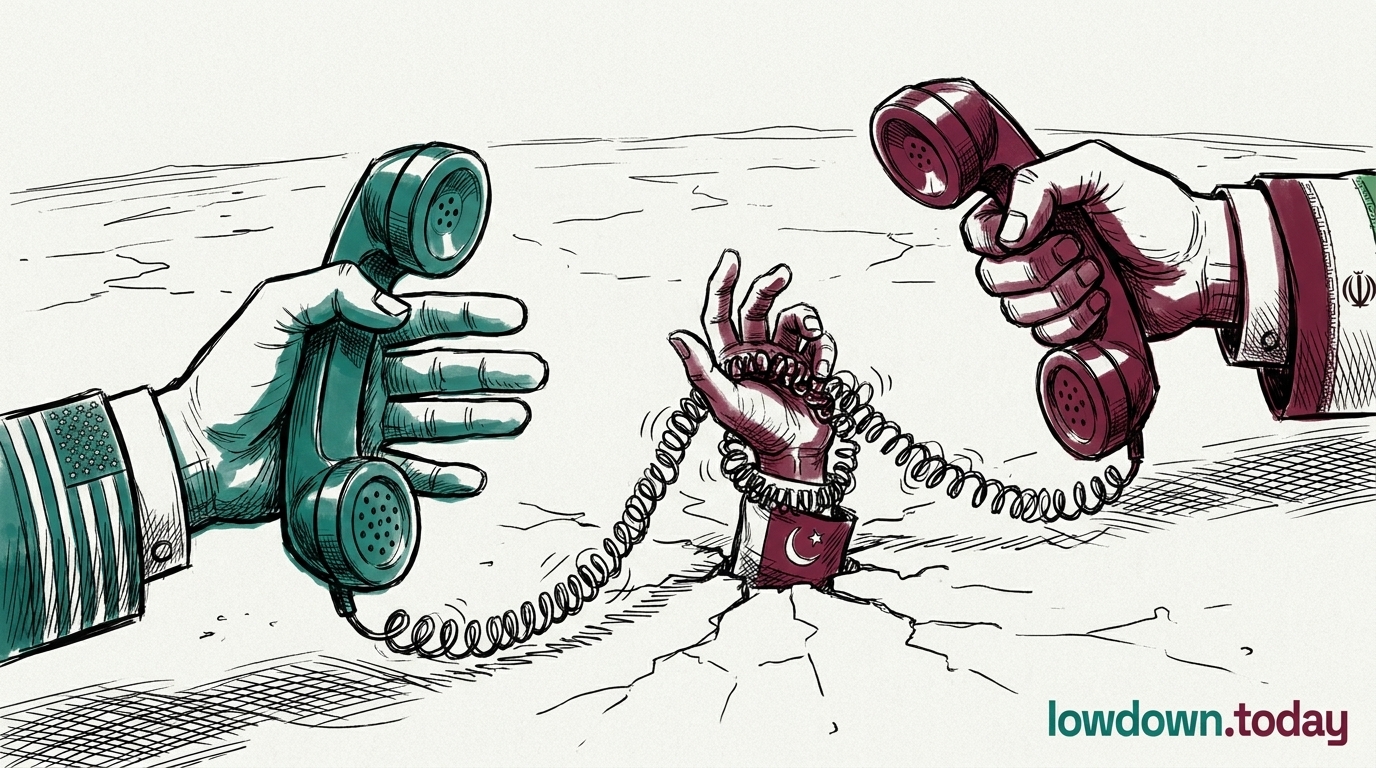
Foreign Minister Araghchi described Iran's 10-point counter-proposal as 'reasonable and responsible' via spokesman Baqaei on 11 May, and widened the mediator pool by meeting Turkish, Egyptian, and Dutch counterparts in a single day. Tehran is buying procedural runway while Trump's verbal rejection went unmatched by any written US counter.
Trump White House
Trump White House
Trump called the ceasefire 'on massive life support' and dismissed Iran's 10-point counter-proposal as 'a piece of garbage' on 11 May, while departing for Beijing two days later with no signed Iran instrument to show Congress. The verbal maximum and the paper void coexist: the administration is running a legal pressure campaign through Treasury while the president free-lances the rhetoric.