Skip to content
Briefings are running a touch slower this week while we rebuild the foundations.See roadmap
Iran Conflict 2026
12APR

Brent falls 8% on phantom peace talks

1 min read
08:59UTC

Brent crude dropped to $97 on Trump's negotiation claims, despite Iran's categorical rejection.

ConflictAssessed
Key takeaway

Oil prices reflect Trump's rhetoric, not Iran's actions; the paper-physical disconnect is at record levels.

Brent Crude (the international oil benchmark) fell to $96.68 per barrel on Wednesday, down from $104 at the start of the week but still 43% above the pre-war baseline of $67.41. The slide began Sunday when Donald Trump announced his 15-point ceasefire plan and continued despite Iran's categorical rejection.

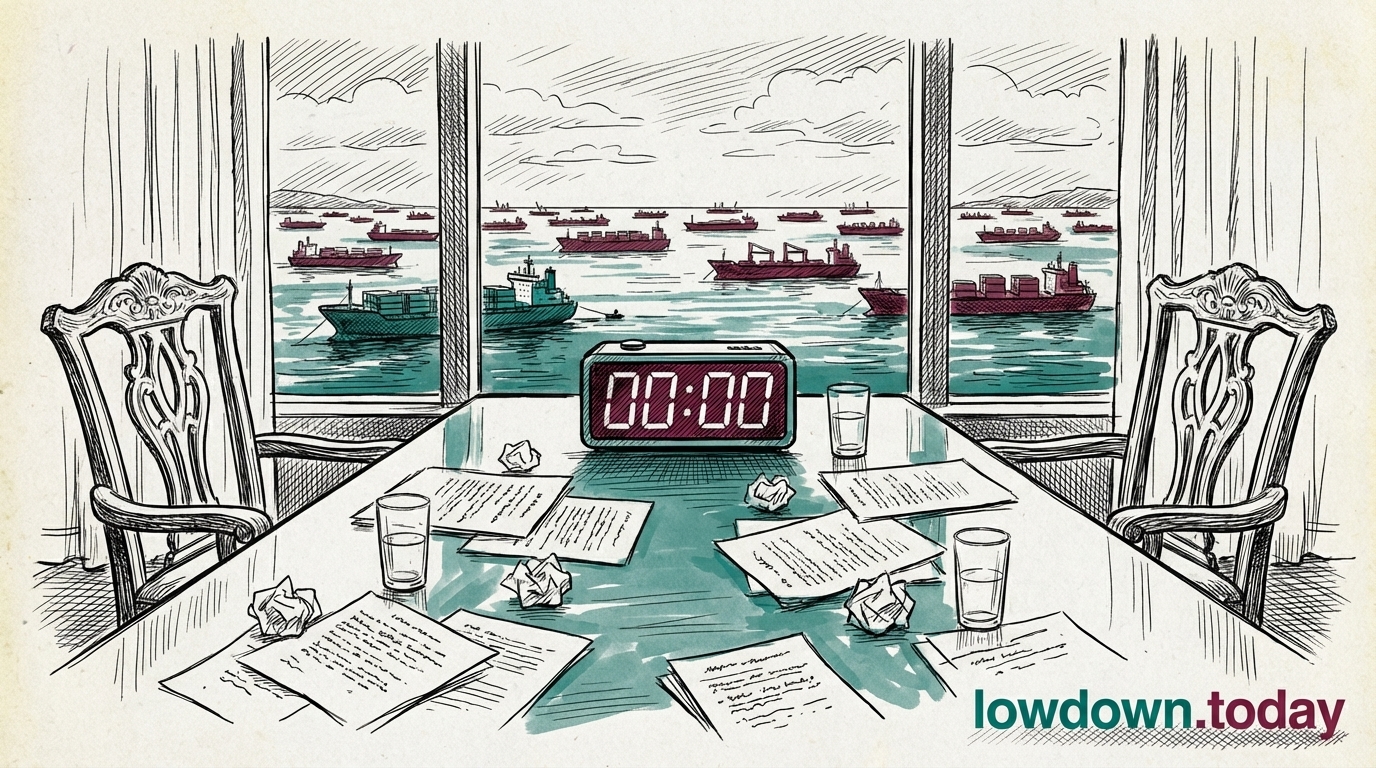
Sunday's 10.9% crash to $99.94 reversed to $102-104 within 48 hours . Physical crude tells a different story from futures: the record $14.20-per-barrel spot premium means refiners pay an effective $111 or more for delivered barrels, even as paper barrels trade at $97. The Strait of Hormuz remains closed; the physical price is more likely to pull paper up than reverse.

For British drivers, the war has added roughly 15p per litre at the pump since February. A return to the $126 peak would push that toward 30p. Goldman Sachs head of oil research Daan Struyven raised the probability of US recession to 25% at oil above $120 .

Deep Analysis

In plain English

Oil prices dropped because traders believe Trump is close to a deal with Iran. But Iran publicly rejected the deal. When that gap closes, prices will jump back up and petrol will get more expensive again.

What could happen next?
  • Risk

    Rapid upward correction likely when rejection registers

  • Consequence

    Record backwardation strains refiner working capital

First Reported In

Update #48 · Iran rejects ceasefire; Kharg fortified

CNBC· 26 Mar 2026
Read original
Causes and effects
This Event
Brent falls 8% on phantom peace talks
Markets are pricing rhetoric over reality; when Iran's rejection registers, a rapid correction could strain derivatives markets at record backwardation.
Different Perspectives
Qatar
Qatar
Qatar holds approximately $12 billion in frozen Iranian assets that Tehran named as the precondition for any Hormuz reopening sequence; with Oman sidelined and no agreed HEU custodian, the asset-routing architecture that any deal requires has no operational channel and no neutral financial intermediary to run it through.
Hengaw and Iranian civilian population
Iranians face an internet capped at 40 per cent by hardware their president cannot dismantle, field killings that leave no court record, and judicial executions running in parallel; Hengaw, based in Norway, is the primary remaining monitor of a repression system the IRGC is deliberately moving beyond auditable records. The real toll is higher than any single monitor's count.
China
China
China supplied deep-packet-inspection hardware that caps Iran's internet at 40 per cent and enables an instant on-demand blackout, and was barred by Trump as a potential HEU custodian on 27 May. Beijing gains from Iran's continued non-alignment with the West while the DPI sale extends Chinese surveillance-technology exports as a geopolitical instrument.
Pakistan
Pakistan
Foreign Minister Ishaq Dar met Rubio in Washington on 29 May, formally inheriting the role of sole active mediator after Oman's forced withdrawal. Pakistan lacks Oman's banking infrastructure for frozen-asset routing and carries its own regional stakes, making it a less structurally neutral broker for the Qatar-held $12 billion sequencing.
Kuwait
Kuwait
Kuwait invoked Article 51 of the UN Charter after absorbing an Iranian ballistic-missile strike on Ali Al Salem Air Base on 28 May, becoming the first Gulf state to make a formal individual self-defence claim in the war. The invocation creates a legal record enabling a future bilateral defence-pact activation without yet triggering it.
Oman
Oman
Oman denied any Hormuz toll plan within hours of Bessent's 28 May threat, absorbing a sanctions warning from the country it has brokered for since 1981. The rapid capitulation preserved the channel formally, but Tehran now knows Washington will threaten its own mediator, which changes Muscat's calculus on how far it can lean into any joint-management architecture.