Skip to content
Briefings are running a touch slower this week while we rebuild the foundations.See roadmap
Iran Conflict 2026
11APR

Oil Retreats From Peak Amid Ceasefire Speculation

1 min read
11:03UTC

Brent crude eased to $110.47 from its $116 peak, but remains 64% above pre-war levels with the strait operating at a fraction of normal capacity.

ConflictAssessed
Key takeaway

Markets priced in ceasefire hope; the supply disruption remains.

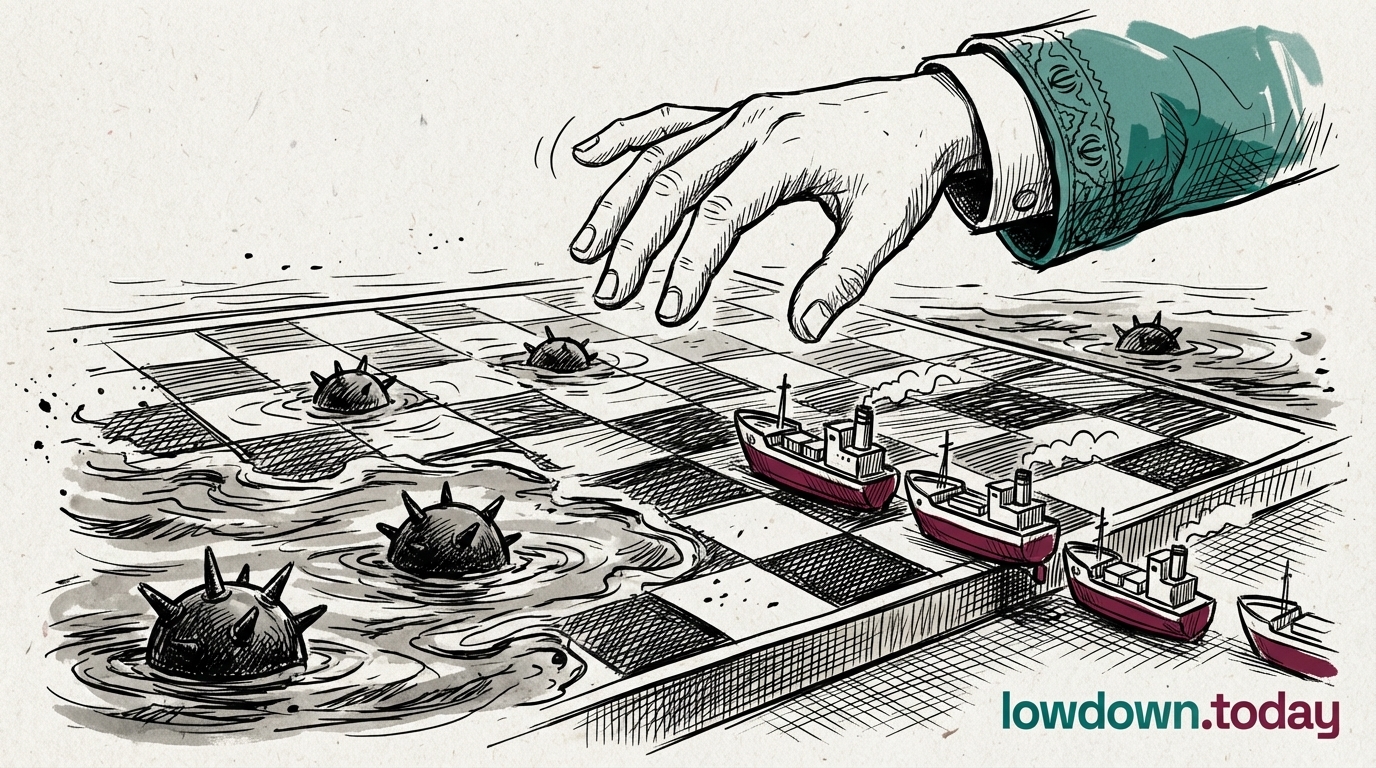
Brent Crude traded at $110.47 per barrel, retreating from the $116 peak on 28 March. The pullback may reflect ceasefire hopes from the Islamabad talks, though the fundamental supply picture has not changed. the strait of Hormuz remains over 90% below pre-war transit volumes at 53 weekly transits against a baseline of 966.

The price remains roughly 64% above pre-war levels of $67.41 per barrel. Analysts had warned that $150 per barrel was possible if the strait stays closed another month. The Islamabad Accord's immediate-reopening provision is the first diplomatic instrument that directly addresses the oil price mechanism, which may explain why markets have responded to the framework's existence even before Iran has accepted it.

The modest retreat should not be mistaken for normalisation. The IEA, IMF, and World Bank jointly described this as one of the largest supply shortages in energy market history . That assessment has not changed.

Deep Analysis

In plain English

Oil prices dropped slightly from their highest point of the war, possibly because traders think the new Pakistan peace plan might work. But prices are still about 64% higher than before the war started. The strait that most of the world's oil passes through is still barely open. If the peace plan fails, prices could rise sharply again.

What could happen next?
  • Markets pricing in ceasefire probability; failure would trigger sharp reversal

First Reported In

Update #60 · Pakistan's Ceasefire Plan Fills the Vacuum

CNBC· 6 Apr 2026
Read original
Causes and effects
This Event
Oil Retreats From Peak Amid Ceasefire Speculation
The price retreat, while modest, is the first sustained pullback since the war began. It suggests markets are pricing in a non-zero probability of ceasefire from the Islamabad talks. However, with Hormuz at roughly 5% of pre-war transit volumes, the fundamental supply disruption remains unchanged.
Different Perspectives
Qatar
Qatar
Qatar holds approximately $12 billion in frozen Iranian assets that Tehran named as the precondition for any Hormuz reopening sequence; with Oman sidelined and no agreed HEU custodian, the asset-routing architecture that any deal requires has no operational channel and no neutral financial intermediary to run it through.
Hengaw and Iranian civilian population
Iranians face an internet capped at 40 per cent by hardware their president cannot dismantle, field killings that leave no court record, and judicial executions running in parallel; Hengaw, based in Norway, is the primary remaining monitor of a repression system the IRGC is deliberately moving beyond auditable records. The real toll is higher than any single monitor's count.
China
China
China supplied deep-packet-inspection hardware that caps Iran's internet at 40 per cent and enables an instant on-demand blackout, and was barred by Trump as a potential HEU custodian on 27 May. Beijing gains from Iran's continued non-alignment with the West while the DPI sale extends Chinese surveillance-technology exports as a geopolitical instrument.
Pakistan
Pakistan
Foreign Minister Ishaq Dar met Rubio in Washington on 29 May, formally inheriting the role of sole active mediator after Oman's forced withdrawal. Pakistan lacks Oman's banking infrastructure for frozen-asset routing and carries its own regional stakes, making it a less structurally neutral broker for the Qatar-held $12 billion sequencing.
Kuwait
Kuwait
Kuwait invoked Article 51 of the UN Charter after absorbing an Iranian ballistic-missile strike on Ali Al Salem Air Base on 28 May, becoming the first Gulf state to make a formal individual self-defence claim in the war. The invocation creates a legal record enabling a future bilateral defence-pact activation without yet triggering it.
Oman
Oman
Oman denied any Hormuz toll plan within hours of Bessent's 28 May threat, absorbing a sanctions warning from the country it has brokered for since 1981. The rapid capitulation preserved the channel formally, but Tehran now knows Washington will threaten its own mediator, which changes Muscat's calculus on how far it can lean into any joint-management architecture.