Skip to content
Briefings are running a touch slower this week while we rebuild the foundations.See roadmap
Iran Conflict 2026
9APR

WPR clock ticks toward 29 April on zero instruments

3 min read
11:02UTC

Lowdown Analysis

ConflictAssessed
Key takeaway

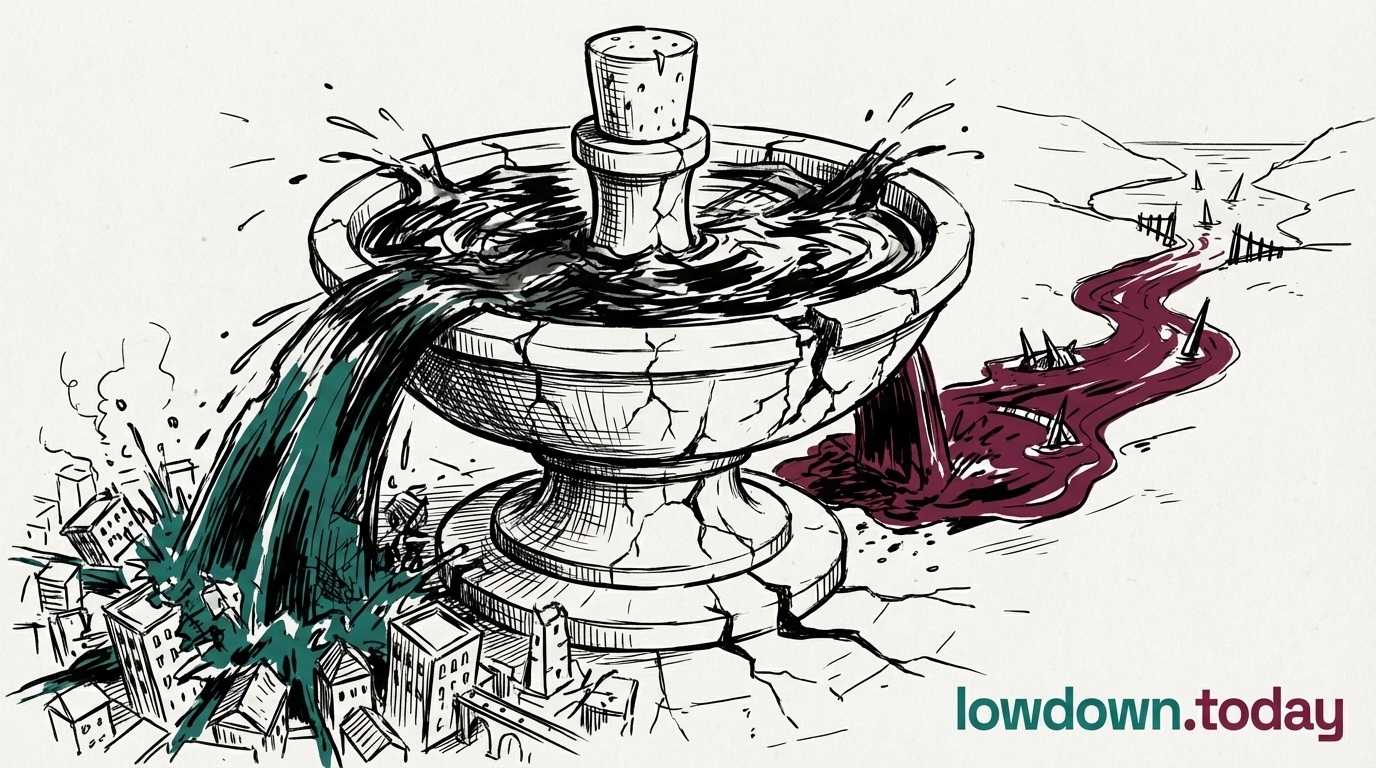
The 29 April WPR deadline may pass on the argument the war is winding down, without any signed Iran paper.

The War Powers Resolution (WPR, the 1973 statute giving Congress 60 days to authorise or end a hostility) clock that started on the 28 February outbreak runs out on 29 April. Behind it sits an operation with zero executive instruments on the Iran file. Senator Josh Hawley's Authorization for Use of Military Force (AUMF, the statutory authority Congress grants a president for specific hostilities) push was conditioned on the war neither ending nor winding down 1.

The Senate had blocked an earlier WPR last week, short of the threshold by five votes . The indefinite extension supplies the White House the political argument that the war is winding down, which is precisely the linguistic window Hawley's condition left open. Fifty-three consecutive days now sit behind the White House tracker with the same number in the Iran column: zero . The 29 April mark may pass on the same pattern that got it here, and if it does, the first signed Iran instrument of the war will not exist.

Deep Analysis

In plain English

The War Powers Resolution is a 1973 US law that limits how long a president can keep US forces in combat without congressional approval. The clock started on 28 February when fighting with Iran began, and it expires on 29 April , 60 days later. Normally, this would force Congress to either vote to authorise the war or require withdrawal. Congress already tried to enforce the law and failed by a single vote, 213-214, in the House. Trump's indefinite extension post now gives the White House a 'winding down' argument that may satisfy the law's exception even without a ceasefire deal. Since no presidential document on Iran has been signed in 53 days, the 29 April deadline may pass without any formal response , which is what has happened at every other forcing moment in this conflict.

Deep Analysis
Root Causes

The WPR clock's approach to 29 April without a signed instrument reflects the same deliberate executive discretion strategy documented across the full Iran file: keeping operational authority in the executive by avoiding the paper that would make congressional oversight actionable.

The specific Hawley mechanism, conditioned on war not winding down, was inadvertently disabled by the extension's indefinite framing, which provides exactly the 'winding down' language Hawley's condition excluded.

What could happen next?
  • Risk

    If 29 April passes without a congressional vote or judicial challenge, the WPR's enforceability in future conflicts is further eroded , a constitutional precedent that outlasts this conflict.

  • Consequence

    Hawley's AUMF push effectively ends on 29 April without its triggering condition being met, removing the one Senate mechanism that could have forced the first signed Iran instrument.

First Reported In

Update #76 · Trump posts an exit Iran can't reach

Al Jazeera· 22 Apr 2026
Read original
Different Perspectives
Civilians and prisoners inside Iran
Mojtaba Kian was hanged in under 50 days from arrest, the fastest wartime espionage case in Hengaw's record, as Trump announced a peace deal. Amnesty places Iran's 2026 execution count above 200 at its fastest pace in 44 years; the diplomatic track has not altered the internal enforcement tempo.
China
China
Beijing accepted a Pakistani civilian briefing mission on the same day OFAC's GL V expired, keeping itself inside the deal architecture without being a named signatory. How Chinese banks respond to Monday's Hengli dollar-clearing decision is the first real-world test of whether the verbal MOU carries any institutional weight.
Pakistan
Pakistan
Islamabad split its highest-level delegation: army chief Munir to Tehran on the security track, Prime Minister Sharif and Foreign Minister Dar to Beijing before Monday's GL V-driven bank compliance decision. The architecture routes the deal's hardest problem, IRGC buy-in, through the general-officer channel that has extracted every wartime concession.
Israeli government
Israeli government
An unnamed Israeli official told the Times of Israel that Trump privately told Netanyahu the deal will dismantle Iran's nuclear programme and remove all its uranium, terms incompatible with what Tehran and a Reuters source describe. If Netanyahu believes he was promised full dismantlement and the deal delivers less, Israel holds a sabotage veto before any signature.
Iranian Foreign Ministry
Spokesman Esmail Baghaei told state agency IRNA that nuclear issues are 'not in the current negotiations text' and the sequencing is: end the war first, then negotiate nuclear over two months. Baghaei's formulation preserves Khamenei's 21 May uranium-stay directive while letting the civilian diplomacy track continue.
Donald Trump / White House
Trump declared the Iran deal 'largely negotiated' on 23 May via Truth Social and signed nothing; the White House's only paper was a Memorial Day proclamation. The verbal-track method converts maximum political signalling into minimum legal exposure: no congressional notification, no Senate treaty ratification, no instrument for Iran to formally reject.