Skip to content
You can now search across every topic, entity and event.What's new
Iran Conflict 2026
27MAR

WPR clock ticks toward 29 April on zero instruments

3 min read
14:13UTC

Lowdown Analysis

ConflictAssessed
Key takeaway

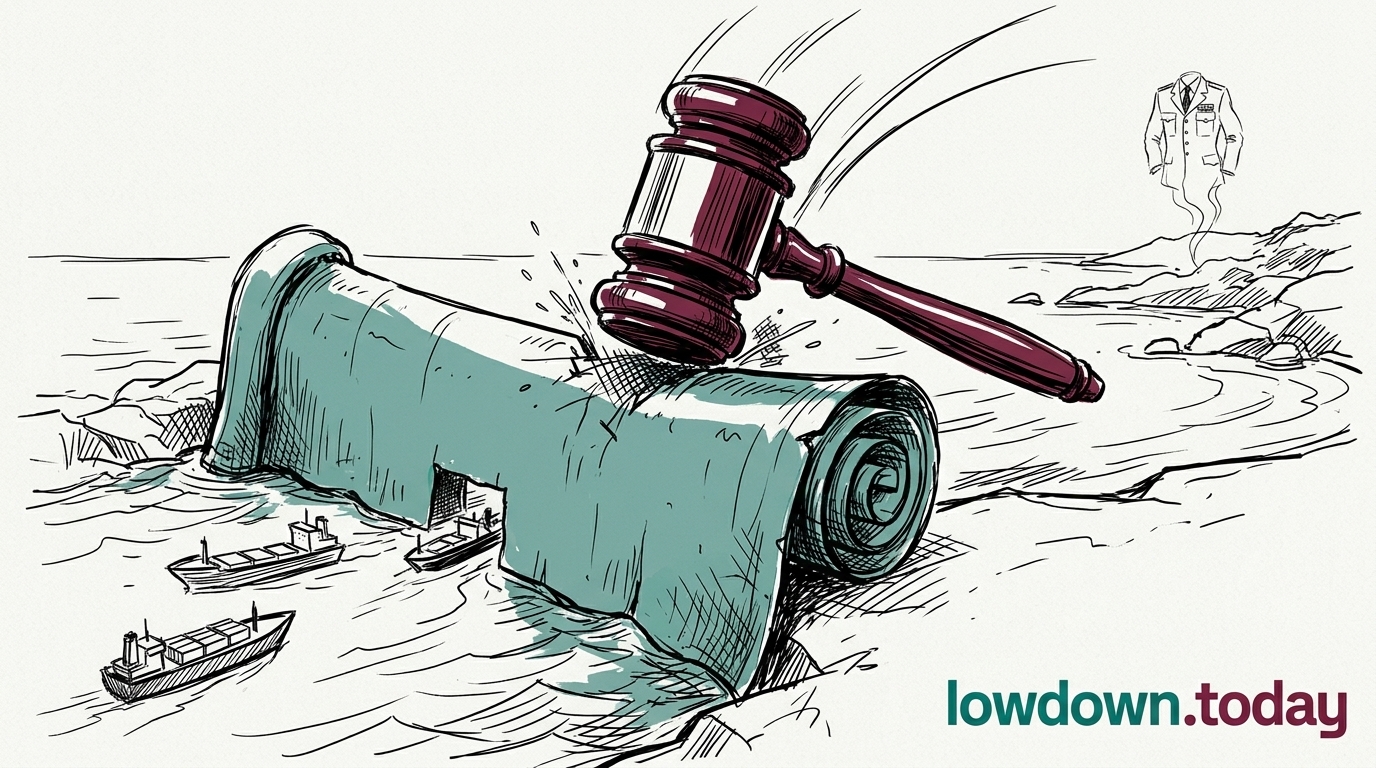
The 29 April WPR deadline may pass on the argument the war is winding down, without any signed Iran paper.

The War Powers Resolution (WPR, the 1973 statute giving Congress 60 days to authorise or end a hostility) clock that started on the 28 February outbreak runs out on 29 April. Behind it sits an operation with zero executive instruments on the Iran file. Senator Josh Hawley's Authorization for Use of Military Force (AUMF, the statutory authority Congress grants a president for specific hostilities) push was conditioned on the war neither ending nor winding down 1.

The Senate had blocked an earlier WPR last week, short of the threshold by five votes . The indefinite extension supplies The White House the political argument that the war is winding down, which is precisely the linguistic window Hawley's condition left open. Fifty-three consecutive days now sit behind The White House tracker with the same number in the Iran column: zero . The 29 April mark may pass on the same pattern that got it here, and if it does, the first signed Iran instrument of the war will not exist.

Deep Analysis

In plain English

The War Powers Resolution is a 1973 US law that limits how long a president can keep US forces in combat without congressional approval. The clock started on 28 February when fighting with Iran began, and it expires on 29 April , 60 days later. Normally, this would force Congress to either vote to authorise the war or require withdrawal. Congress already tried to enforce the law and failed by a single vote, 213-214, in the House. Trump's indefinite extension post now gives the White House a 'winding down' argument that may satisfy the law's exception even without a ceasefire deal. Since no presidential document on Iran has been signed in 53 days, the 29 April deadline may pass without any formal response , which is what has happened at every other forcing moment in this conflict.

Deep Analysis
Root Causes

The WPR clock's approach to 29 April without a signed instrument reflects the same deliberate executive discretion strategy documented across the full Iran file: keeping operational authority in the executive by avoiding the paper that would make congressional oversight actionable.

The specific Hawley mechanism, conditioned on war not winding down, was inadvertently disabled by the extension's indefinite framing, which provides exactly the 'winding down' language Hawley's condition excluded.

What could happen next?
  • Risk

    If 29 April passes without a congressional vote or judicial challenge, the WPR's enforceability in future conflicts is further eroded , a constitutional precedent that outlasts this conflict.

  • Consequence

    Hawley's AUMF push effectively ends on 29 April without its triggering condition being met, removing the one Senate mechanism that could have forced the first signed Iran instrument.

First Reported In

Update #76 · Trump posts an exit Iran can't reach

Al Jazeera· 22 Apr 2026
Read original
Different Perspectives
Oil traders
Oil traders
Sent Brent down 2.29 per cent to $98.38 a barrel on reports that mediation was reviving, moving the price on CENTCOM's quiet night rather than on Trump's same-day promise of a bigger operation with no deadline attached.
Iran
Iran
An Iranian official called the same mediation account completely misleading, denying it received any US proposal via Baghdad on the same day Iraq denied delivering one, leaving neither denial able to settle what actually passed between the two capitals.
Iraq
Iraq
Called groundless the New York Times account that its prime minister carried a US ceasefire proposal to Tehran, a denial that also protects Baghdad's effort to avoid becoming a party to a war fought by aircraft it does not control.
OHCHR
OHCHR
Recorded 17 civilian seafarer deaths since the war began, a population neither the Pentagon nor Iran's Health Ministry counts in its own tally, and called for urgent action on 6,000 crew stranded across roughly 400 vessels in the Strait of Hormuz.
Houthis
Houthis
Enforced the blockade on Saudi-linked shipping it declared on 20 July by hitting the NCC Masa and then an Aramco facility at Jazan, moving from radio warnings to strikes on land after four days without a confirmed hit.
Saudi Arabia
Saudi Arabia
Struck Houthi military sites near Hodeidah the same day the NCC Masa was hit, while its coalition spokesman insisted Hodeidah, Ras Issa and Salif all remain open to navigation. The distinction protects the ports Yemen's population depends on for food and fuel even while punishing the group behind the tanker strike.