Skip to content
You can now search across every topic, entity and event.What's new
Iran Conflict 2026
7MAR

Brent at $73: oil forecast of $150 fails

1 min read
07:34UTC

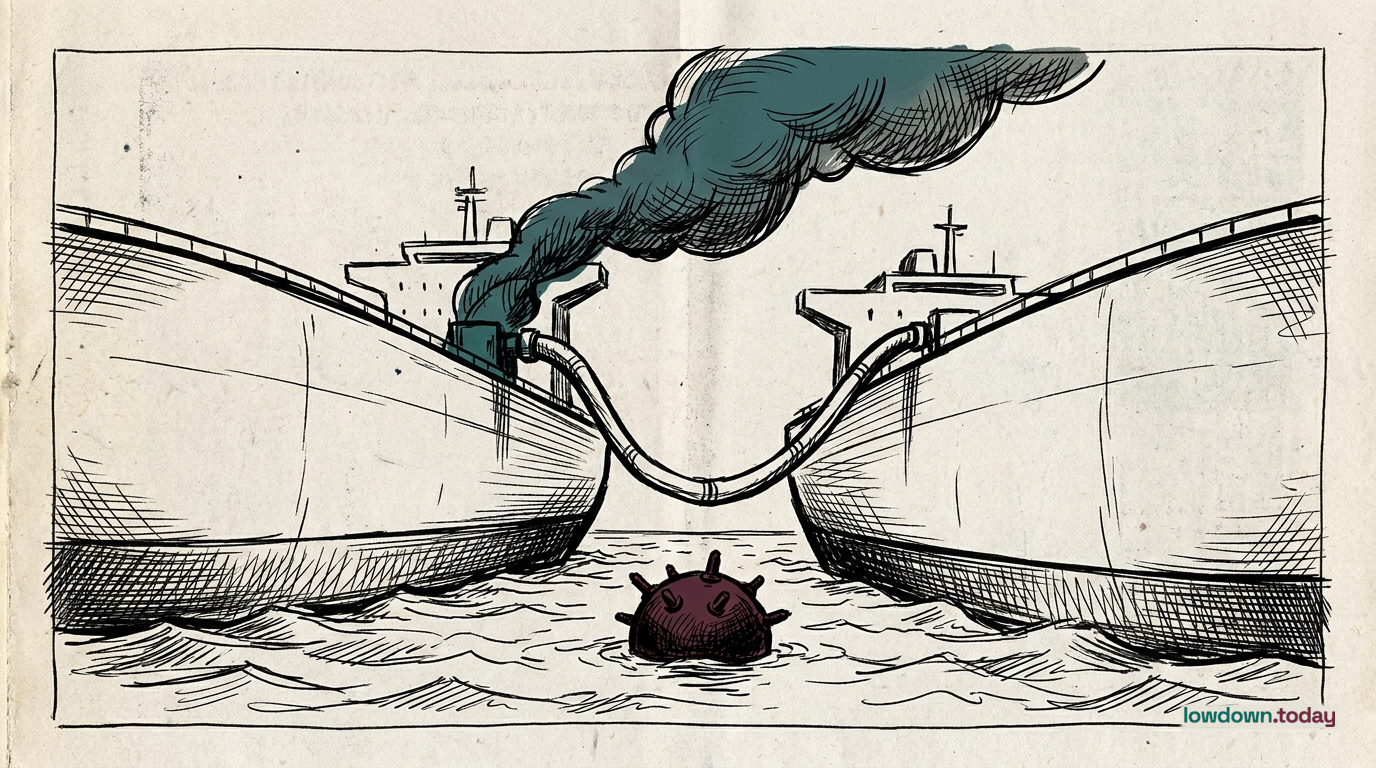
Brent crude stood at approximately $73 per barrel immediately before the 28 February 2026 strikes, with analysts forecasting a rise to $80–100 — well below the $150–200 predicted in earlier modelling — as markets priced partial, reversible Hormuz disruption rather than a formal blockade.

ConflictDeveloping
Key takeaway

Markets priced an $80–100 oil range on 28 February because they assessed Hormuz disruption as partial and reversible — the $150–200 scenario remains a live tail risk conditional on Iranian naval interdiction or prolonged conflict.

The pre-strike $150–200 oil price forecast rested on two assumptions: that Iran would execute a formal Hormuz blockade using mining and naval interdiction, and that the conflict would persist long enough for physical supply to be severely constrained. Neither condition materialised on 28 February. Iran's response comprised ballistic missile strikes, not naval interdiction; tanker avoidance is voluntary and reversible; and Saudi Arabia retains spare production capacity to partially offset any Gulf supply disruption.

A rise from $73 to $80 represents a 10% increase. At $100, the increase is 37% — still inflationary but below the recession-triggering threshold implied by $150–200 modelling. At $100, European economies already managing the energy cost legacy of the Russia-Ukraine war face additional pressure, as do emerging markets with dollar-denominated energy import bills. The Bloomberg tanker-avoidance reporting and Euronews analyst consensus both point to the $80–100 range as the February 28 baseline estimate.

The $150–200 scenario remains a live tail risk rather than a falsified prediction. It materialises if the conflict extends to include Iranian naval action in Hormuz, prolonged tanker avoidance beyond two to three weeks, or destruction of Saudi or UAE production infrastructure. Markets are pricing a shorter and more contained conflict than the worst-case scenario assumed — not ruling out further escalation.

What could happen next?
  • Meaning

  • Meaning

First Reported In

Update #2 · Five cities struck on opening night

Washington Post· 28 Feb 2026
Read original
Causes and effects
This Event
Brent at $73: oil forecast of $150 fails
The more modest oil price forecast relative to pre-strike predictions suggests markets assessed Iranian oil infrastructure damage and Hormuz risk as manageable in the short term.
Different Perspectives
Oil traders
Oil traders
Sent Brent down 2.29 per cent to $98.38 a barrel on reports that mediation was reviving, moving the price on CENTCOM's quiet night rather than on Trump's same-day promise of a bigger operation with no deadline attached.
Iran
Iran
An Iranian official called the same mediation account completely misleading, denying it received any US proposal via Baghdad on the same day Iraq denied delivering one, leaving neither denial able to settle what actually passed between the two capitals.
Iraq
Iraq
Called groundless the New York Times account that its prime minister carried a US ceasefire proposal to Tehran, a denial that also protects Baghdad's effort to avoid becoming a party to a war fought by aircraft it does not control.
OHCHR
OHCHR
Recorded 17 civilian seafarer deaths since the war began, a population neither the Pentagon nor Iran's Health Ministry counts in its own tally, and called for urgent action on 6,000 crew stranded across roughly 400 vessels in the Strait of Hormuz.
Houthis
Houthis
Enforced the blockade on Saudi-linked shipping it declared on 20 July by hitting the NCC Masa and then an Aramco facility at Jazan, moving from radio warnings to strikes on land after four days without a confirmed hit.
Saudi Arabia
Saudi Arabia
Struck Houthi military sites near Hodeidah the same day the NCC Masa was hit, while its coalition spokesman insisted Hodeidah, Ras Issa and Salif all remain open to navigation. The distinction protects the ports Yemen's population depends on for food and fuel even while punishing the group behind the tanker strike.