Skip to content
You can now search across every topic, entity and event.What's new
Iran Conflict 2026
3SEP

Iran says it struck the Omani route

1 min read
16:40UTC

Iranian state broadcaster IRIB said the tanker was struck for using the 'Omani route' after repeated warnings, and separately claimed the vessel had 'US Navy support', a justification no other source corroborates.

ConflictDeveloping
Key takeaway

Iranian state media framed the strike as punishment for using the Omani transit route.

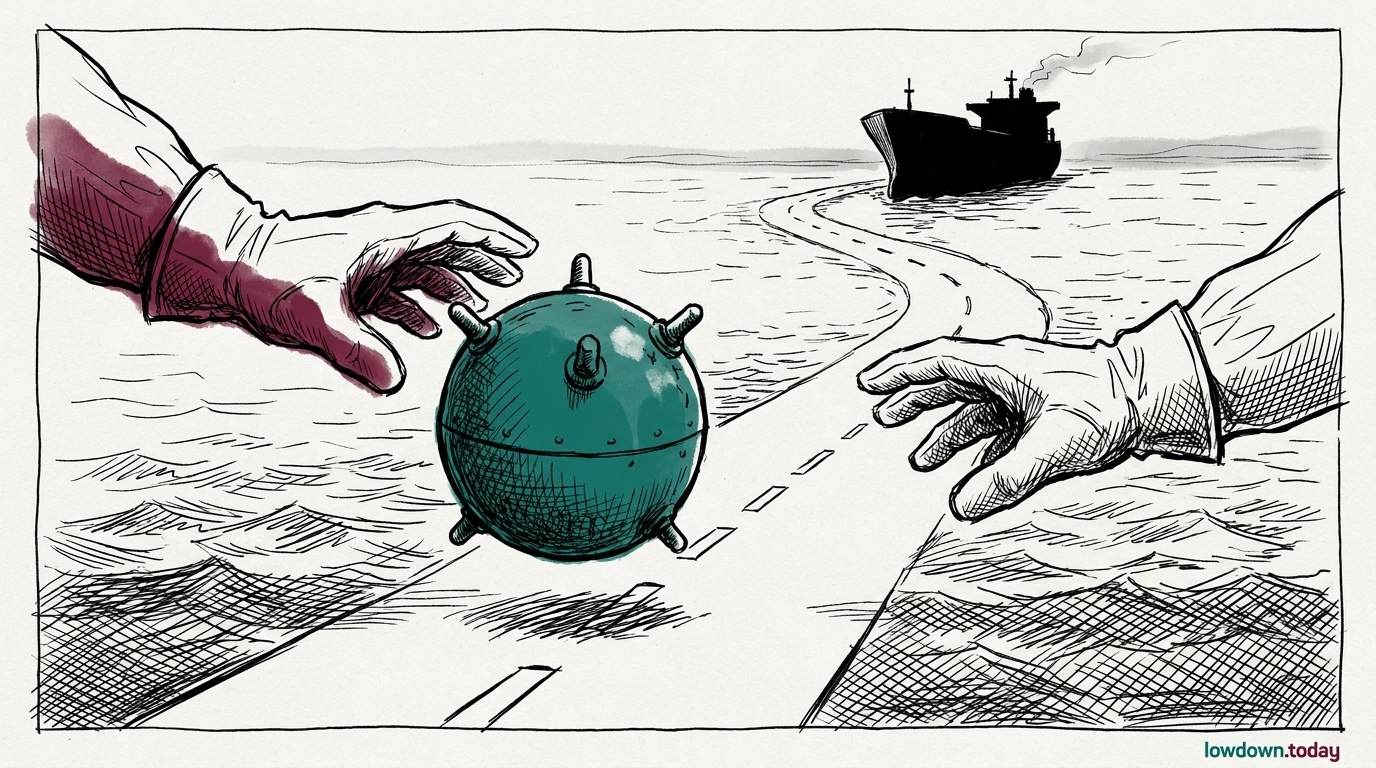
Islamic Republic of Iran Broadcasting (IRIB), Iran's state broadcaster, said Al Rekayyat was struck for using the 'Omani route' after 'repeated warnings', and IRGC radio told vessels its missiles and drones were 'ready to fire' 1. State media separately claimed the ship had 'US Navy support'. No independent source corroborates that, and it should be read as Tehran's framing rather than established fact 2.

Iran branded Oman's transit-fee plan compulsory on 30 June while Muscat called it voluntary , and the corps had called the Oman-backed corridor unacceptable in the days before that. A US official confirmed the attack to Axios 3. What the broadcast adds is intent: by naming a rule and citing prior warnings, IRIB casts the strike as deliberate enforcement, which is the reading Tehran wants on the record whether or not the order came from the top.

Deep Analysis

In plain English

Iran's state broadcaster, IRIB, said the tanker was attacked because it used a shipping route Iran had warned ships to avoid, and separately claimed, without any outside proof, that the ship had US Navy backing. When only one side's media makes a claim and nobody else can confirm it, readers should treat it as that government's version of events, not as an established fact.

Deep Analysis
Root Causes

IRIB's justification rests on a category, 'hostile-linked vessels', that Iran's 2024 domestic maritime law leaves largely undefined, giving Tehran wide discretion to retroactively fit almost any struck vessel into the category after the fact.

No neutral verification mechanism exists to test IRIB's 'US Navy support' claim, so the assertion stands or falls entirely on Iranian state media's own credibility, which international reporting has not corroborated in this case.

What could happen next?
  • Risk

    An undefined 'hostile-linked' legal category gives Tehran room to justify future strikes without a consistent public standard for which vessels qualify.

First Reported In

Update #148 · Iran shoots the Hormuz route it rejected

The National· 7 Jul 2026
Read original
Different Perspectives
China's foreign ministry
Spokesman Lin Jian rejected Treasury Secretary Scott Bessent's 25 August warning that Iranian oil buyers face an "economic D-Day", saying sanctions do not help and that Beijing would safeguard its own rights and interests. China's Iranian crude imports had already halved for unrelated reasons.
Iraq's government and Erbil authorities
Erbil authorities said 10 explosive-laden drones were shot down over the city on 1-2 September with no casualties. Iraq's government condemned the attacks without naming Iran as their source, and neither Washington nor Baghdad confirmed the IRGC's claim to have hit US bases there.
Bahrain Defence Force
The General Command said air defences intercepted several Iranian missiles and drones on 1-2 September and called the use of such weapons against civilians and private property a flagrant violation of international humanitarian law.
Kuwait's Fire Force and foreign ministry
KUNA reported a hostile Iranian drone struck a residential complex in Kuwait City on 2 September; Fire Force spokesman Brigadier General Mohammad Al-Gharib said losses were confined to property. Kuwait's foreign ministry called the attack a clear breach of its sovereignty.
Jordan's Armed Forces
Petra carried a statement that air defences intercepted eight missiles violating Jordanian airspace early on 31 August and 10 of 13 fired on 1 September. The statement named no target and did not address the IRGC's claim to have struck Camp Titin and killed US personnel.
CENTCOM
CENTCOM
CENTCOM's 1 September target list named IRGC air defence, radar, maritime and mine-laying sites in Iran but no tanker, after Axios reported anonymous officials describing a Trump-approved "tanker for tanker" drone policy. A CENTCOM spokesman declined to confirm the policy and referred questions to policymakers.