Skip to content
Welcome, thoughtbot's Giant Robots listeners!Start here
Iran Conflict 2026
3SEP

CENTCOM lists what it struck in Iran

2 min read
16:40UTC

A CENTCOM release timed 18:40 on 1 September named air defence, radar, maritime assets, mine-laying capability and communications sites inside Iran, and justified the strikes by attacks on shipping and on American troops.

ConflictAssessed
Key takeaway

CENTCOM named five target categories inside Iran and no vessel among them.

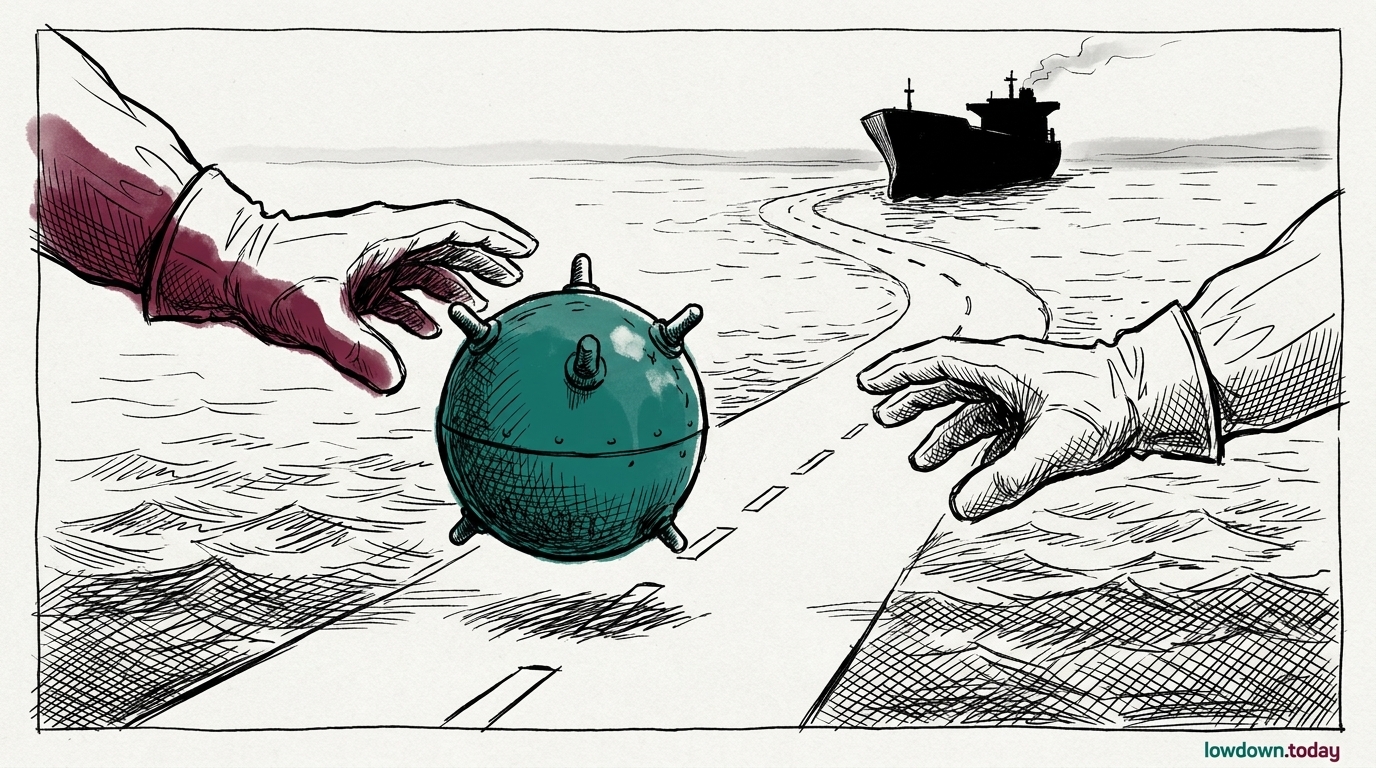
CENTCOM Public Affairs said in a release timed 18:40 on Tuesday 1 September that US forces had struck IRGC air defence sites, radar systems, maritime assets and facilities, mine-laying capabilities and communications sites inside Iran⁠1. The release justifies the operation by "recent attempted attacks by the IRGC against commercial shipping in the strait of Hormuz and against American service members". It names no spokesperson, carries no quotes and gives no count of aircraft, munitions or aim points.

The categories track the mining dispute item by item. Mine-laying capability, maritime assets and the radar that would cue them are the machinery behind the claim that Iran can close or contest the southern approach, and striking them is an answer to that claim rather than to the wider war. Air power for this had moved into position the week before, when USS George Washington relieved USS Abraham Lincoln in the Arabian Sea.

A published target list is a rare thing in this campaign, and it does work its author may not have intended. Once a command specifies what it hit, every category it omits becomes a question that can be put to it, and every rival account of the same night can be measured against a document with the command's name on it. Iran's retaliation followed within hours, reaching four countries.

CENTCOM's release covers strikes on Iranian soil and offers no accounting of anything American forces did at sea that evening, which leaves open whether it describes the whole operation.

Deep Analysis

In plain English

The US military command for the Middle East, CENTCOM, said it struck several types of targets inside Iran: air defences, radar, sea-based assets, mine-laying equipment and communications sites. It said the strikes answered recent attacks on shipping and on American troops. The release names categories, not numbers. It does not say how many aircraft, missiles or targets were involved, so readers cannot check the scale of the operation against anything CENTCOM published.

Deep Analysis
Root Causes

Withholding munition and aircraft counts is standard operational security, not evasion specific to this strike. A command that confirmed exactly what it used and against how many aim points would hand the other side a direct measure of remaining capability and readiness.

The categories named track the mining and shipping dispute item by item: mine-laying capability, maritime assets, communications sites. That correspondence is checkable; the underlying numbers are not.

First Reported In

Update #175 · Iran says it re-mined the cleared lanes

US Central Command Public Affairs, via DVIDS· 3 Sept 2026
Read original →
Different Perspectives
International Energy Agency
G7 members agreed on 2 October to release up to 100 million barrels through the IEA over four months, front-loading diesel.
China
China
China signed the 15 October text reaffirming the Resolution 2216 arms embargo on the Houthis. The Wall Street Journal reported that Conflict Armament Research found Chinese parts in a Houthi copy of Iran's Kheibarshekan missile.
Russia
Russia
Russia joined the 15 October consensus condemning the Houthis, a month after vetoing a mandate for a UN panel of experts on Iran sanctions on 17 September. One Western official told Bloomberg that Moscow is providing Iran with missiles, and the White House rejected the assessment.
India
India
National Security Adviser Ajit Doval raised seafarer safety with Mohsen Rezaei on 12 October, after a drone hit the Petro Dolphin with 11 Indians aboard at Sohar. External Affairs Minister S. Jaishankar urged that attacks on commercial shipping and seafarers be avoided.
Lebanon
Lebanon
President Joseph Aoun met UN peacekeeping chief Jean-Pierre Lacroix in Beirut on 14 October as UNIFIL winds down before its mandate ends on 31 December. Two days later Qatar's prime minister pledged in Beirut to fund a solar plant for Lebanon.
Kataib Hezbollah
Kataib Hezbollah
The militia announced a halt to operations except against "hostile aircraft" and denied any disarmament deal with Prime Minister Ali al-Zaidi. A day later Quds Force chief Esmail Qaani urged eliminating "remaining traces of the US presence in other arenas".

Written with AI from Lowdown's published reporting. Not individually reviewed by an editor. Editorial standards.