Skip to content
You can now search across every topic, entity and event.What's new
Iran Conflict 2026
20AUG

Russian diesel exports crash to 187kbd

1 min read
16:36UTC

Russian diesel exports averaged just 187kbd over 1-8 July against 535kbd a year earlier, the first hard read on Novak's producer-wide ban.

ConflictDeveloping
Key takeaway

Russian diesel exports fell to 187kbd as Novak's producer-wide ban rationed a shrinking export base.

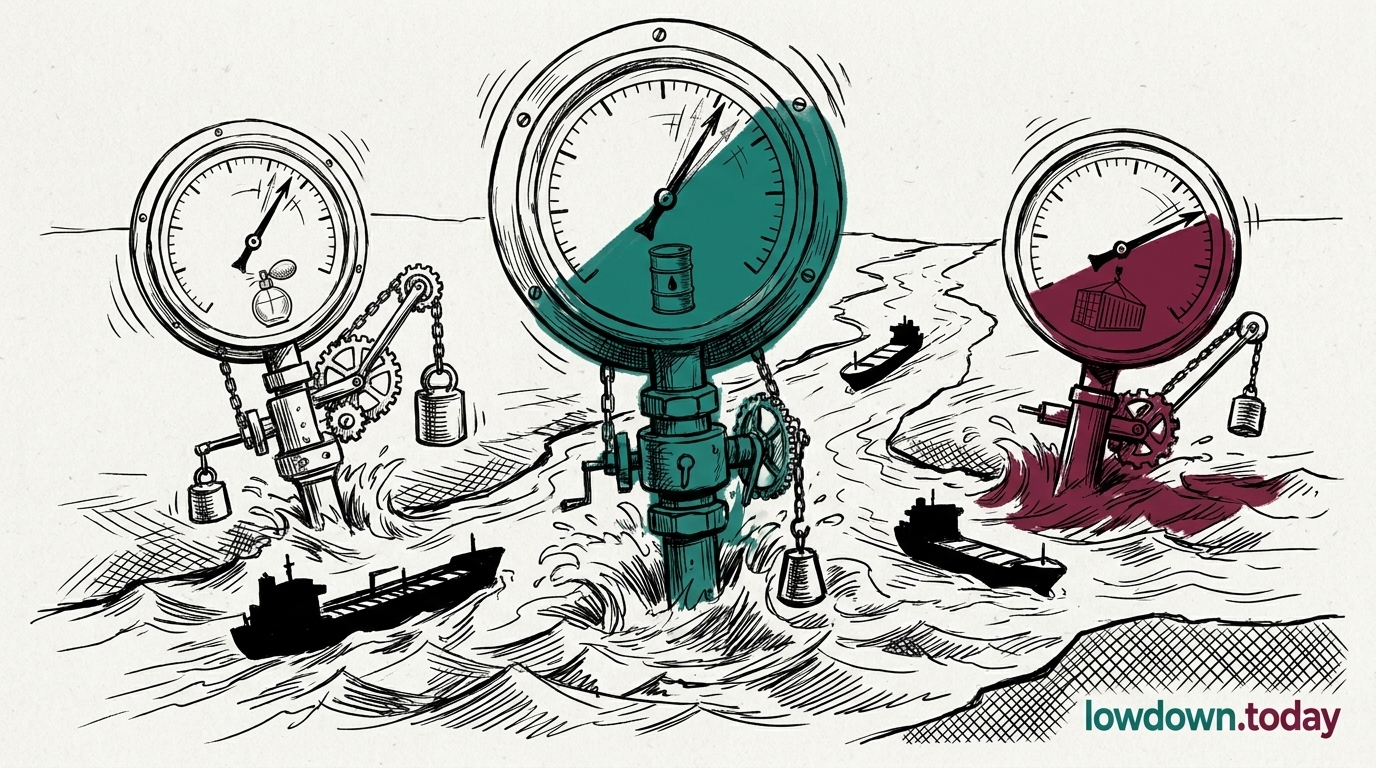
Russian diesel exports averaged 187kbd over 1-8 July against 535kbd a year earlier, an advance loadings figure confirming the scale of the export ban Alexander Novak widened to producers on 8 July 1. Novak is Russia's deputy prime minister for energy; Kpler tracked the loadings and CNN Business relayed the count.

The collapse pulls Atlantic-basin distillate backfill thinner at the exact moment European product stocks are drawing, feeding the same tightness that keeps the diesel crack bid. Novak framed the ban as protecting domestic pump supply after Ukrainian strikes cut refinery runs to multi-year lows, so the measure rations a shrinking export base rather than trimming a surplus.

Deep Analysis

In plain English

Russia banned its oil refineries from exporting diesel fuel starting 8 July, widening an earlier, narrower restriction. New data for the first week of July shows the effect: diesel exports fell to 187,000 barrels a day, down from 535,000 barrels a day a year earlier. That is a huge drop, and it matters because diesel powers trucks, farm equipment and heating across Europe, much of which used to rely partly on Russian supply before the war. Less diesel leaving Russia means importing countries have to find replacement barrels elsewhere, usually at a higher price.

Deep Analysis
Root Causes

Russia's diesel export ban targets producers specifically, meaning refineries themselves are barred from shipping diesel abroad, but the restriction does not by itself prevent independent traders or blenders from acquiring product domestically and exporting it under a different classification, leaving a structural loophole the headline export figure does not capture.

The scale of the collapse, from 535kbd a year earlier to 187kbd, also reflects compounding pressure: the ban widened from a narrower producer-only restriction on 8 July at the same time Ukrainian strikes have been reducing Russian refining capacity, so falling exports partly reflect less diesel being refined at all, in addition to less being allowed to leave.

What could happen next?
  • Consequence

    Markets that relied on Russian diesel must source replacement barrels from the Gulf Coast or Middle East while the ban holds, adding cost pressure

First Reported In

Update #17 · EU freezes the cap a week; Brent-WTI gaps to $5.13

CNN Business· 16 Jul 2026
Read original
Causes and effects
This Event
Russian diesel exports crash to 187kbd
Collapsing Russian diesel loadings thin Atlantic-basin backfill and keep European distillate tight.
Different Perspectives
UK Maritime Trade Operations
UKMTO logged six armed men boarding a tanker 136 nautical miles east of Al Mukalla on 20 August and redirecting it toward Somalia. A vessel steered toward the Somali coast reads as an attempted seizure, a distinct hazard from the stand-off strikes the same lane has seen before.
Mohammad Bagher Ghalibaf
Iran's Majlis speaker received Iraq's Hormuz carve-out request in Baghdad on 19 August, a request that treats passage as Tehran's to grant. Ghalibaf's authority over that grant sits alongside the Revolutionary Guard's separate transit rules, which have moved independently of Iran's foreign ministry before.
Haibat al-Halbousi
Haibat al-Halbousi
Iraq's parliament speaker asked Iran for special consideration on Iraqi Hormuz oil exports during Ghalibaf's 19 August Baghdad visit. Iraq presses the request from a weak position: Iran's central bank is simultaneously demanding Baghdad release Iranian reserves parked in Iraqi accounts.
Federal Department of Economic Affairs, Education and Research
Switzerland's economics ministry updated the Article 21 forms governing lawful Iran money transfers on 19 August, with only the revised forms accepted from 26 August. Bern operates one of the few remaining legal Iran payment channels and has just set a hard cutover on its control point.
Motegi Toshimitsu
Motegi Toshimitsu
Japan's foreign minister said in Muscat on 20 August that Tokyo wants closer coordination with Oman on safe Hormuz and Bab el-Mandeb passage. Japan has no naval presence of its own in the strait, so it is routing the ask through the state negotiating with Iran instead.
Badr bin Hamad Al Busaidi
Oman's foreign minister joined Japan's in Muscat on 20 August to call for intensified coordination on Hormuz and Bab el-Mandeb navigation. Oman also runs the mediation track with Tehran, so the appeal travels through the same channel as the negotiation.