Skip to content
You can now search across every topic, entity and event.What's new
Iran Conflict 2026
20AUG

Brent-WTI blows out as price sits still

2 min read
16:36UTC

Brent-WTI widened about 60% to $3.26 on 6 July as Brent settled at $71.42 and WTI at $68.16; a pre-priced OPEC+ hike left the flat price inert and moved the signal into the spread.

ConflictDeveloping
Key takeaway

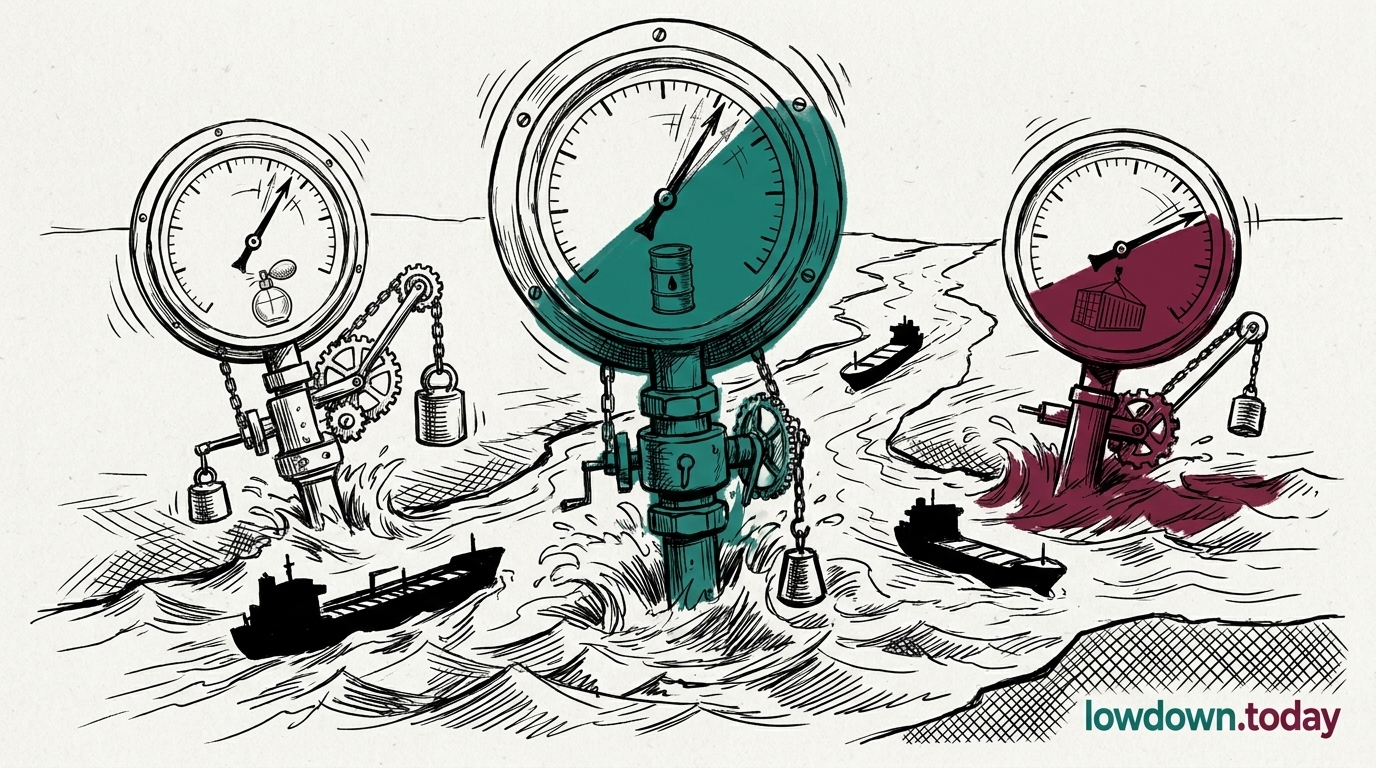
A pre-priced OPEC+ hike left crude flat and blew the Brent-WTI spread out 60% to $3.26.

The Brent-WTI spread, the gap between the two main crude benchmarks, widened about 60% to $3.26 on 6 July, the first trading session after OPEC+ confirmed its August output increase. Brent settled at $71.42 and West Texas Intermediate (WTI) at $68.16, both down on the day, but Brent gave up more ground, so the differential did the repricing rather than the outright price. 1

Brent had drifted to about $70 into the OPEC+ weekend , the tail of a quarter that closed down about 30% , and the confirmed hike was a number the market had already discounted. A vote that holds no surprise leaves the flat price still and pushes the tradeable information into the spread.

Brent prices the seaborne barrel that OPEC+ policy governs directly, while WTI tracks US domestic balances the alliance does not set. A signal of extra OPEC supply attaches to the Brent-linked leg first, so Brent softens faster and the spread absorbs the difference. That mechanism is why a pre-priced vote can leave the outright price inert yet still move the differential 60% in a single session.

The tradeable move this week sat in the spread, not the headline. A desk positioned on the flat-price OPEC story caught nothing, while the Brent-Dubai EFS and any TC2 arbitrage leg priced off a tighter Brent-WTI re-rate into the 2 August review.

Deep Analysis

In plain English

Oil is priced using two main benchmarks: Brent, which reflects oil traded by sea around the world, and West Texas Intermediate (WTI), which reflects oil produced and used mostly within the United States. On 6 July, the gap between the two, known as the spread, jumped by about 60% in a single day to $3.26, even though both prices fell. The move happened because OPEC+, the group of oil-producing countries, had just confirmed it would pump more oil in August. That decision affects Brent much more directly than it affects WTI, so the spread absorbed the news instead of the flat price. Traders who were only watching the headline oil price would have missed where the real action was that day.

Deep Analysis
Root Causes

US refinery utilisation ran near a cyclical high of 96.6% through late June, keeping crude-side demand for WTI-linked grades elevated even as crude and distillate stocks moved in different directions. Brent has no equivalent single data point pulling it in the other direction, so it absorbed more of the OPEC softness by default.

Rising US crude exports have partly decoupled WTI from a purely domestic glut dynamic, yet the pipeline and terminal capacity carrying those exports still clears more slowly than the tanker market Brent trades in, which is why a global supply signal reaches Brent's price first.

What could happen next?
  • Meaning

    With the OPEC decision now priced, the delayed CFTC report due 10 July becomes the next test of whether positioning, not policy, is driving the wider Brent-WTI spread.

First Reported In

Update #14 · Brent-WTI blows out as the hike lands priced

Trading Economics· 6 Jul 2026
Read original
Different Perspectives
UK Maritime Trade Operations
UKMTO logged six armed men boarding a tanker 136 nautical miles east of Al Mukalla on 20 August and redirecting it toward Somalia. A vessel steered toward the Somali coast reads as an attempted seizure, a distinct hazard from the stand-off strikes the same lane has seen before.
Mohammad Bagher Ghalibaf
Iran's Majlis speaker received Iraq's Hormuz carve-out request in Baghdad on 19 August, a request that treats passage as Tehran's to grant. Ghalibaf's authority over that grant sits alongside the Revolutionary Guard's separate transit rules, which have moved independently of Iran's foreign ministry before.
Haibat al-Halbousi
Haibat al-Halbousi
Iraq's parliament speaker asked Iran for special consideration on Iraqi Hormuz oil exports during Ghalibaf's 19 August Baghdad visit. Iraq presses the request from a weak position: Iran's central bank is simultaneously demanding Baghdad release Iranian reserves parked in Iraqi accounts.
Federal Department of Economic Affairs, Education and Research
Switzerland's economics ministry updated the Article 21 forms governing lawful Iran money transfers on 19 August, with only the revised forms accepted from 26 August. Bern operates one of the few remaining legal Iran payment channels and has just set a hard cutover on its control point.
Motegi Toshimitsu
Motegi Toshimitsu
Japan's foreign minister said in Muscat on 20 August that Tokyo wants closer coordination with Oman on safe Hormuz and Bab el-Mandeb passage. Japan has no naval presence of its own in the strait, so it is routing the ask through the state negotiating with Iran instead.
Badr bin Hamad Al Busaidi
Oman's foreign minister joined Japan's in Muscat on 20 August to call for intensified coordination on Hormuz and Bab el-Mandeb navigation. Oman also runs the mediation track with Tehran, so the appeal travels through the same channel as the negotiation.