Skip to content
You can now search across every topic, entity and event.What's new
Iran Conflict 2026
19AUG

Brent clears $87 as Hormuz traffic thins

2 min read
18:42UTC

Brent crude traded above $87 a barrel on 17 July, up more than 14 per cent on the week, while transits through the Strait of Hormuz fell to eight vessels and war-risk premiums reached 3 to 10 per cent of hull value.

ConflictDeveloping
Key takeaway

Brent passed $87 as Hormuz transits fell to eight vessels and war-risk cover reached 10 per cent.

Brent Crude traded above $87 a barrel on Friday 17 July, a one-month high and a rise of more than 14 per cent on the week 1. Transits through the Strait of Hormuz fell to eight vessels on 16 July, down from 15 the day before and against a pre-war baseline above 100 2. Roughly a fifth of the world's seaborne oil normally passes through that channel.

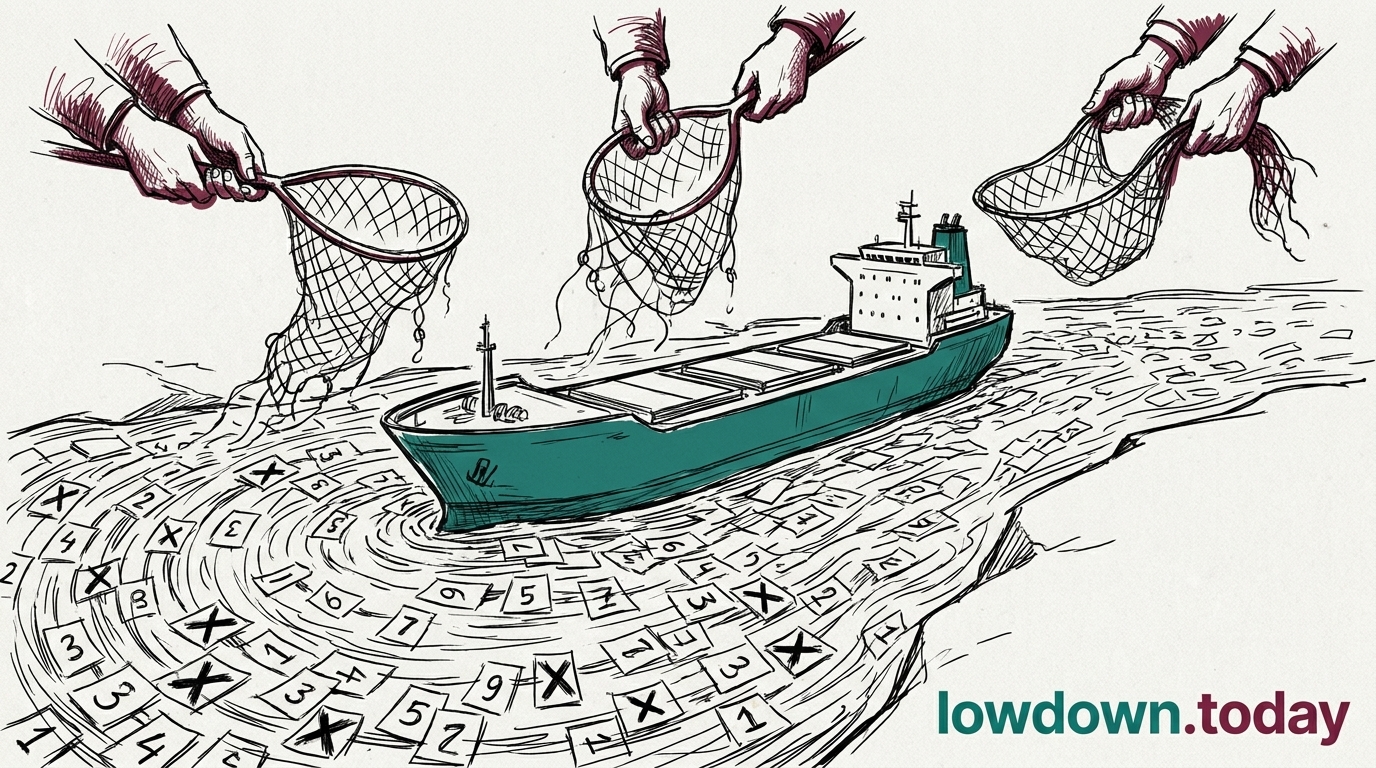
War-risk premiums, the surcharge underwriters levy for sailing dangerous waters, now run at 3 to 10 per cent of hull value against 0.25 per cent before the war 3. An owner who paid $250,000 to insure a $100m hull through the strait is now quoted between $3m and $10m for the same passage, which exceeds what most single cargoes earn. No physical barrier has been placed across the water. the strait shuts on an underwriter's spreadsheet before it shuts on anything else, and the IRGC's mining claim of 18 July, which CENTCOM called false , moves that spreadsheet whether or not a single mine is ever recovered.

That asymmetry favours Tehran. Laying enough ordnance to physically close Hormuz is beyond what Iran can sustain under nightly bombardment; making insurers behave as though it might is not. Tehran can assert a minefield for the price of a broadcast, and the premium moves on the assertion.

Deep Analysis

In plain English

The price of oil jumped to its highest level in a month, and the number of ships passing through the Strait of Hormuz fell sharply, because insurance companies are charging shipowners far more to sail through the strait than they were before the war. That insurance surcharge, called a war risk premium, has gone from a quarter of one per cent of a ship's value to as much as 10 per cent, which on a $100 million ship can mean paying $10 million just to insure one voyage. Shipowners are choosing not to sail rather than pay that much, which is why fewer ships are passing through even though no one has physically blocked the strait.

Deep Analysis
Root Causes

The Joint War Committee's Listed Areas system exists because individual underwriters cannot each independently assess mine risk in real time; they delegate that judgement to a committee that reviews the area periodically rather than continuously.

That institutional lag is the actual mechanism Iran's unconfirmed mining claim exploits: the claim does not need to be true, it needs only to be plausible enough that the Committee does not remove Hormuz from its list, and removal happens on the Committee's schedule, not on a mine-clearance timetable.

What could happen next?
  • Meaning

    Iran can move global oil prices and shipping insurance by making a claim alone, without needing to sustain the physical capability to close the strait, so long as the claim is not immediately and conclusively disproven.

First Reported In

Update #156 · First American deaths in Jordan

Al Jazeera· 19 Jul 2026
Read original
Different Perspectives
UK Maritime Trade Operations
UKMTO logged six armed men boarding a tanker 136 nautical miles east of Al Mukalla on 20 August and redirecting it toward Somalia. A vessel steered toward the Somali coast reads as an attempted seizure, a distinct hazard from the stand-off strikes the same lane has seen before.
Mohammad Bagher Ghalibaf
Iran's Majlis speaker received Iraq's Hormuz carve-out request in Baghdad on 19 August, a request that treats passage as Tehran's to grant. Ghalibaf's authority over that grant sits alongside the Revolutionary Guard's separate transit rules, which have moved independently of Iran's foreign ministry before.
Haibat al-Halbousi
Haibat al-Halbousi
Iraq's parliament speaker asked Iran for special consideration on Iraqi Hormuz oil exports during Ghalibaf's 19 August Baghdad visit. Iraq presses the request from a weak position: Iran's central bank is simultaneously demanding Baghdad release Iranian reserves parked in Iraqi accounts.
Federal Department of Economic Affairs, Education and Research
Switzerland's economics ministry updated the Article 21 forms governing lawful Iran money transfers on 19 August, with only the revised forms accepted from 26 August. Bern operates one of the few remaining legal Iran payment channels and has just set a hard cutover on its control point.
Motegi Toshimitsu
Motegi Toshimitsu
Japan's foreign minister said in Muscat on 20 August that Tokyo wants closer coordination with Oman on safe Hormuz and Bab el-Mandeb passage. Japan has no naval presence of its own in the strait, so it is routing the ask through the state negotiating with Iran instead.
Badr bin Hamad Al Busaidi
Oman's foreign minister joined Japan's in Muscat on 20 August to call for intensified coordination on Hormuz and Bab el-Mandeb navigation. Oman also runs the mediation track with Tehran, so the appeal travels through the same channel as the negotiation.