Skip to content
Welcome, thoughtbot's Giant Robots listeners!Start here
Iran Conflict 2026
10AUG

Sanctions licence dies in OFAC silence

4 min read
23:27UTC

OFAC let General Licence V expire at 12:01am Eastern on Sunday with no guidance on whether Hengli's refinery restructure clears the 50% ownership test; banks open Monday in the dark.

ConflictAssessed
Key takeaway

A US sanctions exemption on a Chinese refiner lapsed with no guidance, leaving banks to guess their exposure.

OFAC, the US Treasury's Office of Foreign Assets Control, let General Licence V expire at 12:01am Eastern on Sunday 24 May without publishing any extension, replacement, or guidance⁠1. The licence, signed on 24 April under Executive Order 13902, had authorised firms to wind down dealings with Hengli Petrochemical's sanctioned Dalian refinery. From Monday's Asia open, any non-US bank clearing dollars for Hengli faces a secondary-sanctions designation of its own.

The silence matters because of a structural question nobody answered. On 21 May, Hengli's Singapore arm transferred 95% of the Dalian refinery to Dalian Changxing, a Chinese state-linked trading house. OFAC's 50% rule treats any entity owned 50% or more by a blocked person as itself blocked. The transfer therefore clears sanctions only if Dalian Changxing is genuinely independent of the Hengli structure; if it is a front, the asset stays blocked and so does every bank that touches its dollars. No bank and no regulator answered that question before the deadline.

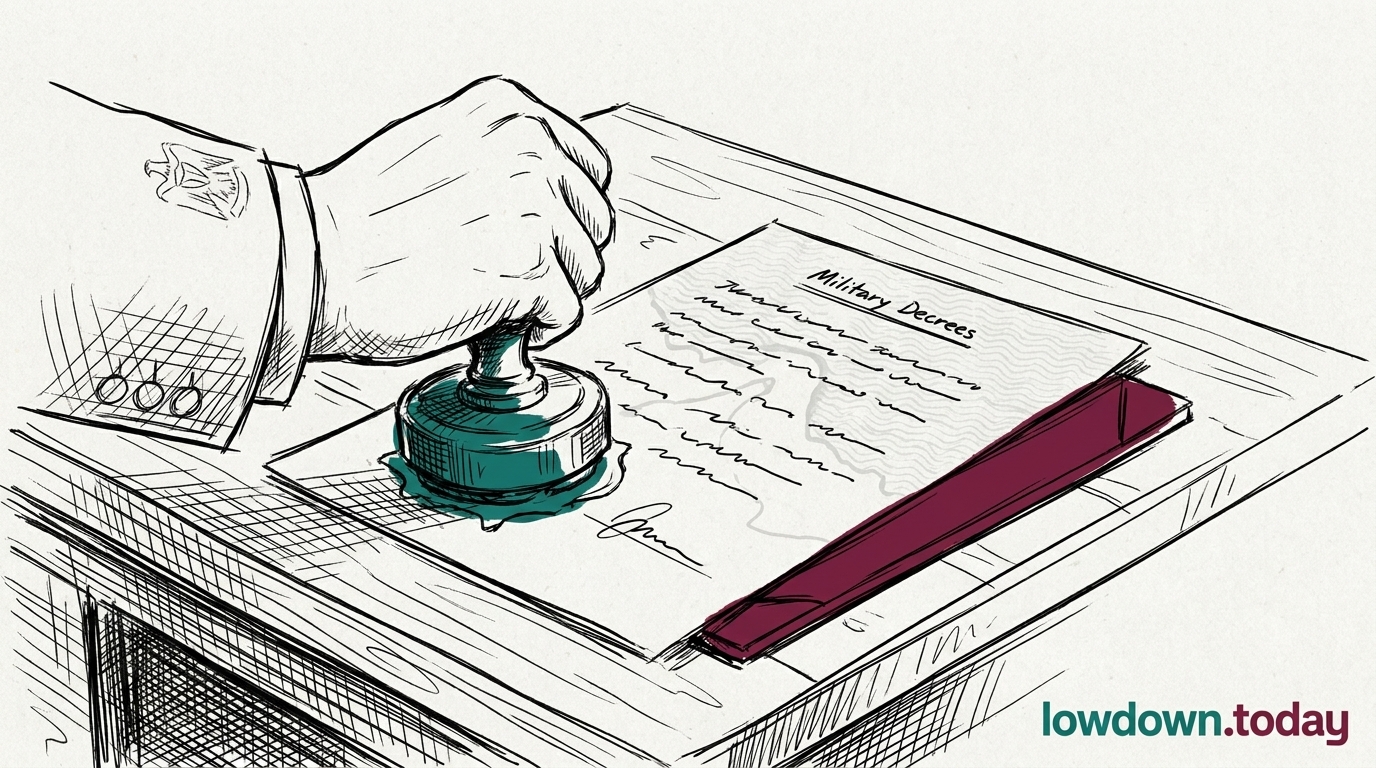
The expiry was mechanical, set on 24 April and immovable. The deal Trump declared the same weekend was verbal and contingent. Treasury enforcement and presidential diplomacy ran on the same Sunday without referencing each other, because one answers to a calendar and the other to a Truth Social post. OFAC's refusal to rule before the deadline is itself the enforcement posture: compliance desks must assume exposure and price it in.

Beijing had already moved. China's National Financial Regulatory Administration ordered banks on 1 May to stop new lending to five US-sanctioned refineries, while telling them not to demand repayment of existing credit⁠2. That order, alongside MOFCOM's Announcement No. 21 blocking statute, shields the same five refiners OFAC has pointedly declined to designate. Asia opens Monday with the legal status of every Hengli dollar trade unresolved, the enforcement clock running, and the promised waivers conditional on a text that does not yet exist.

Deep Analysis

In plain English

The US Treasury's Office of Foreign Assets Control (OFAC) administers America's sanctions programmes, effectively deciding which companies are barred from using US dollars. A rule called the '50% rule' says that if a sanctioned entity owns 50% or more of another company, that company is treated as sanctioned too. In April, OFAC sanctioned Hengli Petrochemical, a large Chinese oil refinery. Three days before a key OFAC deadline expired on 24 May, Hengli's Singapore trading arm transferred 95% of the Dalian refinery to a different Chinese company called Dalian Changxing. Hengli's argument was: we no longer own more than 50% of the refinery, so the new company (Dalian Changxing) should not count as sanctioned. OFAC's deadline expired on 24 May without the bureau clarifying whether it agrees. This matters because any bank clearing US dollars for Hengli or Dalian Changxing now faces potential US penalties from Monday, but nobody knows for certain whether those penalties actually apply. Banks must decide whether to keep processing the trades or freeze them while waiting for clarity that may never come.

Deep Analysis
Root Causes

OFAC's General Licence V (GL V) was the only signed Iran instrument of the entire 80-day war. Its 30-day wind-down period ending 24 May was a fixed administrative deadline rather than a policy choice.

The bureau's silence on the Dalian Changxing restructure reflects a structural constraint: issuing a ruling that the restructure is clean would effectively endorse the evasion mechanism and invite its replication across all five NFRA-protected refineries. Issuing a ruling that the restructure is tainted would force a direct confrontation with Beijing at a moment when the Trump-Xi relationship is the primary channel for China's Hormuz-transit diplomacy.

The 95% Dalian Changxing stake is this event's unique load-bearing figure: a Chinese state-linked entity now controls the refinery, OFAC's 50% ownership rule applies automatically to any entity 50%-or-more owned by a blocked person, but 'owned by' requires tracing beneficial ownership through Dalian Changxing back to the original sanctioned structure, which OFAC has not done. Banks must self-assess, with no guidance.

What could happen next?
  • Risk

    Non-US banks that continue clearing Hengli dollar trades from Monday face live secondary-sanctions exposure with no guidance covering their position. One enforcement action against a major correspondent bank would trigger industry-wide freezing of similar trades.

  • Consequence

    The 95% Dalian Changxing restructure, if accepted de facto by OFAC's silence, becomes a template for all five NFRA-protected refineries to exit the formal sanctions perimeter, hollowing out the Iran energy-sanctions architecture without a single enforcement action.

First Reported In

Update #106 · Trump says deal; OFAC says nothing

US Treasury OFAC· 24 May 2026
Read original →
Different Perspectives
Office for Budget Responsibility
The OBR's 28 October forecast assumed $82 oil for 2026 and 2027, from market prices for the ten working days to 19 August, and blamed dearer wholesale energy on the war without naming Iran. It expects CPI inflation close to 4% in early 2027 even at that price.
Hengaw, Kurdish rights group
Hengaw reported the 3 November hangings of Amirhossein Maleki and Amirhossein Ebrahimi in Isfahan, saying Ebrahimi was tortured into confessing and that nine of 12 people sentenced to death in the case have now been hanged. Iran's judiciary holds that the defendants killed members of the security forces.
FINTRAC, Canada's financial intelligence unit
FINTRAC worked with the US Treasury on the 6 November designation of eight money services businesses in British Columbia, Ontario and Quebec. Treasury says the businesses still operate, some under new names, so closing them falls to Ottawa.
Abdul Qadir al-Dakhil, Governor of Nineveh
Al-Dakhil cancelled three Mosul International Airport contracts on 7 November over alleged links to armed groups, after meeting Prime Minister Ali al-Zaidi in Baghdad. He named no group or company, and said the contracts will go to international companies.
Kuwait
Kuwait
Kuwait condemned the Houthi missile fired towards the Madinah region on 5 November and restated its support for Saudi Arabia, the Qatar News Agency reported. Its state tanker company, Kuwait Oil Tankers Company, is among the Gulf state fleets on Iran's expanded Hormuz list.
Scott Bessent, US Treasury Secretary
Treasury designated an alleged Chandigarh false-flag network on 4 November and eight Canadian exchangers on 6 November, while State sanctioned alleged MANPADS intermediaries. None of the actions touches an oil buyer; they target the paper, cash and procurement around Iran's trade.

Written with AI from Lowdown's published reporting. Not individually reviewed by an editor. Editorial standards.
