Skip to content
Welcome, thoughtbot's Giant Robots listeners!Start here
Iran Conflict 2026
7AUG

Samsami calls a petrol rise a powder keg spark

2 min read
12:08UTC

An Iranian MP on the Majlis Economic Committee warned that raising petrol prices now would be a spark in a powder keg. Food and drink inflation is running at 128.1%.

ConflictDeveloping
Key takeaway

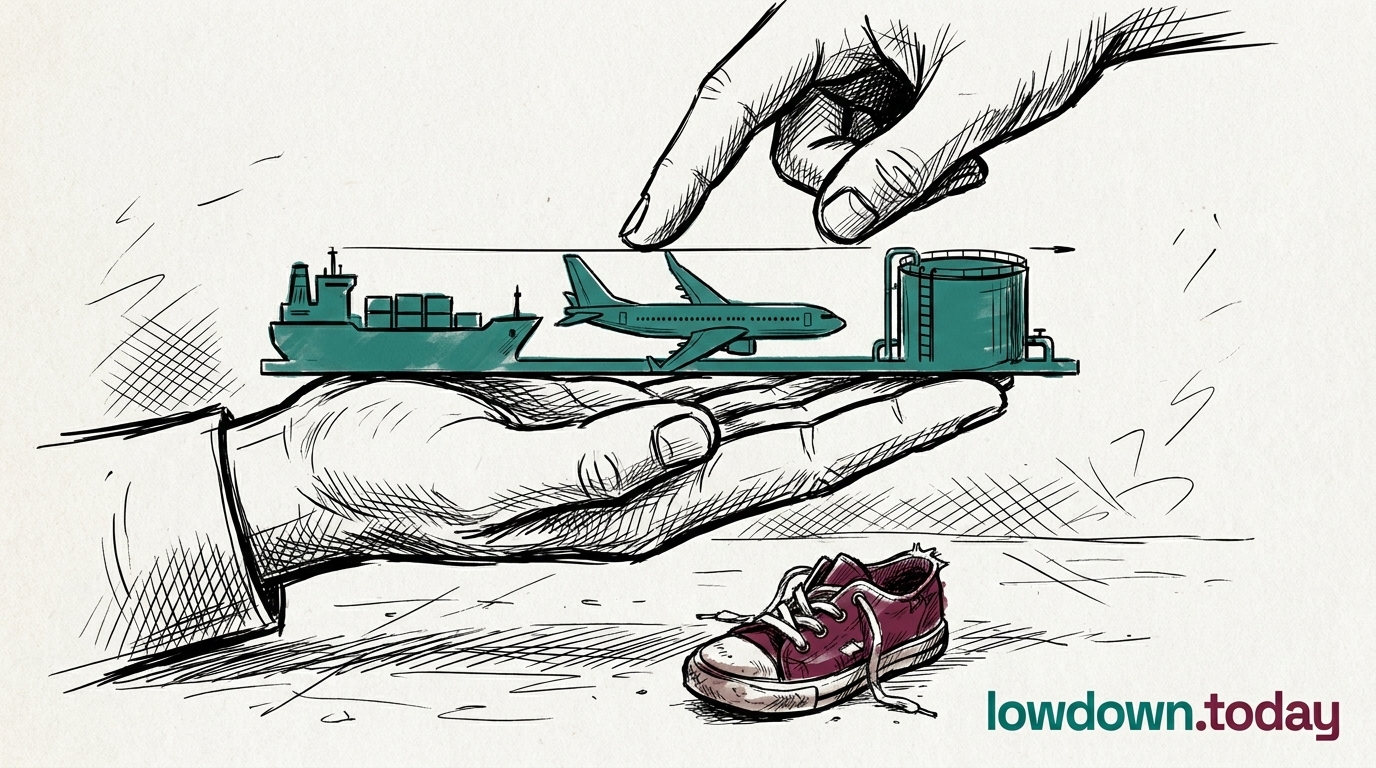
Iran's fuel subsidy is unaffordable and its removal is, on the committee's own account, dangerous.

Member of parliament Hossein Samsami of the Majlis Economic Committee warned on Monday 17 August that a petrol price rise under present conditions would be "a spark in a powder keg"⁠1⁠2. The Majlis is Iran's parliament, and its economic committee scrutinises budget and subsidy policy, so the warning comes from inside the body that would have to approve any change.

The numbers behind it are published by the government itself. Point-to-point inflation, the measure Iran reports against the same month a year earlier, ran at 87.9% for the Iranian month of Tir, which ended on 22 July, with food and drink inflation at 128.1%, reported by Dawn citing the Iranian Labour News Agency and the Statistical Centre of Iran⁠3. Iran's minimum wage runs at about 25 million tomans a month, or roughly 250 million rials, because one toman is ten rials and Iranian sources quote both⁠4. That wage is being spent into food prices that have more than doubled in a year.

Kerman province announced a refinery-rate petrol rise on 12 August and cancelled it inside a day, so Samsami is describing a decision the state has already flinched from once. Petrol in Iran is sold far below the cost of producing it, which makes the subsidy a growing hole in the budget and the price rise the obvious repair; what stalls the repair is the political cost, and Kerman measured that cost in a single day. The central bank's contribution in the same month was to open Iran's first foreign-currency investment fund, which serves the people who hold currency rather than the people queueing for coupons.

Washington's shortage this week acquired a contract, a term and a delivery rate. Tehran's arrives in a household's grocery bill, and no procurement decision reaches it.

Deep Analysis

In plain English

Hossein Samsami sits on the economic committee of Iran's parliament. He warned that raising petrol prices now, while the economy is already under strain, could set off unrest. Iran keeps petrol artificially cheap through subsidies it can no longer easily afford. Raising the price would save the government money but risks the kind of public anger that turned deadly the last time it tried, in 2019.

Deep Analysis
Root Causes

Petrol in Iran remains priced far below production cost, a subsidy funded from the same budget squeezed by sanctions on oil exports; the shortfall must be covered by other spending or by inflation, not by the price of petrol itself.

Samsami's committee sits inside the Majlis's economic bloc, which has to weigh the subsidy's fiscal cost against the 2019 precedent, a constraint that leaves no politically safe option rather than a hidden one.

First Reported In

Update #174 · A $22.9bn missile order, and a hunger row

Dawn· 23 Aug 2026
Read original →
Causes and effects
This Event
Samsami calls a petrol rise a powder keg spark
Tehran has to choose between an unfunded fuel subsidy and a price rise its own economic committee says could trigger unrest.
Different Perspectives
Office for Budget Responsibility
The OBR's 28 October forecast assumed $82 oil for 2026 and 2027, from market prices for the ten working days to 19 August, and blamed dearer wholesale energy on the war without naming Iran. It expects CPI inflation close to 4% in early 2027 even at that price.
Hengaw, Kurdish rights group
Hengaw reported the 3 November hangings of Amirhossein Maleki and Amirhossein Ebrahimi in Isfahan, saying Ebrahimi was tortured into confessing and that nine of 12 people sentenced to death in the case have now been hanged. Iran's judiciary holds that the defendants killed members of the security forces.
FINTRAC, Canada's financial intelligence unit
FINTRAC worked with the US Treasury on the 6 November designation of eight money services businesses in British Columbia, Ontario and Quebec. Treasury says the businesses still operate, some under new names, so closing them falls to Ottawa.
Abdul Qadir al-Dakhil, Governor of Nineveh
Al-Dakhil cancelled three Mosul International Airport contracts on 7 November over alleged links to armed groups, after meeting Prime Minister Ali al-Zaidi in Baghdad. He named no group or company, and said the contracts will go to international companies.
Kuwait
Kuwait
Kuwait condemned the Houthi missile fired towards the Madinah region on 5 November and restated its support for Saudi Arabia, the Qatar News Agency reported. Its state tanker company, Kuwait Oil Tankers Company, is among the Gulf state fleets on Iran's expanded Hormuz list.
Scott Bessent, US Treasury Secretary
Treasury designated an alleged Chandigarh false-flag network on 4 November and eight Canadian exchangers on 6 November, while State sanctioned alleged MANPADS intermediaries. None of the actions touches an oil buyer; they target the paper, cash and procurement around Iran's trade.

Written with AI from Lowdown's published reporting. Not individually reviewed by an editor. Editorial standards.
