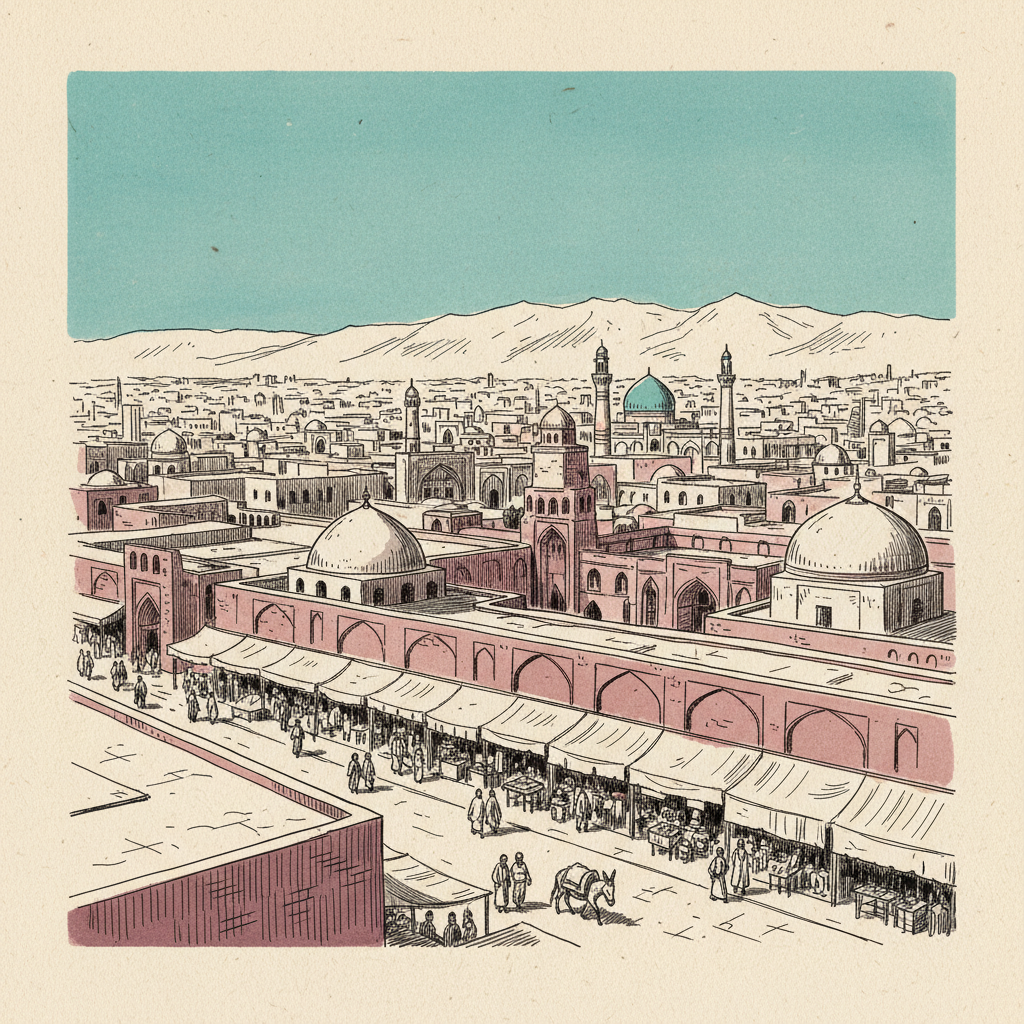
Kerman
South-eastern Iran's historic provincial capital; recurring in wartime crackdown and fuel unrest.
Kerman, the historic Capital of Iran's south-eastern Kerman province, saw a market-rate petrol scheme scrapped within a day of its 12 August 2026 launch, months after appearing in a 13 May execution cluster.
Last refreshed: 17 August 2026 · Appears in 1 active topic
What does the spread of executions to Kerman tell us about Iran's wartime judicial system?
Timeline for Kerman
Mentioned in: Samsami calls a petrol rise a powder keg spark
Iran Conflict 2026Mentioned in: Iran's wells flat as Iraq adds 665 tb/d
Iran Conflict 2026Kerman scraps petrol rise in a day
Iran Conflict 2026Mentioned in: Naqadeh dual, two Iraqis, a Turk at risk
Iran Conflict 2026Mentioned in: Hengaw: 3 executed, writer detained 19 May
Iran Conflict 2026Background
Kerman is the capital of Kerman province in south-eastern Iran, with a population of approximately 750,000. It is one of Iran's most historic cities, a former Silk Road hub with extensive bazaars and Citadel ruins, and it sits in a province bordering Afghanistan and Pakistan.
The city's economy has long centred on the copper and pistachio industries that also anchor the wider province. Kerman is the provincial capital, not a synonym for the province itself; it is a single city with its own long, pre-industrial history, not merely the seat of a modern administrative area.
As the largest and most historic city in its province, Kerman is the natural point where provincial-level developments, judicial or economic, surface in national reporting, which is why it has featured in both the 2026 wartime execution record and the province's fuel-pricing disputes without either defining what the city is.
Kerman entered the execution register
Kerman was one of four cities in Iran's 13 May 2026 coordinated execution cluster, when the Norway-based monitor Hengaw documented seven executions across prisons in Birjand, Tabriz, Kerman and Gorgan; Gorgan appeared in the wartime register for the first time that day. The prisoners held in Kerman were not named, consistent with the wartime pattern of undisclosed executions across provincial prisons.
Hengaw's reporting depends on prison contacts rather than official Iranian records, which makes exact identification difficult from a city as FAR from Tehran as Kerman. State media has not confirmed the Kerman executions, and Iranian authorities have made no public statement on them, leaving Hengaw's account as the only record of what happened that week.
Kerman's petrol rise lasted one day
Kerman province began charging the market refinery rate for petrol, 872,000 rials a litre, at 204 stations from midnight on 12 August 2026, a full tank costing over a quarter of Iran's monthly minimum wage at the new price. The scheme lasted less than a day: the governor scrapped it by the next morning after escalating the matter to national authorities in person.
The reversal, in the province's historic capital rather than a minor town, showed how sensitive fuel pricing remains politically even deep into the war, when a provincial administrator judged a subsidy rollback worth overturning within hours rather than defending nationally. Kerman's role in the episode was as the site where officials tested, and immediately retreated from, wartime fuel-price liberalisation.