Skip to content
You can now search across every topic, entity and event.What's new
Iran Conflict 2026
31JUL

WPR wind-down hits 1 June cliff

3 min read
09:24UTC

The War Powers Resolution 30-day wind-down expires 1 June, with Pete Hegseth's claim that the ceasefire pauses the 60-day clock having no basis in the 1973 text and Senator Lisa Murkowski's draft Iran AUMF still unfiled behind it.

ConflictDeveloping
Key takeaway

The WPR wind-down expires 1 June against an administration interpretation the 1973 statute does not support.

The War Powers Resolution 30-day wind-down provision expires on 1 June 2026, CBS News confirmed. Trump notified Congress of Operation Epic Fury on 2 March; the 60-day clock under the 1973 statute reached the 1 May deadline; the WPR's additional 30-day wind-down for orderly withdrawal of forces runs out two weeks after the present briefing 1.

Secretary of War Pete Hegseth told senators in mid-May that the ceasefire 'pauses or stops' the 60-day clock. The 1973 text contains no such provision, CBS News noted, and the position was deployed in the same testimony where Hegseth's Article 2 argument destroyed the rationale Senator Lisa Murkowski had been building for her draft Iran AUMF (Authorisation for Use of Military Force) . Seven war-powers votes have failed during the conflict; Murkowski's defection to support the seventh resolution (49-50 on 13 May) was the first time a Republican crossed . Her AUMF remains unfiled.

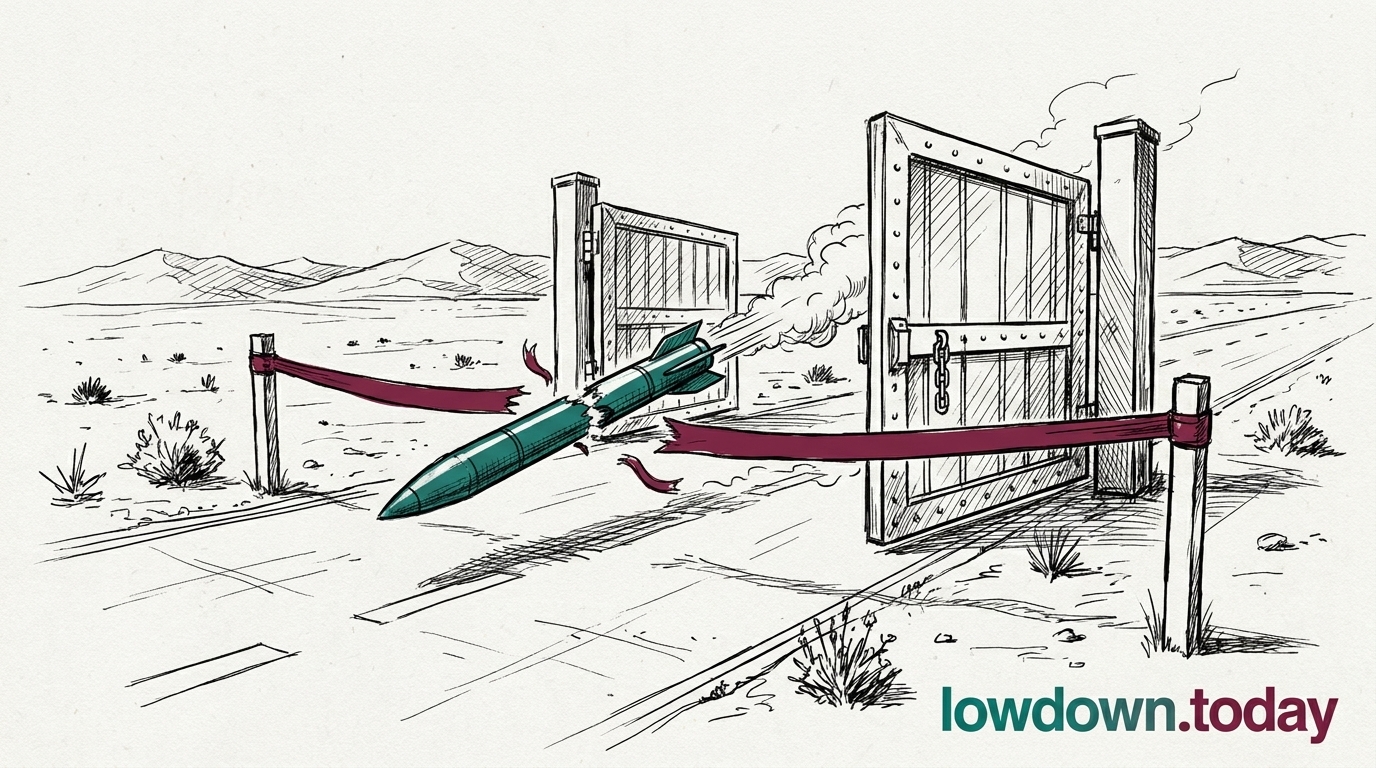
The 1 June expiry therefore arrives without a Senate vehicle behind it. If the administration treats the wind-down provision the same way it has treated the 60-day clock, the war continues with no statutory authorisation Congress has voted to grant, defended by an interpretation the WPR text does not authorise. The institutional cliff is procedurally identical to the one Murkowski crossed on, only this time the deadline is the statute's own and not a privileged resolution. Whether an eighth war-powers vote materialises before 1 June, or whether the AUMF leaves Murkowski's drawer, is now the binding question for Congress's role in the conflict.


Deep Analysis

In plain English

The War Powers Resolution is a 1973 US law that says the president must get Congress to approve a war within 60 days, or start pulling troops out. An extra 30-day wind-down period takes the deadline to 1 June 2026. After that, the operation is legally in breach unless Congress passes an authorisation. The defence secretary claimed the ceasefire pauses the clock, but legal experts say the law does not allow that. The Senate has voted seven times to challenge the war and failed each time. Senator Lisa Murkowski has been drafting an authorisation bill but has not filed it. After 1 June, every further US military action in the Iran conflict will be operating without any clear legal authority under the 1973 statute.

Deep Analysis
Root Causes

The WPR 1 June cliff has three structural components that make it the most legally exposed moment of the conflict.

First, the 30-day wind-down is not discretionary. Section 1544(b) does not give the president authority to extend it by declaration, executive order, or verbal announcement the only legal mechanism for continuing operations past 1 June is an AUMF or a constitutional finding that the WPR itself is unconstitutional (a finding no federal court has made).

Second, Hegseth's ceasefire-pause theory has been formally rejected by Senator Tim Kaine on the Senate floor and has no supporting case law. Courts have not affirmed it; the administration has merely asserted it.

Third, Murkowski's AUMF draft remains behind the cliff as the next institutional option, but it has been rendered procedurally awkward by Hegseth's Article 2 testimony: an AUMF that passes implicitly concedes the war needs authorisation, contradicting the administration's own legal doctrine and creating a White House veto risk.

Escalation

The 1 June WPR cliff is an institutional escalation point, not a kinetic one. The risk is that post-1 June operations generate litigation and legislative challenges that constrain command flexibility at moments requiring rapid response.

What could happen next?
  • Risk

    Post-1 June, every CENTCOM action in the Iran conflict is legally unsupported by the WPR framework; a successful congressional challenge could force an operational pause at a moment of active military engagement.

    Immediate · 0.75
  • Consequence

    If Murkowski files and passes an AUMF after 1 June, the implicit concession that authorisation was needed undermines the Hegseth Article 2 doctrine and establishes a congressional-approval precedent for future executive military actions.

    Short term · 0.68
  • Precedent

    A successful operation past the WPR 1 June cliff without an AUMF if courts decline to adjudicate would effectively complete the WPR's transformation from a hard constraint to an advisory mechanism, removing the primary post-Vietnam statutory check on undeclared wars.

    Long term · 0.72
First Reported In

Update #102 · Iran signs Hormuz toll; Trump posts a cancelled strike

UPI· 19 May 2026
Read original
Causes and effects
This Event
WPR wind-down hits 1 June cliff
The next hard institutional cliff for the war's legal architecture arrives in 13 days, and the administration's stated interpretation of the statute is not one the statute supports.
Different Perspectives
Shipping and insurance underwriters
Underwriters can price Houthi strikes because the group announces its targets, but an unclaimed drone at Damietta and a mandatory Iranian insurance scheme both deny them a pattern to price against. War-risk premiums are increasingly being set by the absence of a claimant, not the scale of the damage.
Jordan
Jordan
Azraq absorbed its fourth Iranian strike in seven weeks, again drawing no direct Jordanian retaliation, only an American one. Amman's exposure, hosting US basing without the Patriot density of Gulf allies, has not changed even as the war around it widens.
Houthi movement
Houthi movement
The Houthis' 20 July blockade of Saudi-linked shipping is the injury Riyadh's new 43-nation coalition directly answers, yet the group itself was never asked to join and remains outside every proposal on the table. Sanaa-aligned commentators call the coalition a paper reassurance for insurers rather than a deployable force.
Egypt's Cabinet
Egypt's Cabinet
Egypt confirmed the Damietta blaze was an attack, not an accident, on soil the war had never touched before. Cairo now faces an unclaimed threat to a facility supplying roughly 7% of its domestic gas, with no author to hold accountable and no pattern yet to defend against.
Oman
Oman
Muscat is running the only channel Iran will use, a voluntary Hormuz fee modelled on Malacca, but stayed out of Saudi Arabia's new naval coalition entirely. Oman's mediating leverage depends on treating Hormuz as shared and non-exclusive, the opposite of what Tehran is now demanding of it.
Iraq's Prime Minister
Al-Zaidi cancelled his first official Riyadh visit and convened the Coordination Framework, the coalition that keeps him in power and whose factions sit inside the PMF that Saudi jets just struck. He is caught between a five-year Saudi investment relationship and armed groups inside his own state he does not fully control.



