Skip to content
You can now search across every topic, entity and event.What's new
Iran Conflict 2026
31JUL

B-52s over Iran; 50,000 US troops in

2 min read
09:24UTC

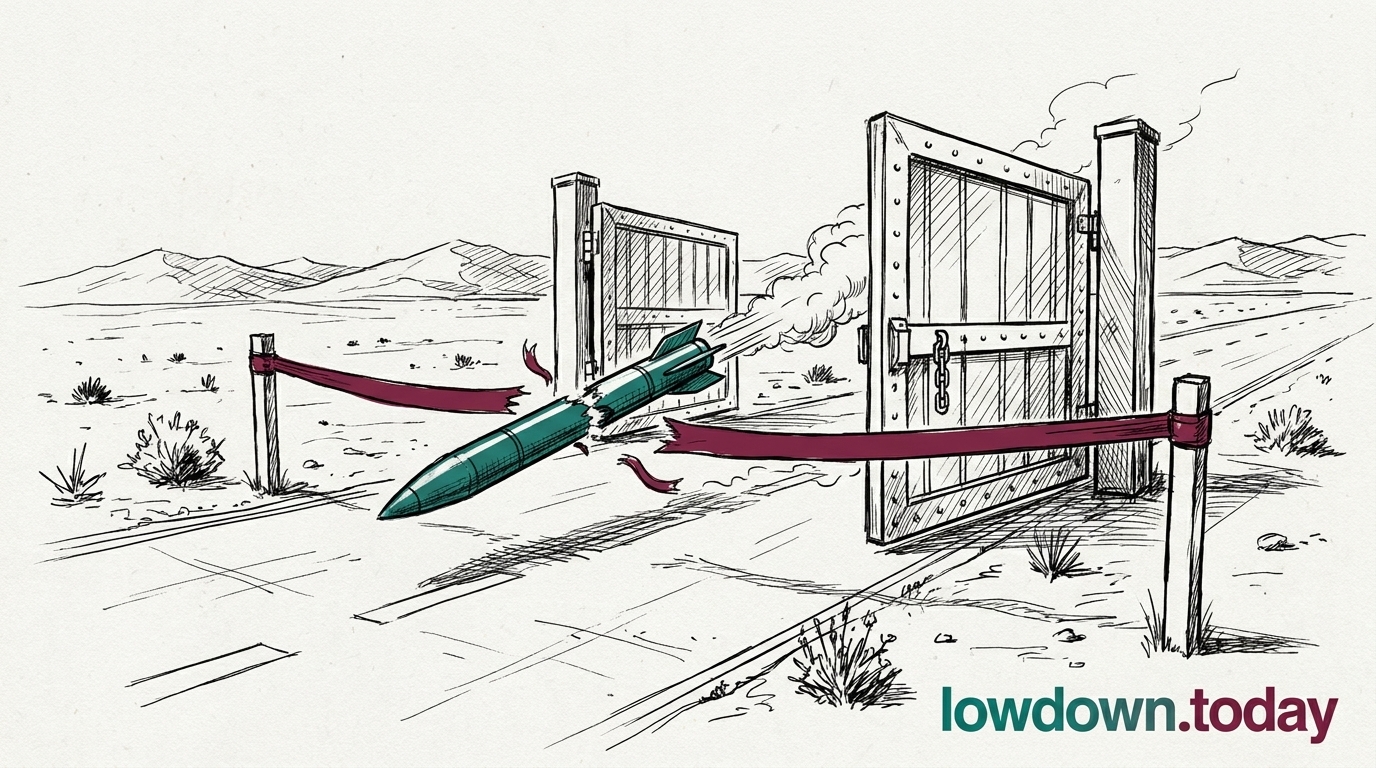
US forces have begun flying B-52 strategic bombers overland into Iran for the first time in the conflict, quadrupling ordnance-per-sortie while Pentagon planners weigh options including seizing Kharg Island. The tactical picture and Trump's victory speech describe two different wars.

ConflictAssessed
Key takeaway

B-52 overland flights confirm US air superiority over Iran and quadruple per-sortie ordnance capacity.

Gen. Dan Caine confirmed on 1 April that CENTCOM has begun flying B-52 Stratofortress bombers on overland missions inside Iran, lifting a 30-day restriction to standoff-only strikes. Bunker-busters had struck Isfahan ammunition depots the previous night , and the B-52 overland authorisation signals that the degradation of Iran's air defences has now crossed the threshold that makes large, slow aircraft survivable.

The B-52 is not a stealth aircraft. Flying one over hostile territory is a statement: CENTCOM has suppressed Iranian air defences sufficiently that it can send the most visible aircraft in its inventory over Iranian territory and expect it to survive. The shift from standoff to overland dramatically increases ordnance per sortie. A B-52 carries roughly 70,000 lbs of bombs versus approximately 18,000 lbs for an F-35. With 200 dynamic strikes logged on Monday alone, CENTCOM has the targeting intelligence and the delivery capacity to accelerate the campaign.

CENTCOM had already logged 9,000 targets through Day 25 and reported 10,000-plus targets struck with 92% of Iran's largest naval vessels destroyed before today's confirmation. The B-52 authorisation is the operational expression of that accumulated attrition.

The SOF deployment compounds the picture. Hundreds of Navy SEALs and Army Rangers, options including seizing Kharg Island (which handles 90% of Iran's oil exports), and 3,500 Marines aboard USS Tripoli are assets relevant to a ground phase, not a withdrawal. The Pentagon had drawn up Kharg seizure plans weeks ago. The tactical picture and Trump's victory speech describe two different wars.


Deep Analysis

In plain English

B-52s are enormous American bombers built during the Cold War that can carry vast amounts of weapons. For the first 30 days of the war, they were only allowed to fire missiles from far away, outside Iranian airspace. Now they are flying directly over Iran. This tells us two things: first, the US military believes Iran can no longer shoot them down, meaning Iran's air defences have been severely degraded. Second, each B-52 can carry four times as many bombs as a modern fighter jet. At the same time, hundreds of special forces soldiers have arrived in the region, and Pentagon planners are reportedly considering seizing Kharg Island ; the port that handles 90% of Iran's oil exports. This is not what a military winding down looks like.

Deep Analysis
Root Causes

Iranian air defence degradation results from 30 days of systematic targeting by Operation Epic Fury, which struck over 11,000 targets including radar installations, SAM sites, and command nodes.

The shift from standoff to overland B-52 missions reflects CENTCOM's assessment that remaining Iranian air defences cannot threaten slow, high-altitude aircraft.

Escalation

The combination of B-52 overland flights, 50,000 troops, SOF deployment, and USS Tripoli Marines constitutes a full pre-invasion force posture. Whether this represents actual preparation or coercive signalling, the military infrastructure for a Kharg Island seizure is now in place.

What could happen next?
  • Risk

    B-52 overland flights and SOF deployment signal a potential ground phase that would extend the conflict well beyond Trump's two-to-three-week withdrawal timeline.

    Short term · Assessed
  • Precedent

    Confirming air superiority over Iran means CENTCOM can now target any location in the country, including underground facilities not accessible to standoff missiles.

    Immediate · Assessed
  • Consequence

    Seizing Kharg Island would remove 90% of Iran's oil export capacity and fundamentally alter the economic calculus of the conflict.

    Short term · Reported
First Reported In

Update #54 · Trump declares victory and withdrawal

UPI· 1 Apr 2026
Read original
Different Perspectives
Shipping and insurance underwriters
Underwriters can price Houthi strikes because the group announces its targets, but an unclaimed drone at Damietta and a mandatory Iranian insurance scheme both deny them a pattern to price against. War-risk premiums are increasingly being set by the absence of a claimant, not the scale of the damage.
Jordan
Jordan
Azraq absorbed its fourth Iranian strike in seven weeks, again drawing no direct Jordanian retaliation, only an American one. Amman's exposure, hosting US basing without the Patriot density of Gulf allies, has not changed even as the war around it widens.
Houthi movement
Houthi movement
The Houthis' 20 July blockade of Saudi-linked shipping is the injury Riyadh's new 43-nation coalition directly answers, yet the group itself was never asked to join and remains outside every proposal on the table. Sanaa-aligned commentators call the coalition a paper reassurance for insurers rather than a deployable force.
Egypt's Cabinet
Egypt's Cabinet
Egypt confirmed the Damietta blaze was an attack, not an accident, on soil the war had never touched before. Cairo now faces an unclaimed threat to a facility supplying roughly 7% of its domestic gas, with no author to hold accountable and no pattern yet to defend against.
Oman
Oman
Muscat is running the only channel Iran will use, a voluntary Hormuz fee modelled on Malacca, but stayed out of Saudi Arabia's new naval coalition entirely. Oman's mediating leverage depends on treating Hormuz as shared and non-exclusive, the opposite of what Tehran is now demanding of it.
Iraq's Prime Minister
Al-Zaidi cancelled his first official Riyadh visit and convened the Coordination Framework, the coalition that keeps him in power and whose factions sit inside the PMF that Saudi jets just struck. He is caught between a five-year Saudi investment relationship and armed groups inside his own state he does not fully control.



