Skip to content
You can now search across every topic, entity and event.What's new
Iran Conflict 2026
23JUL

UK launches £500m Sovereign AI Unit

3 min read
19:27UTC

Britain's Department for Science, Innovation and Technology committed £500m to sovereign AI, with a separate £250m cloud compute procurement running to 2029.

ConflictDeveloping
Key takeaway

Britain's VC-chaired Sovereign AI Unit operates outside EU frameworks, trading scale for speed.

The UK Government launched a £500m Sovereign AI Unit on 16 April 2026, chaired by James Wise of Balderton Capital and delivered by the Department for Science, Innovation and Technology (DSIT) 1. A separate £250m cloud compute procurement runs from June 2026 to March 2029. Investee selection criteria have not been published.

Wise is a venture capitalist, not a civil servant or academic. Balderton is one of Europe's largest early-stage technology investors. Appointing a VC to chair the unit signals that DSIT wants the programme to move at startup speed, selecting investees and deploying capital faster than typical government procurement cycles allow.

The UK programme operates entirely outside the EU's regulatory and subsidy architecture. Britain is not subject to the AI Act, the Chips Act, or the DMA. This gives DSIT flexibility: it can fund companies that might face compliance hurdles under EU rules, and it can structure investments without the milestone-gating that has caused problems for the EU Chips Act. Fragmentation is the risk. European sovereign AI efforts are now split between an EU programme with regulatory heft but slow delivery, and a UK programme with more agility but smaller scale and no access to the single market's procurement base.

Deep Analysis

In plain English

On 16 April 2026, the UK government announced a £500 million 'Sovereign AI Unit' run by DSIT, the Department for Science, Innovation and Technology. The unit is chaired by James Wise, a partner at Balderton Capital; one of Europe's largest technology venture capital funds. The unit's purpose is to invest in and support British artificial intelligence; to help the UK have its own AI capabilities rather than depending entirely on American companies. The UK left the European Union in 2020, so it is not part of the EU's AI policies and programmes. A separate £250 million procurement programme will buy cloud computing capacity for the UK public sector over three years. The criteria for who can bid for both the investment and the procurement have not yet been published. The announcement comes as France has committed over €2 billion in various forms of support for Mistral, and Germany is backing the Aleph Alpha ecosystem through procurement and shareholding. The UK's £500m appears modest by comparison.

Deep Analysis
Root Causes

The UK Sovereign AI Unit's structure; VC-chaired, DSIT-delivered, without published investee criteria; reflects the tension between the Treasury's preference for market-led investment allocation and DSIT's political mandate to signal AI ambition.

A VC-chaired unit optimises for financial returns rather than strategic sovereignty; the two objectives are not aligned in early-stage AI infrastructure, where the highest-return investments (US AI labs) are precisely the dependency the unit should be reducing.

The separate £250m cloud compute procurement (June 2026 to March 2029) is more structurally significant than the £500m unit, because it creates genuine UK public sector demand for compute that could anchor a UK sovereign cloud provider. But the procurement runs for only three years; insufficient to justify the capital investment required to build new UK data centre capacity; and its scope and provider eligibility have not been defined.

Escalation

The UK's AI sovereignty commitment is growing but remains below the investment thresholds set by France and Germany. The unit's VC-chairmanship structure and unpublished criteria suggest it may function more as a signalling vehicle than a strategic market intervention. Watch for investee criteria publication and first investments as the meaningful indicators of strategic intent.

What could happen next?
  • Consequence

    The UK's £500m commitment positions it as a participant in the European AI sovereignty race but below the investment thresholds set by France and Germany, risking strategic marginalisation as the EU's AI Act creates a preferential market for EU-domiciled providers.

    Medium term · 0.7
  • Risk

    A VC-chaired unit without published sovereignty criteria may optimise for financial returns rather than strategic technology independence, directing UK public money toward US AI labs that are the dependency the programme should be reducing.

    Short term · 0.65
  • Opportunity

    The UK's lighter AI regulatory environment, combined with £750m in public AI investment, could attract US AI labs to establish genuine UK R&D operations; building real UK AI capability as a byproduct of serving as a EU-adjacent research base.

    Medium term · 0.55
First Reported In

Update #1 · Europe's chip ambitions meet reality

The Register· 13 Apr 2026
Read original
Different Perspectives
India
India
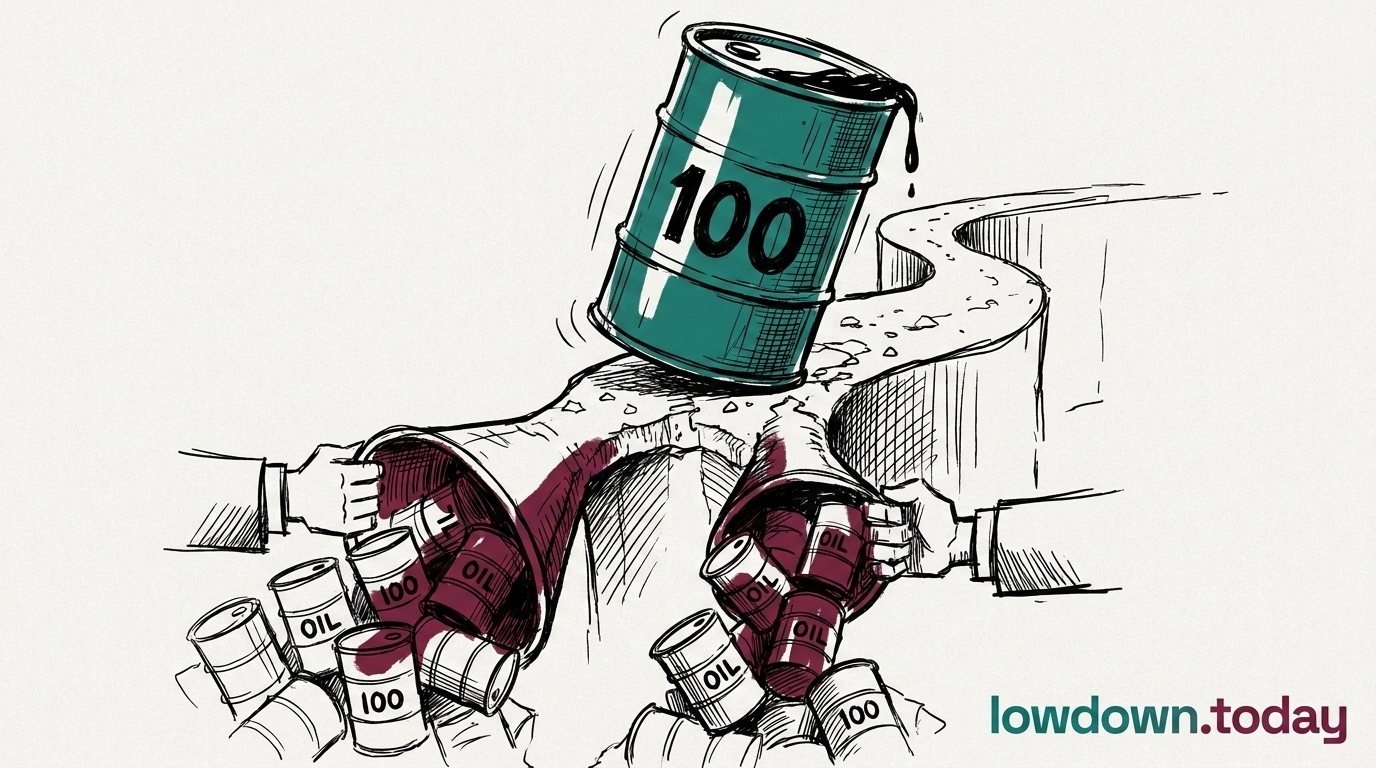
India buys more Saudi crude than any other country and has 2.5 million nationals working in the kingdom, so a $100 Brent and a live strike on Saudi tankers reach New Delhi through both fuel bills and remittance risk. Neither channel has an alternative route the way Saudi Arabia's own pipeline does.
Qatar
Qatar
Qatar co-authored the four-mediator ten-day ceasefire proposal alongside Egypt, Pakistan and Oman, centred on resuming Hormuz navigation, while separately pursuing its dated compensation claim against Iran at the UN Security Council filed on 21 July. Doha is mediating and litigating in the same week.
Israel
Israel
Israeli intelligence, reported by the Wall Street Journal, assesses Iran moved thousands of centrifuges and part of its roughly 440kg enriched-uranium stock into Pickaxe Mountain after the June 2025 strikes on its three main nuclear sites. Some of the US refuelling aircraft now deploying to the region are bound for Israeli bases and Ramon Airport.
Houthis
Houthis
Yahya Saree announced the missile and drone strikes on the Encelia and Layla on 22 July as enforcement of the embargo his forces had declared by radio warning alone two days earlier. Six vessels already turned back on the broadcast; the strike shows Houthi forces will use weapons once warnings stop working.
Saudi Arabia
Saudi Arabia
Saudi Arabia's state news agency confirmed only a fire on the Encelia's bow, with the crew safe; the Layla strike remains unconfirmed by Riyadh. The kingdom built its Petroline pipeline specifically to bypass Hormuz through the Red Sea, so the tanker fire lands on the route Riyadh had already spent billions escaping.
United States
United States
Washington is weighing both ten-day proposals but wants a longer truce than either offers, and moved F-16 and F-35 jets plus refuelling aircraft into the region while it decides. That deployment, not Trump's Pickaxe Mountain remarks, is the measurable US action, buying options for the day talks fail rather than betting on them.