Skip to content
You can now search across every topic, entity and event.What's new
Iran Conflict 2026
23JUL

Israel pushes 91st Division into Lebanon

3 min read
19:27UTC

Defence Minister Katz ordered the 91st Division to seize new territory as UNHCR reports 30,000 displaced from southern Lebanon since Monday.

ConflictDeveloping
Key takeaway

Ordering a standing border division to 'advance and seize controlling areas' — not a raid formation — signals a sustained territorial commitment with no defined endpoint, making withdrawal politically costly once ground is held.

Defence Minister Israel Katz ordered the 91st Division to "advance and seize additional controlling areas" in southern Lebanon, with the stated objective of preventing Hezbollah fire on northern border settlements. UNHCR reports 30,000 people newly displaced since Monday. The Lebanese Armed Forces withdrew from key border positions rather than contest the advance — lacking both the military capacity and the political mandate to confront the IDF directly.

The phrasing matters. "Advance and seize" is the language of territorial control, not of a limited raid or security sweep. Israel mobilised reservists and launched what it called an "offensive campaign" on Saturday , following Netanyahu's statement to his cabinet that Trump had given approval for operations against Hezbollah. Four days later, the operation has progressed from mobilisation to active ground seizure, with the 91st Division — a reserve formation typically tasked with holding ground — ordered forward into new positions.

Every Israeli ground operation in Lebanon has followed this trajectory. Operation Litani in 1978 was a limited security sweep; it produced the South Lebanon Army and a semi-permanent occupation zone. Operation Peace for Galilee in 1982 aimed to push the PLO 40 kilometres from the border; it became an 18-year occupation that cost over 1,000 Israeli soldiers' lives and ended in a unilateral withdrawal in 2000. The 2006 ground invasion in the war's final days achieved little beyond additional casualties on both sides.

Israel is now running air operations across 24 Iranian provinces while pushing ground forces into Lebanon — operations that require different force structures, different intelligence pipelines, and different command attention. The 1982 Lebanon invasion consumed Israel's strategic bandwidth for a generation. Lebanon's government, actively reviewing a formal ban on Hezbollah's military activity, may provide political cover for what Israeli planners describe as a limited operation. But "limited" is what every Lebanon incursion was called at the start.

Deep Analysis

In plain English

The 91st Division is Israel's permanent standing army on the northern border — not reservists called up for an emergency, but the professional force stationed there permanently. Ordering it to advance and hold territory is qualitatively different from a strike-and-withdraw operation: it means Israel intends to physically occupy and control ground, not just pass through. The stated rationale is creating distance between Hezbollah and Israeli border towns so rockets cannot reach them. Once an army holds territory, giving it back becomes a political decision, not just a military one.

Deep Analysis
Synthesis

The use of a standing division in a 'seize and hold' posture rather than the reserve call-up formations used in Gaza marks a deliberate institutional signal: this operation is being resourced for sustained commitment, not rapid resolution. The absence of a stated northern limit to the advance mirrors the structural ambiguity that preceded both the 1982 and 2006 expansions — a pattern the body notes but whose force-composition dimension is new.

Root Causes

Approximately 60,000–80,000 residents of northern Israeli communities have been evacuated since October 2023 — over 16 consecutive months. Restoring these communities is a binding domestic political commitment for the Israeli government, creating pressure for a territorial buffer that extends the operation's logic beyond purely military objectives. The 'advance and seize' order is as much a response to internal political pressure from evacuated communities as to battlefield necessity.

What could happen next?
  • Meaning

    Deploying a standing division in advance-and-hold mode rather than reserve raid formations signals operational planning for weeks of sustained ground presence, not a temporary incursion.

    Immediate · Assessed
  • Risk

    Once territory is seized and held, domestic political pressure to maintain it — enabling return of northern evacuees displaced for 16 months — could prevent withdrawal even if the immediate military rationale diminishes.

    Medium term · Assessed
  • Precedent

    A ground advance without a defined northern geographic limit establishes an expandable operational mandate whose scope is determined by field conditions rather than pre-stated political objectives.

    Long term · Assessed
First Reported In

Update #15 · Iran rejects ceasefire; embassies close

The National· 3 Mar 2026
Read original
Causes and effects
This Event
Israel pushes 91st Division into Lebanon
The order to 'advance and seize additional controlling areas' while simultaneously running air operations across 24 Iranian provinces creates a dual commitment that historical precedent — the 1982 Lebanon invasion, the 2003 Iraq war — shows is prone to scope expansion and overextension.
Different Perspectives
India
India
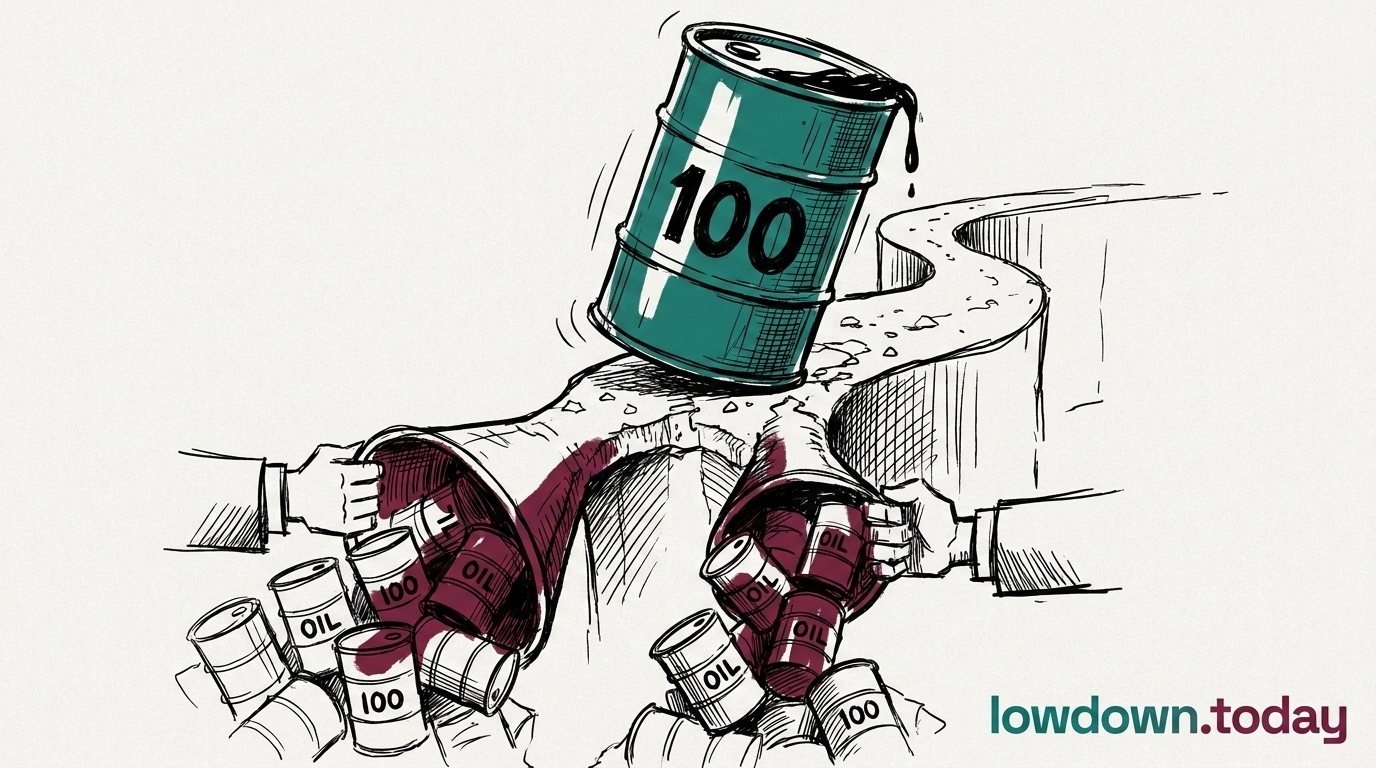
India buys more Saudi crude than any other country and has 2.5 million nationals working in the kingdom, so a $100 Brent and a live strike on Saudi tankers reach New Delhi through both fuel bills and remittance risk. Neither channel has an alternative route the way Saudi Arabia's own pipeline does.
Qatar
Qatar
Qatar co-authored the four-mediator ten-day ceasefire proposal alongside Egypt, Pakistan and Oman, centred on resuming Hormuz navigation, while separately pursuing its dated compensation claim against Iran at the UN Security Council filed on 21 July. Doha is mediating and litigating in the same week.
Israel
Israel
Israeli intelligence, reported by the Wall Street Journal, assesses Iran moved thousands of centrifuges and part of its roughly 440kg enriched-uranium stock into Pickaxe Mountain after the June 2025 strikes on its three main nuclear sites. Some of the US refuelling aircraft now deploying to the region are bound for Israeli bases and Ramon Airport.
Houthis
Houthis
Yahya Saree announced the missile and drone strikes on the Encelia and Layla on 22 July as enforcement of the embargo his forces had declared by radio warning alone two days earlier. Six vessels already turned back on the broadcast; the strike shows Houthi forces will use weapons once warnings stop working.
Saudi Arabia
Saudi Arabia
Saudi Arabia's state news agency confirmed only a fire on the Encelia's bow, with the crew safe; the Layla strike remains unconfirmed by Riyadh. The kingdom built its Petroline pipeline specifically to bypass Hormuz through the Red Sea, so the tanker fire lands on the route Riyadh had already spent billions escaping.
United States
United States
Washington is weighing both ten-day proposals but wants a longer truce than either offers, and moved F-16 and F-35 jets plus refuelling aircraft into the region while it decides. That deployment, not Trump's Pickaxe Mountain remarks, is the measurable US action, buying options for the day talks fail rather than betting on them.