Skip to content
You can now search across every topic, entity and event.What's new
Iran Conflict 2026
23JUL

Brent-WTI blows out as price sits still

2 min read
19:27UTC

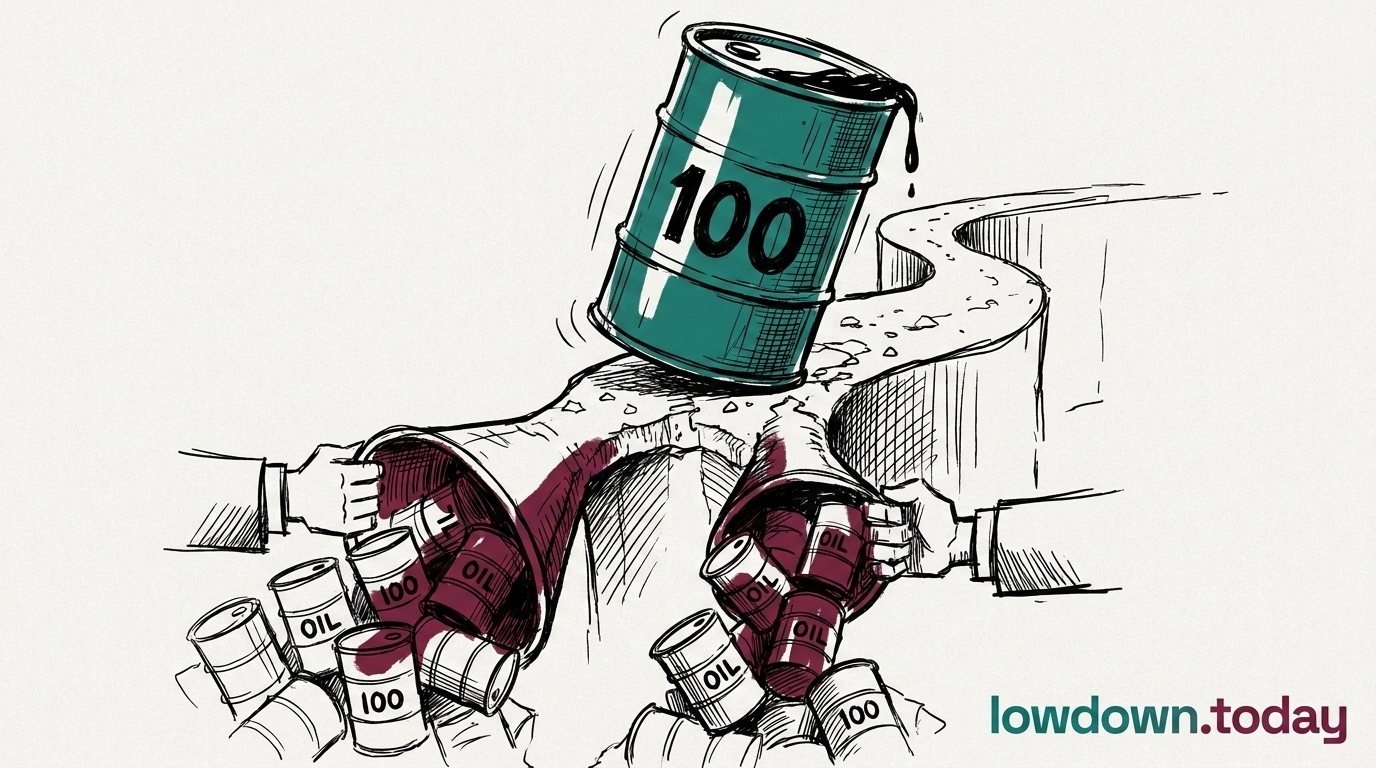
Brent-WTI widened about 60% to $3.26 on 6 July as Brent settled at $71.42 and WTI at $68.16; a pre-priced OPEC+ hike left the flat price inert and moved the signal into the spread.

ConflictDeveloping
Key takeaway

A pre-priced OPEC+ hike left crude flat and blew the Brent-WTI spread out 60% to $3.26.

The Brent-WTI spread, the gap between the two main crude benchmarks, widened about 60% to $3.26 on 6 July, the first trading session after OPEC+ confirmed its August output increase. Brent settled at $71.42 and West Texas Intermediate (WTI) at $68.16, both down on the day, but Brent gave up more ground, so the differential did the repricing rather than the outright price. 1

Brent had drifted to about $70 into the OPEC+ weekend , the tail of a quarter that closed down about 30% , and the confirmed hike was a number the market had already discounted. A vote that holds no surprise leaves the flat price still and pushes the tradeable information into the spread.

Brent prices the seaborne barrel that OPEC+ policy governs directly, while WTI tracks US domestic balances the alliance does not set. A signal of extra OPEC supply attaches to the Brent-linked leg first, so Brent softens faster and the spread absorbs the difference. That mechanism is why a pre-priced vote can leave the outright price inert yet still move the differential 60% in a single session.

The tradeable move this week sat in the spread, not the headline. A desk positioned on the flat-price OPEC story caught nothing, while the Brent-Dubai EFS and any TC2 arbitrage leg priced off a tighter Brent-WTI re-rate into the 2 August review.

Deep Analysis

In plain English

Oil is priced using two main benchmarks: Brent, which reflects oil traded by sea around the world, and West Texas Intermediate (WTI), which reflects oil produced and used mostly within the United States. On 6 July, the gap between the two, known as the spread, jumped by about 60% in a single day to $3.26, even though both prices fell. The move happened because OPEC+, the group of oil-producing countries, had just confirmed it would pump more oil in August. That decision affects Brent much more directly than it affects WTI, so the spread absorbed the news instead of the flat price. Traders who were only watching the headline oil price would have missed where the real action was that day.

Deep Analysis
Root Causes

US refinery utilisation ran near a cyclical high of 96.6% through late June, keeping crude-side demand for WTI-linked grades elevated even as crude and distillate stocks moved in different directions. Brent has no equivalent single data point pulling it in the other direction, so it absorbed more of the OPEC softness by default.

Rising US crude exports have partly decoupled WTI from a purely domestic glut dynamic, yet the pipeline and terminal capacity carrying those exports still clears more slowly than the tanker market Brent trades in, which is why a global supply signal reaches Brent's price first.

What could happen next?
  • Meaning

    With the OPEC decision now priced, the delayed CFTC report due 10 July becomes the next test of whether positioning, not policy, is driving the wider Brent-WTI spread.

First Reported In

Update #14 · Brent-WTI blows out as the hike lands priced

Trading Economics· 6 Jul 2026
Read original
Different Perspectives
India
India
India buys more Saudi crude than any other country and has 2.5 million nationals working in the kingdom, so a $100 Brent and a live strike on Saudi tankers reach New Delhi through both fuel bills and remittance risk. Neither channel has an alternative route the way Saudi Arabia's own pipeline does.
Qatar
Qatar
Qatar co-authored the four-mediator ten-day ceasefire proposal alongside Egypt, Pakistan and Oman, centred on resuming Hormuz navigation, while separately pursuing its dated compensation claim against Iran at the UN Security Council filed on 21 July. Doha is mediating and litigating in the same week.
Israel
Israel
Israeli intelligence, reported by the Wall Street Journal, assesses Iran moved thousands of centrifuges and part of its roughly 440kg enriched-uranium stock into Pickaxe Mountain after the June 2025 strikes on its three main nuclear sites. Some of the US refuelling aircraft now deploying to the region are bound for Israeli bases and Ramon Airport.
Houthis
Houthis
Yahya Saree announced the missile and drone strikes on the Encelia and Layla on 22 July as enforcement of the embargo his forces had declared by radio warning alone two days earlier. Six vessels already turned back on the broadcast; the strike shows Houthi forces will use weapons once warnings stop working.
Saudi Arabia
Saudi Arabia
Saudi Arabia's state news agency confirmed only a fire on the Encelia's bow, with the crew safe; the Layla strike remains unconfirmed by Riyadh. The kingdom built its Petroline pipeline specifically to bypass Hormuz through the Red Sea, so the tanker fire lands on the route Riyadh had already spent billions escaping.
United States
United States
Washington is weighing both ten-day proposals but wants a longer truce than either offers, and moved F-16 and F-35 jets plus refuelling aircraft into the region while it decides. That deployment, not Trump's Pickaxe Mountain remarks, is the measurable US action, buying options for the day talks fail rather than betting on them.