Skip to content
You can now search across every topic, entity and event.What's new
Iran Conflict 2026
23JUL

A second worldwide alert in three days

2 min read
19:27UTC

The State Department's second worldwide alert in three days warns that Iran-aligned groups may target Americans anywhere, and cites a Jordan casualty toll Washington revised the same evening.

ConflictDeveloping
Key takeaway

The second worldwide alert in three days names no new country and cites a toll already superseded.

The US State Department issued a Worldwide Caution security alert on Tuesday 21 July, warning that Iran and Iran-aligned groups may target American interests and citizens anywhere 1. Level 4 Do Not Travel remains in force for Iran, Iraq and Israel, and the alert flags further commercial flight cancellations and airspace closures.

Washington had already gone worldwide on 18 July , which makes this the second such instrument inside three days. The newer one names no additional country, sets no new threshold and carries no figure that outlived the day it was published.

It cites the Jordan attack as two dead and one missing. Sergeant Angel S. Rampersad's status moved from missing to believed deceased later that same day, so Washington's broadest public warning went out carrying a toll its own government revised before the evening was over.

Consular posts adjust their security posture on this text, and it does other work besides. Travel insurers reprice war-risk cover against the wording, and corporate security departments treat it as the trigger for their duty-of-care obligations. An advisory of this kind therefore moves money and staffing decisions some weeks before it changes what any individual traveller does.

Deep Analysis

In plain English

The State Department runs two separate warning systems for Americans abroad. A Travel Advisory covers one country, like Iran or Iraq being rated 'Do Not Travel'. A Worldwide Caution is broader: it tells every American, everywhere, that people or groups linked to Iran might target them or US interests, wherever in the world they are. Washington issued its first Worldwide Caution over this conflict on 18 July, then issued a second one on 21 July, just three days later. That is unusual. It suggests officials do not think the threat has settled down, and it applies whether you are travelling to Jordan or simply flying through an unrelated country with a US embassy or military base nearby.

Deep Analysis
Root Causes

A Worldwide Caution is a distinct instrument from a country Travel Advisory: it applies when State judges a threat travels with US citizens and interests rather than staying inside a mapped territory. Iran, Iraq and Israel already carried Level 4 Do Not Travel advisories before 21 July, so this alert exists to cover an American in a country with no country-specific warning at all.

Issuing it twice inside three days points to an intelligence picture that had not settled between the two instruments. State does not normally re-issue a global caution this soon after the first; doing so again on 21 July signals the threat assessment behind was already judged insufficient within 72 hours.

What could happen next?
  • Meaning

    A second global caution inside three days signals State's threat assessment shifted meaningfully between 18 and 21 July, not that the 18 July alert was simply being renewed.

  • Risk

    The alert was drafted citing a Jordan toll of two dead and one missing, then overtaken within hours by the Pentagon's revision of Sergeant Rampersad's status to believed deceased, showing how fast-moving casualty reporting can outpace a same-day advisory.

First Reported In

Update #159 · A second strait closes by radio alone

US Department of State· 22 Jul 2026
Read original
Causes and effects
This Event
A second worldwide alert in three days
A Worldwide Caution is the department's broadest instrument, and issuing two of them inside three days puts its own expectation of spread on the record.
Different Perspectives
India
India
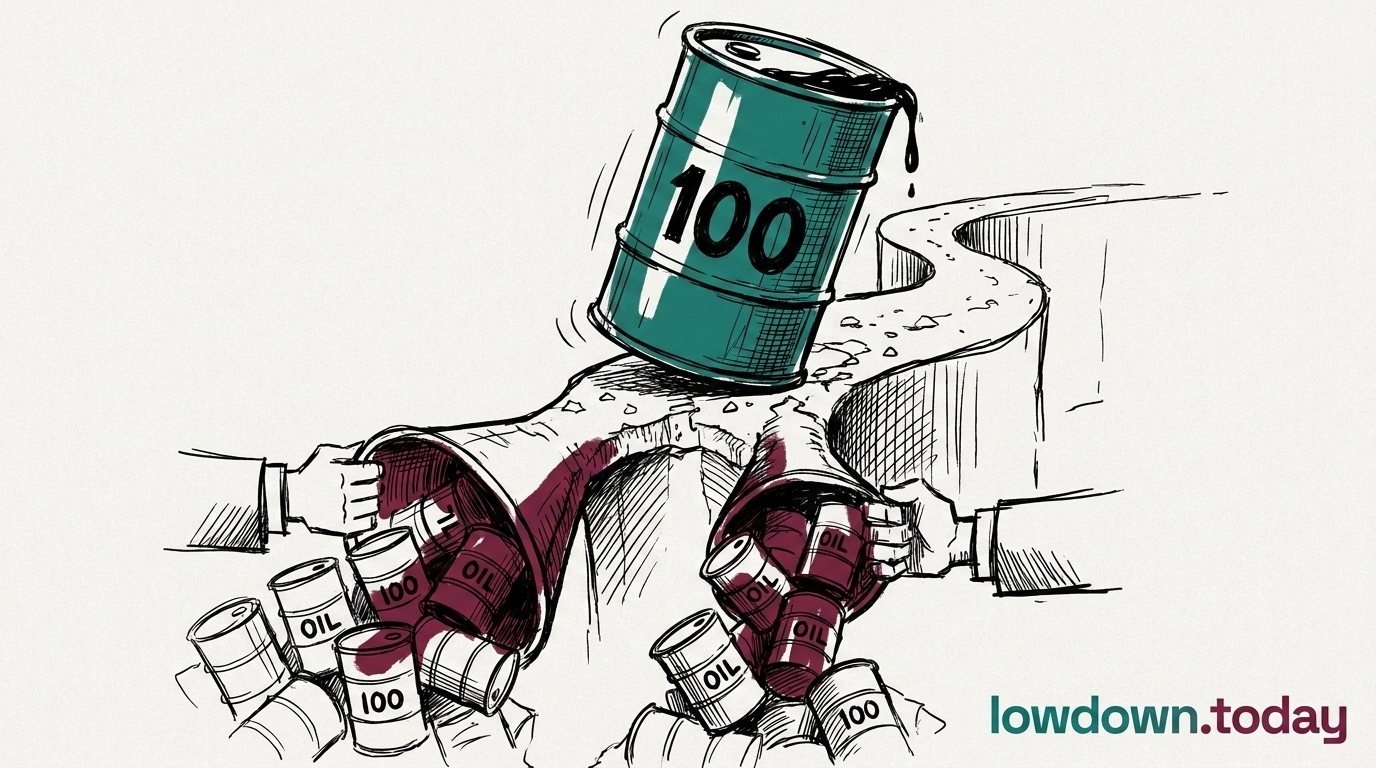
India buys more Saudi crude than any other country and has 2.5 million nationals working in the kingdom, so a $100 Brent and a live strike on Saudi tankers reach New Delhi through both fuel bills and remittance risk. Neither channel has an alternative route the way Saudi Arabia's own pipeline does.
Qatar
Qatar
Qatar co-authored the four-mediator ten-day ceasefire proposal alongside Egypt, Pakistan and Oman, centred on resuming Hormuz navigation, while separately pursuing its dated compensation claim against Iran at the UN Security Council filed on 21 July. Doha is mediating and litigating in the same week.
Israel
Israel
Israeli intelligence, reported by the Wall Street Journal, assesses Iran moved thousands of centrifuges and part of its roughly 440kg enriched-uranium stock into Pickaxe Mountain after the June 2025 strikes on its three main nuclear sites. Some of the US refuelling aircraft now deploying to the region are bound for Israeli bases and Ramon Airport.
Houthis
Houthis
Yahya Saree announced the missile and drone strikes on the Encelia and Layla on 22 July as enforcement of the embargo his forces had declared by radio warning alone two days earlier. Six vessels already turned back on the broadcast; the strike shows Houthi forces will use weapons once warnings stop working.
Saudi Arabia
Saudi Arabia
Saudi Arabia's state news agency confirmed only a fire on the Encelia's bow, with the crew safe; the Layla strike remains unconfirmed by Riyadh. The kingdom built its Petroline pipeline specifically to bypass Hormuz through the Red Sea, so the tanker fire lands on the route Riyadh had already spent billions escaping.
United States
United States
Washington is weighing both ten-day proposals but wants a longer truce than either offers, and moved F-16 and F-35 jets plus refuelling aircraft into the region while it decides. That deployment, not Trump's Pickaxe Mountain remarks, is the measurable US action, buying options for the day talks fail rather than betting on them.