Skip to content
You can now search across every topic, entity and event.What's new
Iran Conflict 2026
23JUN

US crude waiver lapses, no successor

2 min read
11:42UTC

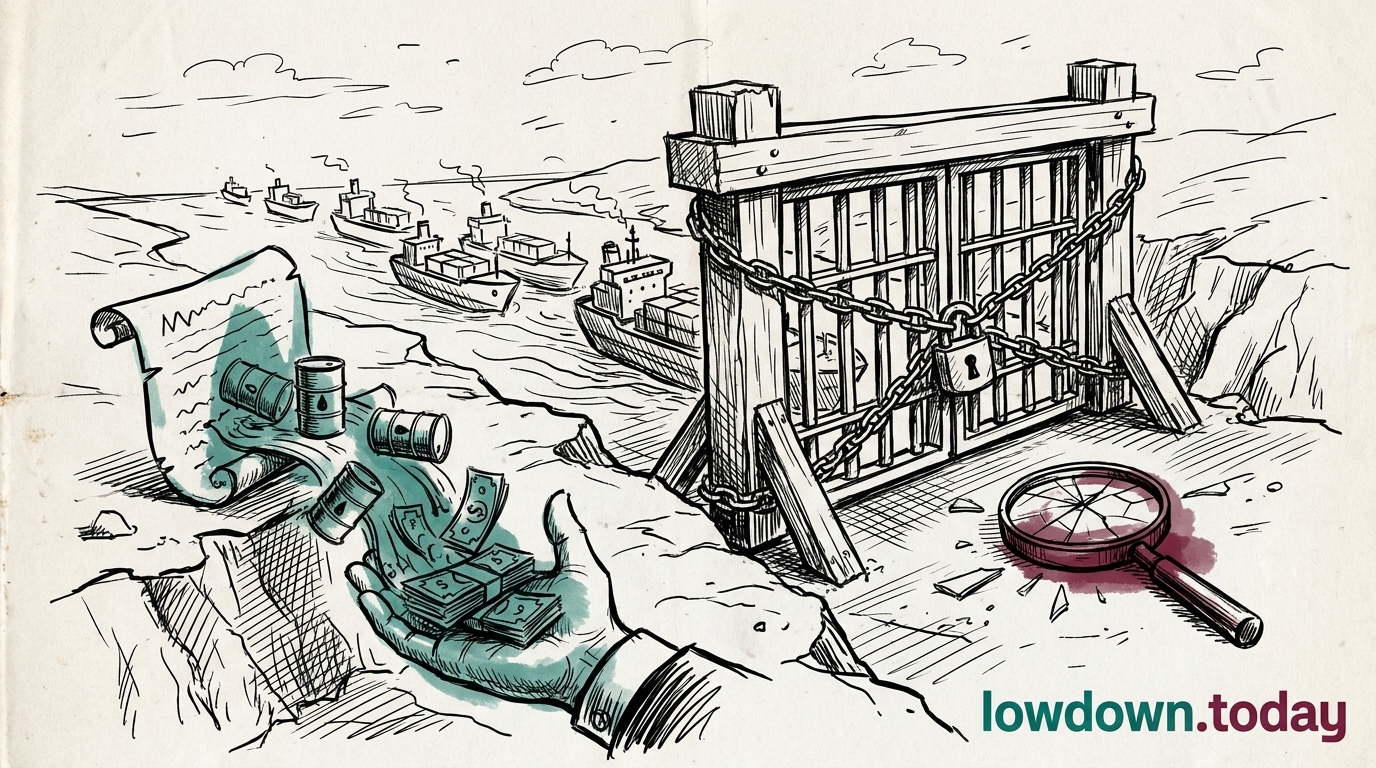
The US General License 134C crude waiver expired on 17 June with no successor issued, and the gap has now run 26 days, the longest of the war.

ConflictAssessed
Key takeaway

The US crude waiver lapsed on 17 June with no successor, the gap now 26 days and counting.

The US crude-oil waiver known as General License 134C expired on 17 June with no replacement issued since, according to S&P Global 1. The waiver ran as three consecutive thirty-day licences that softened the sanctions hit on buyers of Russian crude; as of 13 July the gap has reached 26 days, the longest of the war, against the fifteen-day gap recorded on 1 July .

OFAC, the US Treasury's Office of Foreign Assets Control, has announced nothing. The lapse is read from the absence of any new licence across OFAC's recent-actions listings and the specialist trackers that logged all three prior iterations within a day, not from any Treasury decision to let it fall 2. It should not be confused with the separate Lukoil retail-sale licence that expires on 25 July.

The crude cover fell away in the same fortnight the diesel export ban took effect, narrowing Russia's fiscal room just as the physical fuel squeeze turned hardest.


Deep Analysis

In plain English

OFAC is the part of the US Treasury that decides which sanctions exemptions apply to Russian oil. Three times this year it issued a short licence letting buyers keep purchasing Russian crude that was loaded before a cut-off date, each time renewing it within a day or two of the old one expiring. This time, the licence expired on 17 June and, as of 13 July, 26 days have passed with no replacement. This matters because that 26-day gap is far longer than any previous pause, and it has now gone unrenewed for longer than the licence itself normally lasts. Buyers who relied on that legal cover for Russian crude cargoes are operating without it.

Deep Analysis
Root Causes

OFAC administers the crude waiver as a discretionary licence renewed in short windows rather than a standing exemption, which means silence is itself an active policy outcome: without an affirmative renewal, the underlying sanctions apply in full by default.

The 30-day bridge structure was built for administrative flexibility, but it also means a single missed renewal cycle, if it becomes two, functions as a de facto termination without Treasury having to announce one.

Escalation

Direction: the gap has widened from 15 days (as of 1 July) to 26 days (as of 13 July) with no successor licence and no public Treasury statement of intent, consistent with a deliberate wind-down rather than an administrative delay.

What could happen next?
  • Consequence

    Buyers still routing Russian crude purchases through US-linked insurance or banking lose their legal cover for cargoes loaded after 17 June until a successor licence, if any, is issued.

First Reported In

Update #23 · Moscow rations diesel as US cover lapses

S&P Global· 13 Jul 2026
Read original
Different Perspectives
Shipping and insurance industry
UKMTO counted about 20 US-facilitated Hormuz transits a day to 11 September against only 6 visible on AIS, with traffic still around 90% below the 138-a-day pre-war baseline. War-risk underwriters cannot price hulls they cannot see, or resolve whether the tanker El Gaia hit a mine, as Iran claims, or a missile and drone, as CENTCOM says.
European refiners
European refiners
European refiners, including Poland's Orlen, absorbed a roughly $26 gap between Dated Brent at $130.80 on 15 September and ICE Brent futures settling at $103.87 on 18 September, a spread that widened from $13.45 on 9 September rather than newly opening. Their futures hedges no longer cover what they now pay for physical barrels.
Saudi Arabia
Saudi Arabia
Saudi Aramco zeroed European term customers' October allocations and rerouted roughly 60 million barrels to Asia through Ras Tanura and Sohar, using Red Sea and Gulf terminal capacity built years ago to cut Hormuz exposure. Riyadh reallocated existing supply rather than negotiating a shortfall with Europe.
Qatar
Qatar
Qatar's energy minister Saad al-Kaabi told Bloomberg at the Qatar Economic Forum on 20 September that Bessent's two-year Hormuz-obsolescence forecast is wrong, and that Doha has deliberately built no bypass pipeline. Qatar's gas exports run through one waterway by choice, not oversight.
Iran (foreign ministry and Majlis)
Iran's foreign ministry and 130 Majlis deputies moved toward NPT withdrawal this week, with lawmaker Hossein-Ali Haji Deligani filing a triple-urgency bill on 20 September that Speaker Qalibaf has not yet scheduled. Tehran treats treaty membership as leverage still on the table, not yet spent.
Russia and China
Russia and China
Moscow and Beijing vetoed the Panel of Experts' renewal, maintaining Resolution 2231 lapsed in October 2025 and the 2025 snapback was never validly triggered, so the sanctions architecture the Panel enforces has no current legal standing. Both governments frame the veto as upholding law, not shielding Tehran.



